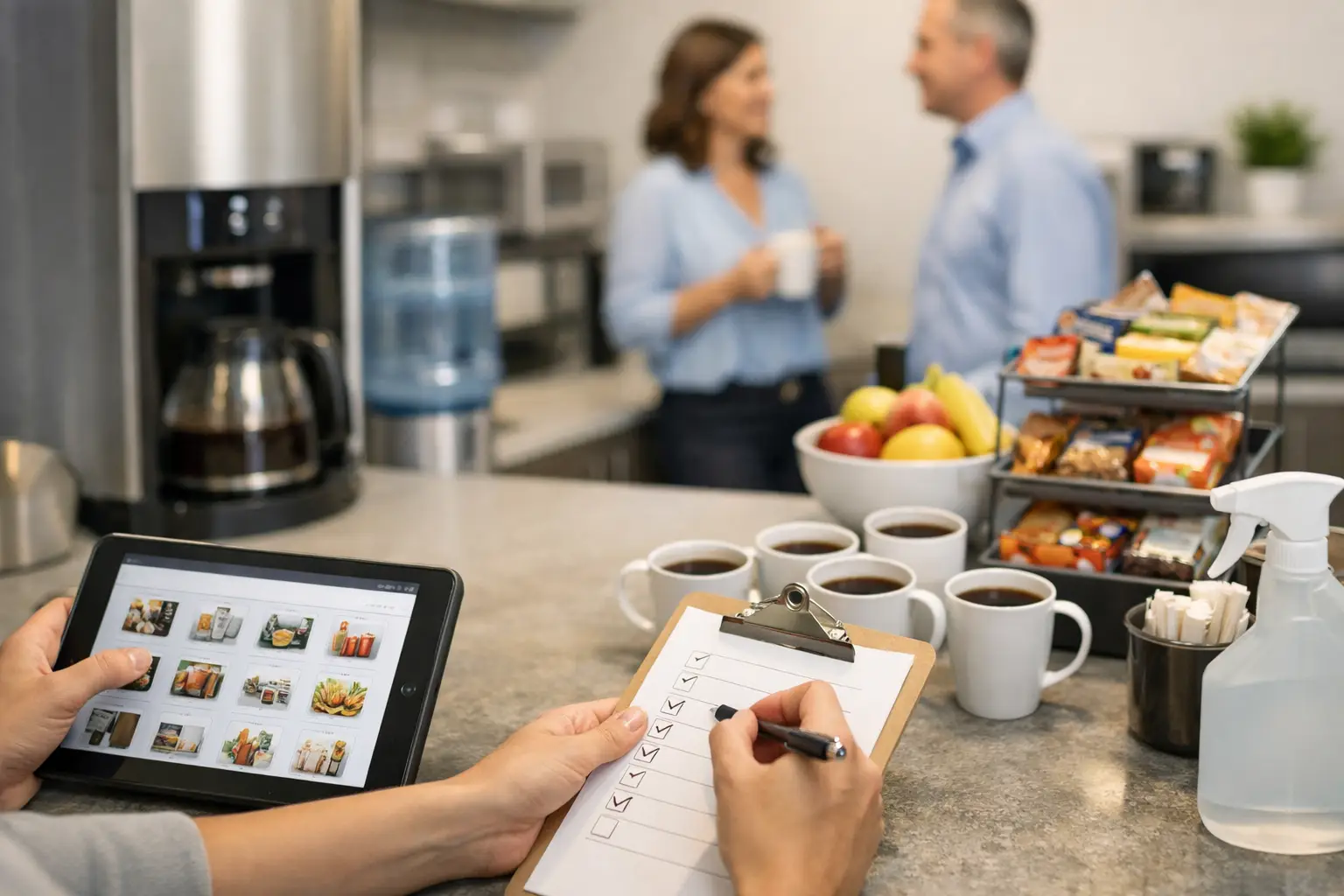
How to Reduce Breakroom Management Tasks
Learn how to reduce breakroom management tasks with smarter stocking, easier cleaning, and outsourced coffee service for busy offices.
If your office breakroom keeps turning into a small operations problem, you are not imagining it. For many growing teams, figuring out how to reduce breakroom management tasks becomes less about coffee and snacks and more about protecting staff time, avoiding complaints, and keeping the workplace looking professional.
A breakroom seems simple until someone has to own it. Someone notices the coffee machine needs cleaning, the cups are gone, the creamer ran out, the trash is full, and the counter looks like a Monday morning hit it twice. In many offices, that someone is an admin, office manager, HR lead, or operations person already carrying too much. The result is familiar – little tasks pile up, standards slip, and a basic employee perk starts creating more work than it should.
The good news is that most breakroom headaches are not caused by a lack of effort. They come from a system that depends too much on internal follow-up. If you want the breakroom to stay inviting without becoming another job, the fix is to remove as many recurring decisions and manual tasks as possible.
How to Reduce Breakroom Management Tasks at the Source
The fastest way to cut breakroom work is to stop treating it as a series of one-off chores. When supplies, equipment, cleaning, and maintenance are handled reactively, your team keeps getting pulled back into the same loop. When those pieces are standardized, scheduled, or outsourced, the workload drops quickly.
That does not mean every office needs a major overhaul. It means looking at where time disappears now. In most workplaces, the biggest drains are restocking, machine issues, supply ordering, and basic cleanup oversight. If even two of those are simplified, the breakroom becomes far easier to manage.
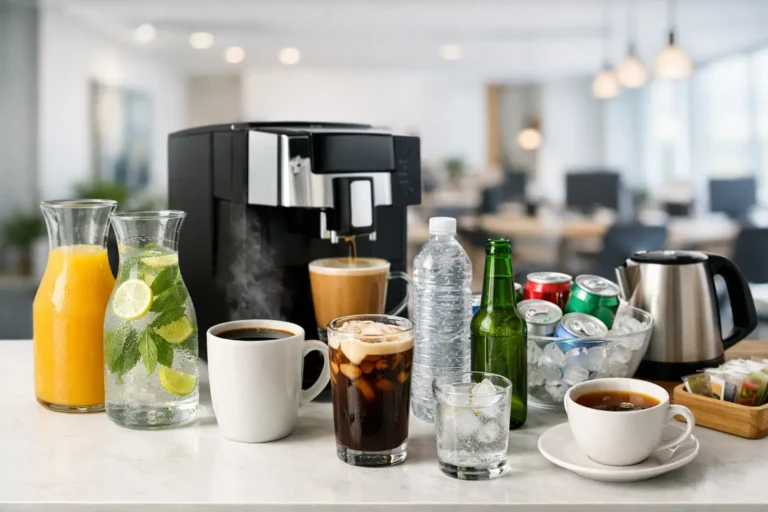
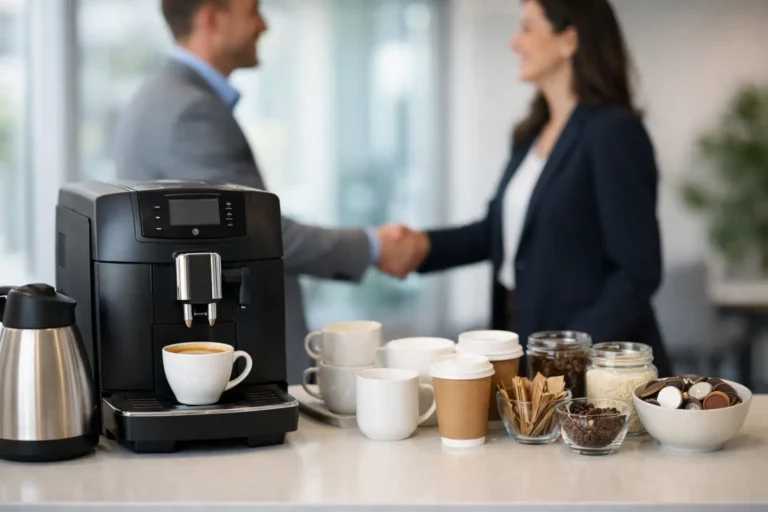
A good first step is to decide what level of service your workplace actually wants to provide. There is a difference between a basic coffee corner and a client-ready beverage station. If your team wants café-style drinks, better presentation, and reliable availability, trying to manage that casually in-house usually creates more friction than expected.
Standardize What You Stock
Too much variety often creates more work than value. If you offer six sweeteners, four creamers, multiple cup sizes, and an unpredictable mix of pods, packets, and loose supplies, ordering becomes more complicated and waste goes up. The breakroom feels generous, but someone has to monitor every item.
A better approach is to narrow the offering to what people actually use. Look at what runs out first and what sits untouched. Most offices are better served by a focused beverage setup with dependable favorites instead of a cluttered assortment that needs constant attention.
This is especially true for coffee service. If your current setup relies on separate products, separate brewing steps, and separate cleanup routines, every drink creates more mess and more management. A bean-to-cup or touch-button system can reduce that burden because it simplifies the process for employees and reduces the number of items your staff has to monitor.
There is a trade-off here. A highly customized setup can feel more flexible, but it usually requires more oversight. A more standardized setup is easier to maintain and tends to deliver a more consistent experience.
Put Restocking on a Predictable Schedule
One reason breakrooms become frustrating is that supplies get checked only when something is already empty. That leads to rushed orders, frustrated employees, and unnecessary interruptions during the workday.
If you are handling the breakroom internally, assign a simple inventory rhythm. Weekly checks are usually enough for most offices, though high-traffic environments may need more frequent attention. The key is consistency. A short scheduled review prevents the daily habit of emergency problem-solving.
It also helps to set minimum on-hand levels for the basics – cups, lids, stirrers, sweeteners, napkins, coffee, tea, and cleaning items. Without those thresholds, restocking depends too much on memory. With them, the process becomes easier to hand off and easier to track.
Still, even a smart schedule takes time. If your team is already stretched, a vendor-managed restocking model may be the better fit. That shifts the burden of monitoring and replenishment away from your internal staff, which is often where the biggest time savings happen.
Cut Down on Cleaning and Maintenance Requests
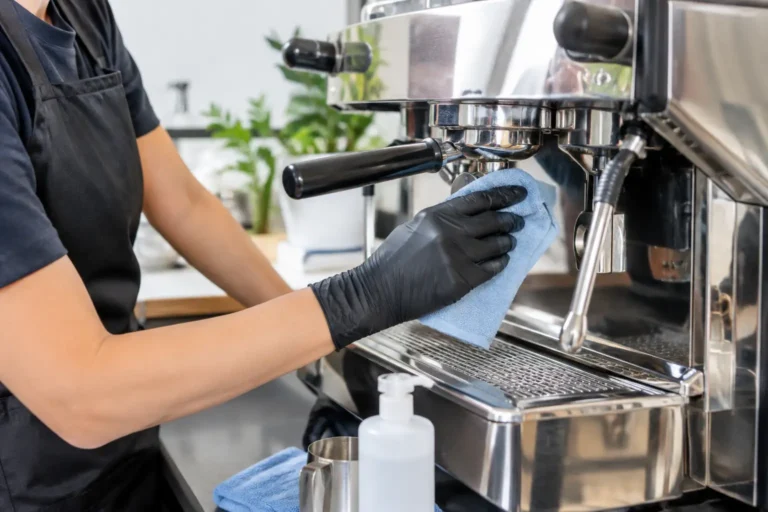
A breakroom does not need to be spotless every minute, but it does need to stay clean enough that employees and visitors feel comfortable using it. The trouble starts when coffee equipment requires regular descaling, part replacement, manual cleaning, or troubleshooting that your team was never trained to handle.
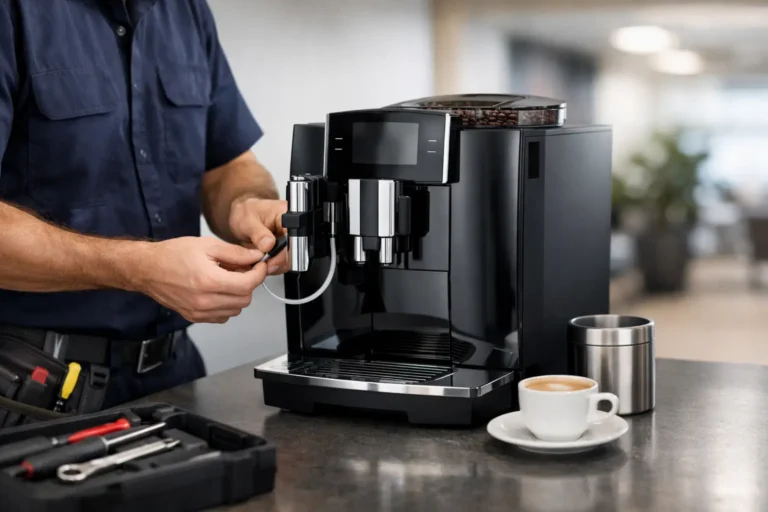
That is where many offices underestimate the true cost of an in-house setup. The machine itself may seem manageable at first, but over time the hidden work adds up. Someone has to empty grounds, wipe down surfaces, clean milk systems, deal with leaks, and call for repairs when the machine stops cooperating.
If your goal is to learn how to reduce breakroom management tasks, machine support matters as much as the machine. Equipment that comes with ongoing service, cleaning, and repair support removes a major category of internal work. It also lowers the risk of the breakroom being out of service for days while someone tries to coordinate a fix.
For offices that want premium drinks without the upkeep, this is often the tipping point. Outsourced beverage service works well because it combines quality with accountability. Your team gets the experience. Your staff does not get the maintenance checklist.
Give One Partner More Responsibility
Many breakroom problems come from having too many moving parts. One company supplies coffee, another handles water, office staff buy snacks at wholesale clubs, and no one fully owns the overall experience. When something goes wrong, responsibility gets blurry.
Consolidating vendors can simplify management fast. If one service partner can provide equipment, ingredients, scheduled maintenance, repairs, and restocking, there are fewer calls to make and fewer details to coordinate. It also becomes easier to keep the breakroom consistent in both appearance and quality.
That is one reason full-service coffee programs appeal to busy offices. Instead of buying equipment, sourcing supplies, and solving machine issues separately, you hand the beverage side to a provider built for it. For employers in Canton that want a polished coffee program without the daily oversight, that model can remove a surprising amount of admin work.
Sip and Smile Gourmet Coffee was built around exactly that kind of hands-off support – installing equipment, supplying ingredients, and handling weekly care so your team can offer premium drinks without running a mini café behind the scenes.
Make the Breakroom Easier for Employees to Use
Not every breakroom task comes from staff management. Some of it comes from employee confusion. If people do not know how to use the machine, where supplies belong, or what to do after making a drink, the room gets messier and your team ends up stepping in.
Simple design helps. Clear placement for cups, lids, stirrers, and waste bins makes a big difference. Easy-to-use beverage equipment matters too. If making a cappuccino takes five steps and leaves spills behind, users create more cleanup. If it takes one button, the process stays cleaner and faster.
This is another place where it depends on your workplace. In a small office, a basic setup may be enough. In a busier office with guests, frequent meetings, or a stronger hospitality standard, convenience and presentation carry more weight. The easier the experience is for employees and visitors, the less follow-up your team has to do.
Decide What Should Stay In-House
Not every breakroom task needs to be outsourced. Some offices prefer to keep snack purchasing internal or manage a few supplies themselves. That can work well if responsibilities are clear and the setup stays simple.
But beverage service is often the area with the highest return on outside support. Coffee gets used every day, runs out quickly, and creates the most visible complaints when quality drops or equipment fails. It also has the biggest impact on employee experience. If there is one part of the breakroom worth simplifying first, it is usually the coffee program.
A good rule is to keep low-effort choices in-house and hand off high-frequency, high-friction tasks. That balance gives you control where you want it and relief where you need it most.
When the breakroom is managed well, nobody talks about it. People just enjoy it, clients notice the polish, and your office runs with fewer interruptions. That is usually the best sign you found the right setup – the perk still feels premium, but the work behind it mostly disappears.