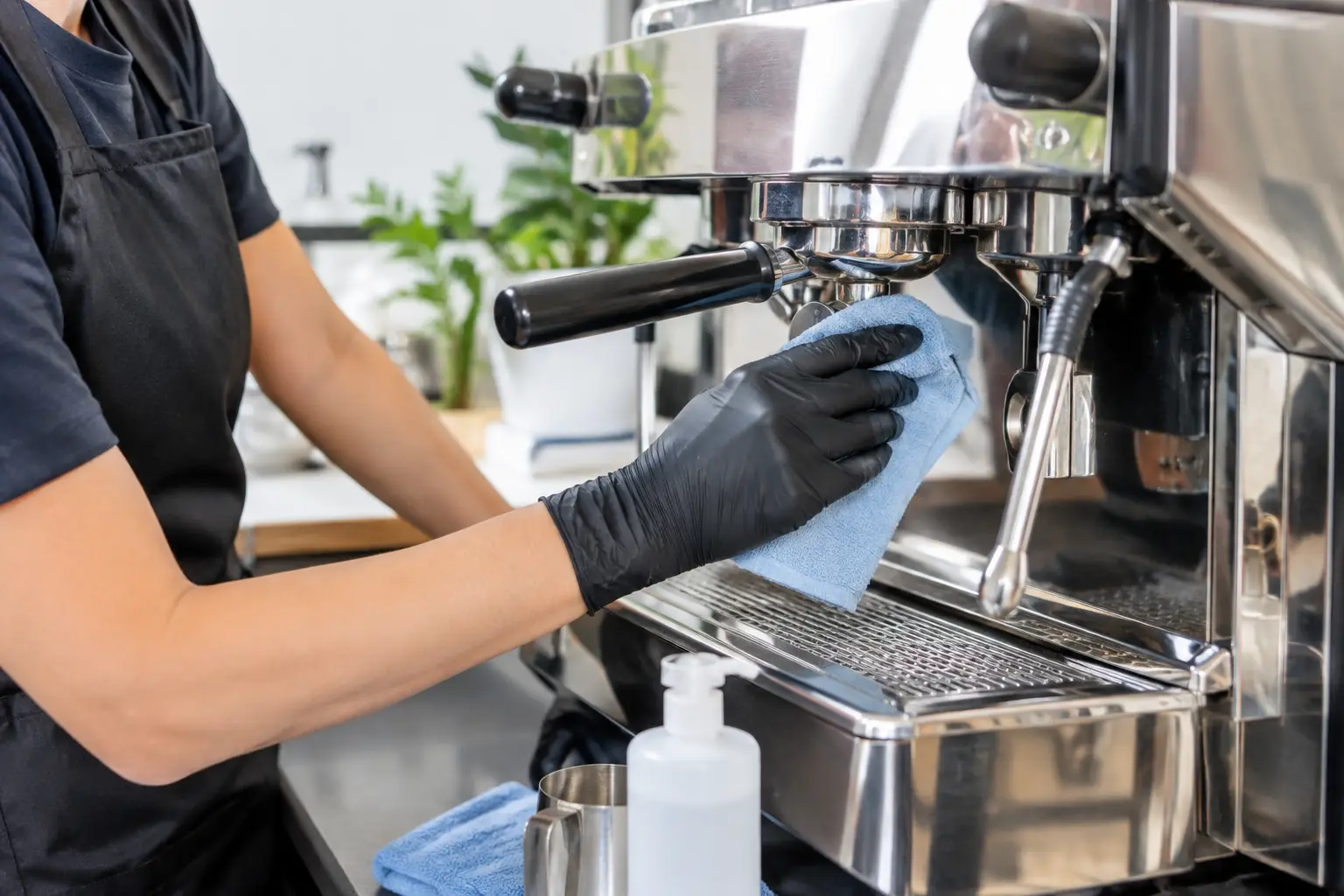
How Are Espresso Machines Sanitized at Work?
Learn how are espresso machines sanitized in workplace settings, from daily rinse cycles to weekly service that protects drink quality and staff confidence.
A café-quality drink station makes a strong impression on employees and visitors. It also has to stay clean behind the scenes. So, how are espresso machines sanitized in a workplace? The right answer is not a quick wipe-down at the end of the day. It is a consistent process that removes coffee oils, milk residue, mineral buildup, and surface contamination without putting the equipment or drink quality at risk.
For a busy office, that process should be simple for staff and dependable enough that it does not become another task on an administrator’s list. Commercial espresso machines need a combination of daily care, proper cleaning products, and scheduled professional service.
Cleaning and Sanitizing Are Not the Same Thing
People often use the words interchangeably, but they solve different problems. Cleaning removes visible residue and the oils left behind by coffee. Those oils can turn rancid, affect flavor, and collect inside brew components. Sanitizing reduces microorganisms on appropriate food-contact surfaces after those surfaces have been cleaned.
A machine cannot be properly sanitized through residue alone. Milk film, coffee grounds, and syrup splashes must be removed first. Then the correct manufacturer-approved sanitizer can be used where appropriate, following its contact-time and rinsing instructions.
For office beverage systems, the goal is both hygiene and a better-tasting drink. A spotless exterior is nice, but clean brew paths, milk systems, drip trays, and touch points are what protect the experience employees expect when they choose a latte, cappuccino, or hot chocolate.
How Are Espresso Machines Sanitized Day to Day?
Daily service starts with the parts that come into contact with coffee, milk, hands, and spills. The exact routine depends on whether the office has a traditional espresso machine, a bean-to-cup unit, or a fully automatic commercial beverage system. The manufacturer instructions always come first.
For a traditional machine, the group heads are typically rinsed and backflushed to clear coffee particles and oils. The portafilters and baskets are washed with an approved espresso-machine cleaner, then rinsed thoroughly. Steam wands should be wiped immediately after each use and purged, because milk can dry inside the tip quickly.
Bean-to-cup machines often run an automatic rinse cycle at startup, shutdown, or both. That cycle helps flush the coffee outlet and internal brewing path. Staff should empty and rinse the drip tray and grounds container before they overflow, wipe down the beverage spouts and machine exterior, and clean any visible spills around the dispensing area.
Milk systems deserve extra attention. Whether a machine uses a refrigerated milk line, a milk container, or a powder-based topping system, its components need the cleaning routine specified for that equipment. Fresh-milk lines may require daily flushing with a dedicated milk-system cleaner and a sanitation step. Leaving milk residue in a line is not an acceptable trade-off for saving a few minutes.
A Practical Daily Routine for Workplace Machines
A reliable daily routine is short when it is built into the machine’s design and supported by regular service. In most offices, it includes four core actions:
- Run the machine’s programmed rinse or cleaning cycle.
- Empty, wash, and dry the drip tray, grounds bin, and waste container.
- Wipe beverage spouts, steam wands, touch screens, buttons, and surrounding counters with approved products.
- Clean and sanitize milk-contact parts as directed by the machine manufacturer.
The word “approved” matters. A harsh household cleaner may damage seals, leave an unwanted odor, or create a residue that does not belong near beverages. Likewise, sanitizer should never be poured into a water tank, boiler, grinder, or internal system unless the equipment manufacturer specifically calls for it.
Hot water and high brewing temperatures help during normal operation, but they are not a complete sanitizing plan. Coffee machines have cooler areas, removable parts, milk circuits, and exterior touch points that still require direct cleaning.
Weekly Cleaning Protects Taste and Equipment
Daily care handles the immediate mess. Weekly maintenance goes deeper, especially in a high-use workplace.
Coffee oils accumulate on brew units, shower screens, valves, and dispensing components. Over time, those oils can make even premium beans taste bitter or stale. Depending on the machine, weekly service may include a more thorough brew-unit cleaning, detergent backflushing, removal and washing of removable parts, and inspection of seals, spouts, and drains.
Water quality also matters. Canton-area businesses may need filtration or a treatment plan that matches their water conditions and equipment. Mineral scale is not the same as contamination, but it can restrict water flow, affect temperature consistency, and make cleaning less effective. Descaling should be done only on the machine’s recommended schedule and with the correct product. Over-descaling can be just as damaging as ignoring scale entirely.
A professional service visit can also identify small issues before they become a machine outage: a slow drain, a worn gasket, a clogged nozzle, or a milk component that is not fully flushing. That is valuable when your coffee station supports a full office rather than one person at home.
Why Staff Should Not Have to Become Machine Experts
Office managers have enough to manage. Asking someone to troubleshoot cleaning codes, measure cleaning chemicals, disassemble beverage components, or decide when a machine needs repair adds friction to a perk that should feel easy.
The best workplace coffee programs clearly separate simple daily tasks from technical maintenance. Employees can follow a straightforward rinse-and-wipe routine. A qualified service provider handles the deeper cleaning, restocking, repairs, calibration, and preventive maintenance that keep the machine dependable.
That approach also creates consistency. When the responsibility changes hands between shifts or departments, cleaning can become uneven. A scheduled service plan gives the business confidence that the equipment receives the same careful attention every week, not only when someone remembers.
Signs an Espresso Machine Needs Attention Sooner
Regular service reduces surprises, but a machine may need attention between visits. Sour or unusually bitter coffee, slower dispensing, weak foam, dripping from a group head, unpleasant odors, or repeated error messages can all point to a cleaning or maintenance issue.
Milk-based drinks offer especially clear warning signs. If foam is inconsistent, the milk is not reaching the expected temperature, or the machine asks repeatedly for a milk-system cleaning cycle, do not work around the alert. Clean the system according to the equipment instructions and request service if the issue continues.
It is also smart to act quickly when a drip tray overflows or a grounds container is packed. These may seem minor, but neglected waste areas create odors, spills, and an unprofessional look in a client-facing space.
The Right Standard for a Workplace Coffee Station
A sanitized espresso machine should look polished, produce consistently good drinks, and operate without placing a maintenance burden on your team. That requires more than an occasional wipe-down. It requires the right cleaning products, the right schedule, and people who understand commercial beverage equipment.
For Canton businesses that want café-style coffee without managing every detail, Sip and Smile Gourmet Coffee provides the machine, fresh ingredients, routine maintenance, and support behind the scenes. Your staff and clients get a better drink experience, while your team gets to focus on the work that matters. A great office coffee station should be noticed for the cappuccino, not for the cleaning checklist.