Office Refreshment Budgeting That Works Daily
Office refreshment budgeting helps Canton employers serve better coffee, control hidden costs, and create a workplace perk people value every workday.
A coffee budget can look perfectly reasonable on paper and still disappoint everyone by Thursday. The reason is usually not the price of coffee itself. It is the gap between what employees and visitors expect, what the office actually uses, and how much staff time disappears into ordering, cleaning, troubleshooting, and restocking. Effective office refreshment budgeting accounts for the whole experience, not just the grocery receipt.
For Canton-area businesses with 10 or more employees, a better breakroom does not have to mean an uncontrolled expense. It means choosing the right level of service, setting clear spending boundaries, and avoiding the hidden costs that come with managing a beverage program in-house.
Start Office Refreshment Budgeting With Your Goals
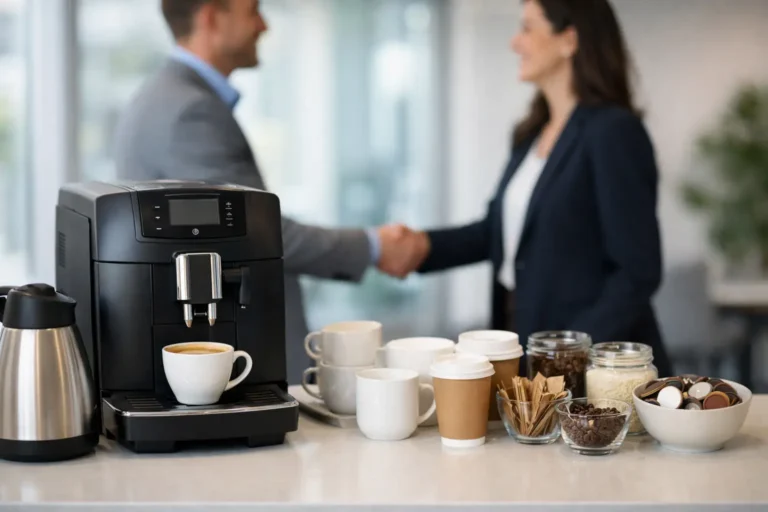
Before assigning a dollar amount, decide what the refreshment program needs to accomplish. A small back-office team may simply need dependable coffee throughout the day. A client-facing office may need café-style beverages that make a strong first impression. A growing employer may see coffee and hot drinks as a practical way to support employee satisfaction and encourage people to take breaks together.
Those goals lead to different budgets. The lowest-cost option is not always the best value if it delivers weak coffee, creates supply headaches, or sits unused because employees prefer to buy drinks elsewhere. On the other hand, a premium machine with every possible drink option may be more than a team of 12 needs.
A useful starting point is to answer three questions: How many people regularly use the breakroom? Is the beverage station primarily for staff, clients, or both? And what experience do you want people to have when they use it? The answers help you match the program to the workplace rather than paying for a one-size-fits-all package.
Look Beyond the Cost of Beans and Cups
Office refreshment budgets often fail because the visible supply costs get all the attention. Coffee, creamers, sweeteners, cups, and stirrers matter, but they are only part of the total.
Equipment ownership is one major consideration. Purchasing a commercial coffee machine may appear economical at first, yet the initial price is only the beginning. There may be installation needs, water-line considerations, filters, cleaning products, replacement parts, repairs, and eventual replacement. If the machine goes down on a busy Monday, someone on your team has to find a solution.
Then there is labor. Ask who monitors inventory, places orders, puts supplies away, wipes down the station, cleans the machine, and handles a service call. Even when these tasks take only a few minutes at a time, they add up over a month. For an office manager or administrator, the real cost may be less about money and more about another recurring responsibility competing for attention.
Waste deserves a line in the budget, too. Bulk purchases can be smart when consumption is predictable. They are not smart when flavored syrups expire, creamers go unused, or an oversized machine requires more supplies than your office can reasonably move. The right service level should keep the station well stocked without turning the supply cabinet into a storage room for products no one wants.
Build a Per-Person Monthly Baseline
A practical way to create a starting budget is to think in cost per employee per month. This gives leadership a clear, comparable number and makes it easier to scale the program as headcount changes.
Begin with the number of regular users rather than total payroll. If 30 people work in the building but only 24 are typically present, base the initial estimate on 24 and adjust after a few weeks of real usage. Include common supplies and service in the calculation, not just the beverage ingredients.
Usage patterns matter. An accounting office with an early-morning rush may use more coffee than a team that spends much of the day in the field. A reception area that welcomes clients may need a broader drink selection, cleaner presentation, and more frequent restocking than an employee-only kitchen. There is no single correct per-person number because the value of the amenity depends on how people use it.
The goal is not to monitor every cup. It is to establish a reasonable monthly range, then review whether the program is delivering enough value to justify it. If a quality beverage station improves the employee experience, helps host clients professionally, and removes daily supply hassles, it may be doing more work for your business than a simple line item suggests.
Plan for Drink Variety Without Overbuilding
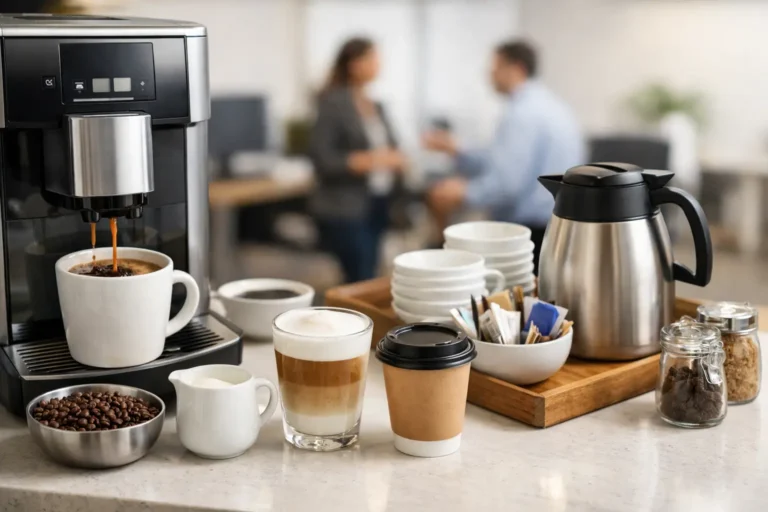
Variety is where many offices either underdeliver or overpay. Basic drip coffee may meet the needs of some teams, but it can feel limited when employees want cappuccinos, lattes, hot chocolate, or non-coffee options. At the same time, stocking every conceivable flavor and specialty ingredient can create unnecessary waste.
A balanced program usually centers on the drinks people use most often, then adds a few thoughtful choices. Fresh roasted coffee and espresso-based favorites can cover a wide range of preferences. Seasonal beverages can be a welcome addition when they are introduced intentionally rather than kept on hand year-round.
Consider your culture. If your team enjoys a morning coffee ritual or regularly brings in candidates and customers, a barista-style machine may earn its place quickly. If usage is lighter, a simpler configuration with dependable service may be the better fit. Good budgeting means paying for the experience people will actually use.
Choose a Service Model That Reduces Surprises
There are two basic ways to manage an office beverage program: own and operate it internally, or work with a full-service provider. Neither is automatically right for every business, but the trade-off should be clear.
Internal management gives you direct control over purchasing. It can work well for a very small office with modest needs and someone willing to handle the details. However, the apparent savings can disappear when equipment breaks, supplies run short, or responsibility falls to an already busy employee.
A full-service model turns more of those variable tasks into a predictable monthly investment. Equipment, ingredients, cleaning, maintenance, restocking, and repairs can be handled as part of the service arrangement. That makes budgeting easier because the business is not trying to guess when a machine will need attention or who will solve the problem.
For many employers, predictability is worth more than finding the lowest possible cost per cup. A coffee station that is empty, dirty, or out of order sends the wrong message to staff and guests. Reliable service protects the value of the investment.
Review the Budget After the First 60 Days
Your first budget should be treated as a working plan, not a permanent number. After about 60 days, review consumption, employee feedback, waste, and service needs. This is enough time to see whether the office is using more cappuccinos than expected, whether cups are disappearing too quickly, or whether a certain product is rarely touched.
Keep the review simple. Look at whether supplies are consistently available, whether the drink options fit the team, and whether anyone in the office is still spending time on tasks the program was meant to remove. If the answers are positive, the budget is likely doing its job. If not, adjust the mix instead of assuming the entire program needs to be cut.
Sip and Smile Gourmet Coffee helps Canton businesses build beverage programs around their team size, workplace goals, and desired level of service. With commercial Italian-made barista machines, fresh ingredients, and ongoing support, businesses can offer a polished coffee experience without adding another operational burden to the office.
A well-planned refreshment budget is not about squeezing every last penny out of the breakroom. It is about making a smart, dependable investment in the people who walk through your doors each day. When the coffee is good, the station is ready, and no one has to manage the details, the benefit is easy to see.