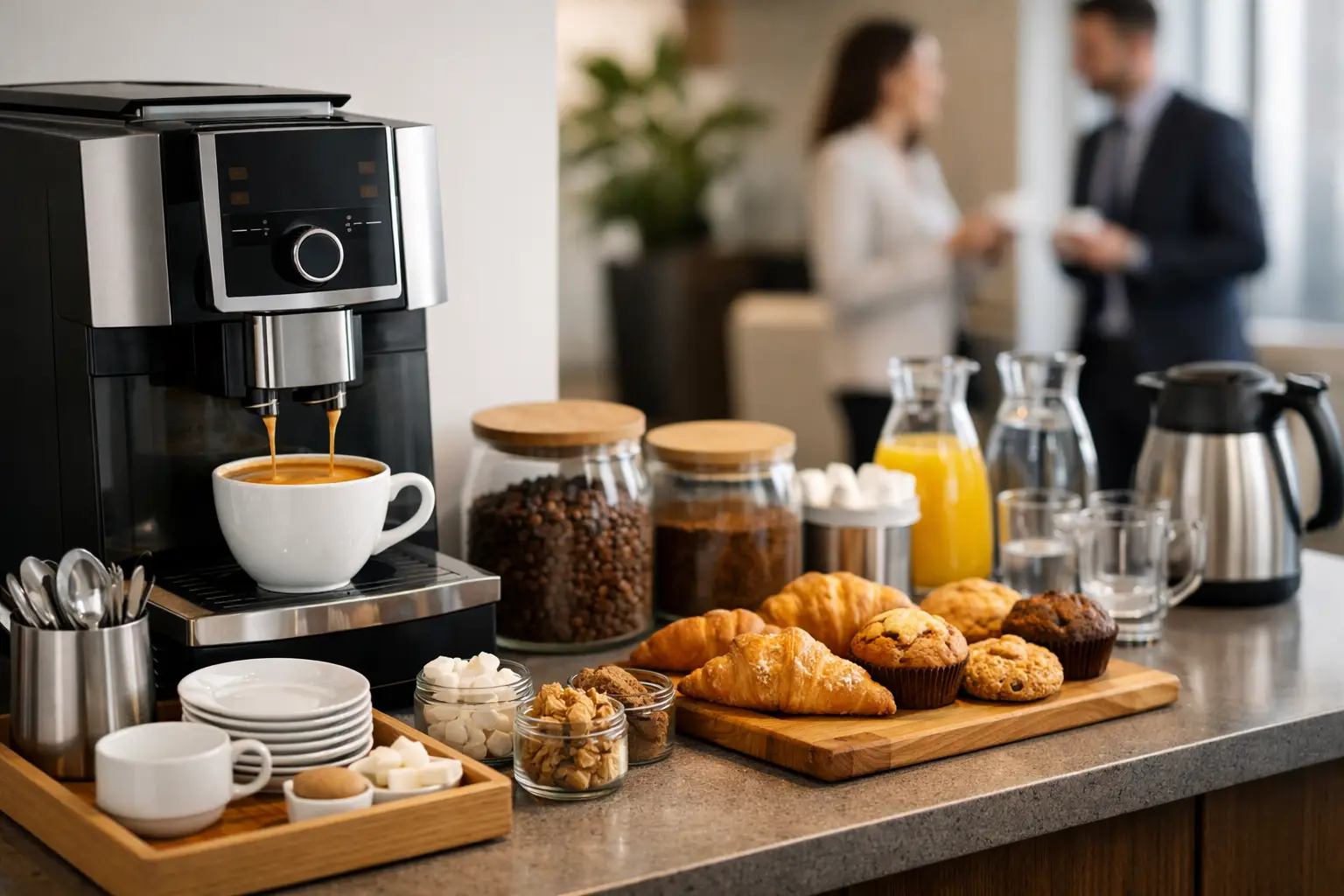
Client Hospitality Coffee Station That Works
A client hospitality coffee station helps Canton offices impress guests, support staff, and offer café-style drinks without extra daily work.
The fastest way to make a waiting area feel more professional is not new furniture or a bigger front desk. It is a client hospitality coffee station that tells every guest, right away, that your business pays attention to details. When a customer, prospect, vendor, or job candidate is offered a fresh cappuccino or latte instead of a lukewarm pot of basic coffee, the whole visit feels more considered.
That matters more than many offices realize. In law firms, medical offices, financial services, real estate offices, and company headquarters, the beverage experience quietly shapes how people view your brand. It can make your team look polished, prepared, and generous. It can also do the opposite if the station is messy, empty, or built around low-quality coffee no one actually wants.
What a client hospitality coffee station should do
A strong client hospitality coffee station is not just a coffee maker on a counter. It is part hospitality tool, part workplace amenity, and part brand signal. It should serve guests well, make life easier for employees, and operate without becoming one more thing your office manager has to babysit.
The best setups usually do three things at once. First, they give visitors a premium experience. Second, they offer enough drink variety that people can choose what they actually enjoy. Third, they stay clean and stocked without constant internal effort.
That last point is where many offices get tripped up. It is easy to picture a beautiful station. It is harder to keep it running every week. Machines need cleaning. Beans run low. Powdered drink mixes disappear faster than expected. Something always seems to happen right before a client meeting. If your coffee setup looks great on day one but creates daily upkeep problems, it stops feeling like a perk.
Why clients notice coffee more than you think
Most guests will not walk into your office and comment on your beverage strategy. They will, however, notice whether your space feels welcoming. Coffee is part of that judgment.
A good drink creates a short but meaningful pause. It gives your receptionist or team member a natural way to greet people. It fills the few minutes before a meeting with something positive. It can even help tense conversations start on a friendlier note. In client-facing environments, those small moments have value.
There is also a clear difference between standard office coffee and café-style service. A basic drip brewer can check a box, but it rarely feels memorable. Espresso-based drinks, hot chocolate, French vanilla, and seasonal options feel more intentional. They show that your company thinks beyond the minimum.
For some businesses, this matters directly to revenue. If you host consultations, sales meetings, investor conversations, or recruiting interviews, the environment around those interactions affects perception. A polished beverage station will not close a deal by itself, but it can support the kind of experience that builds confidence.
The gap between a nice idea and a usable setup
Many companies start with the right instinct and the wrong model. They buy a machine, set out a few supplies, and assume the rest will take care of itself. Then the practical issues show up.
Someone has to order ingredients. Someone has to wipe down the counter. Someone has to troubleshoot the machine when drinks stop coming out correctly. Someone has to notice that the cup supply is almost gone before the front office runs out. Usually, that someone is already juggling ten other responsibilities.
This is why a client hospitality coffee station works best when the service side is handled just as well as the equipment side. Great coffee only helps if it is consistently available, easy to serve, and professionally maintained. Otherwise, what should feel like hospitality starts feeling like hassle.
That is also why businesses often outgrow DIY coffee programs faster than expected. What sounds simple can turn into hidden labor, inconsistent quality, and surprise costs. The machine itself is only one part of the equation.
What to include in a client hospitality coffee station
The right station depends on your traffic, your space, and the kind of experience you want to create. A busy office that hosts clients all day has different needs than a small professional suite with a few scheduled appointments. Still, the strongest setups tend to share the same core features.
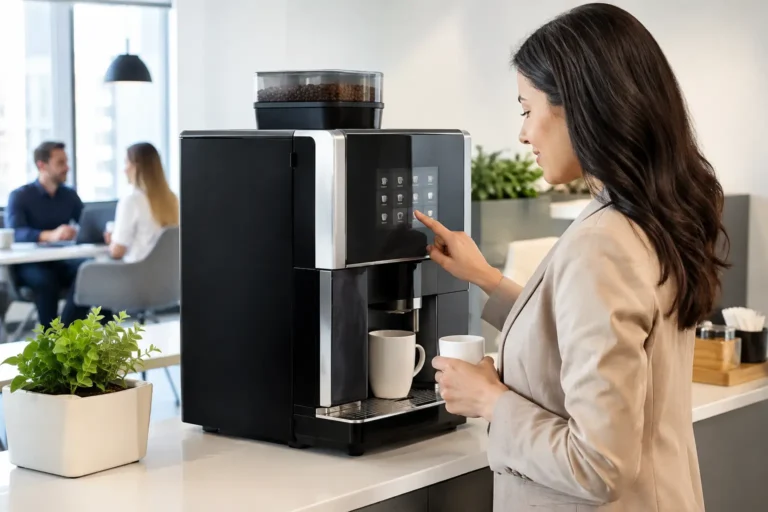
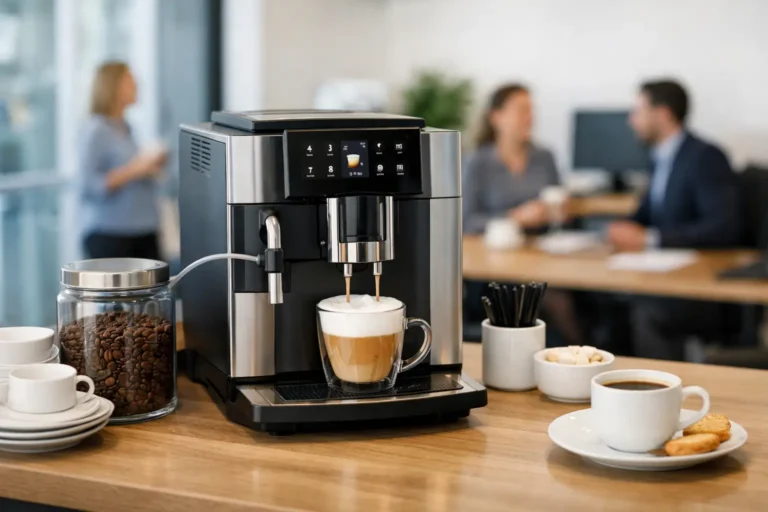
A commercial-grade machine is the foundation. For client-facing use, reliability matters just as much as drink quality. A machine should produce consistent beverages quickly and without complicated instructions. Touch-button espresso drinks are especially useful because they give guests and staff café-style options without requiring a trained barista.
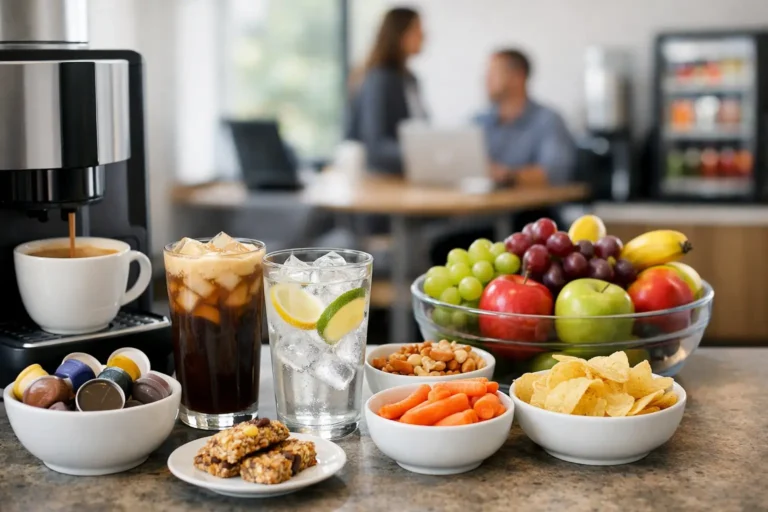
Variety also matters. Not everyone wants black coffee. Offering cappuccinos, café lattes, café Americanos, mochaccinos, hot chocolate, and a few flavored options makes the station feel more thoughtful. It also helps you serve a wider range of preferences without adding more equipment.
Presentation should stay simple and clean. Cups, lids, stirrers, sweeteners, and napkins should be easy to access but not clutter the space. A station that looks organized reads as professional. One that looks overstuffed or neglected sends the wrong message, even if the coffee itself is good.
Placement is another decision worth thinking through. If the station is visible from the lobby or conference area, it becomes part of the guest experience. If it is tucked too far away, staff may use it but clients may never know it is available. There is no universal rule here. It depends on your floor plan and how your office receives visitors.
Premium feel without adding daily work
This is the part business decision-makers care about most. A premium beverage program sounds great until it becomes another thing your team has to manage. The better approach is to set up a coffee station that feels high-end while removing the day-to-day burden.
That means professional installation, regular restocking, ongoing maintenance, cleaning support, and repairs handled for you. It means not owning a machine that becomes your problem the second something breaks. It means your office can enjoy the benefit without assigning a staff member to monitor every detail.
For many Canton-area businesses, that convenience is the real value. The machine matters. The drinks matter. But what often makes the difference is continuity. You want the station to work next week, next month, and during your busiest season. You want your team to trust that if there is a problem, someone else is already handling it.
That hands-off model is where a local service partner can make a big difference. Sip and Smile Gourmet Coffee, for example, is built around exactly that kind of support – installation, beverage supply, weekly service, and machine care handled together so offices can offer a polished experience without extra internal management.
When a coffee station makes the most sense
Not every office needs the same level of setup. If your business rarely hosts visitors and your staff is fully remote, a high-end station may not be a priority. But if people regularly walk through your doors, the case gets stronger quickly.
A client hospitality coffee station is especially useful for businesses that host scheduled meetings, interviews, consultations, or vendor visits. It also makes sense for offices using workplace amenities to improve culture and retention. In many settings, the same station that impresses guests also becomes a daily morale boost for employees.
That overlap is worth paying attention to. You are not choosing between client hospitality and staff satisfaction. In many offices, the right coffee program does both. Guests get a more welcoming experience, and employees get a café-style perk they actually use.
There are trade-offs, of course. A larger beverage menu usually means higher supply use. A premium machine needs the right location and power access. Higher guest traffic may require more frequent restocking. But those are manageable issues when the program is sized correctly and supported properly.
A better question than “Should we have one?”
For many growing businesses, the better question is not whether a coffee station belongs in the office. It is whether your current setup reflects the kind of experience you want people to have.
If guests are being offered basic breakroom coffee from a stained pot, there is room to improve. If your staff is spending time dealing with supplies and machine issues, there is room to simplify. And if your office wants to feel more polished without creating more work, a professionally supported beverage station is one of the easiest upgrades to make.
The best hospitality touches are the ones that feel effortless to your guests and easy for your team to maintain. That is exactly what a good coffee station should deliver. When it is done right, it says something positive about your business before the meeting even begins.