Espresso Lease Review for Canton Offices
An espresso lease review helps Canton businesses compare equipment, service, supplies, and contract terms before choosing a workplace coffee partner today.
A breakroom coffee machine that sits empty while employees wait for repairs is not much of a workplace perk. Neither is a lease that looks affordable until service calls, ingredients, or replacement parts begin appearing as extra costs. An espresso lease review gives Canton-area businesses a clear way to assess the full value of a café-style coffee program before signing an agreement.
For offices with more than 10 employees, the right arrangement can create a better morning routine, make meetings more welcoming, and give clients a polished first impression. The key is looking beyond the machine itself. Your decision should account for the drinks it makes, the support behind it, the supplies included, and how little work your team has to do after installation.
What an Espresso Lease Review Should Cover
An espresso lease is not always a simple equipment rental. Some agreements cover only the machine, leaving the business responsible for beans, milk options, cleaning, repairs, and restocking. Others are built as a full-service workplace beverage program, with equipment and ongoing support working together.
That difference matters. A lower monthly equipment payment may not be the better value if your office manager must troubleshoot errors, place supply orders, coordinate repairs, or clean internal components. A practical review starts by asking one question: What responsibilities stay with us, and what responsibilities move to the coffee provider?
For most busy offices, the goal is not to become experts in commercial coffee equipment. The goal is to offer consistently good drinks without adding another task to an already full workday.
Start with the employee and client experience
Consider who will use the machine and when. An office with employees arriving in waves at 8 a.m. needs a machine that can handle a busy morning rush. A client-facing reception area may place a higher value on drink variety and presentation. A manufacturing office may need an easy, dependable option that requires little training.
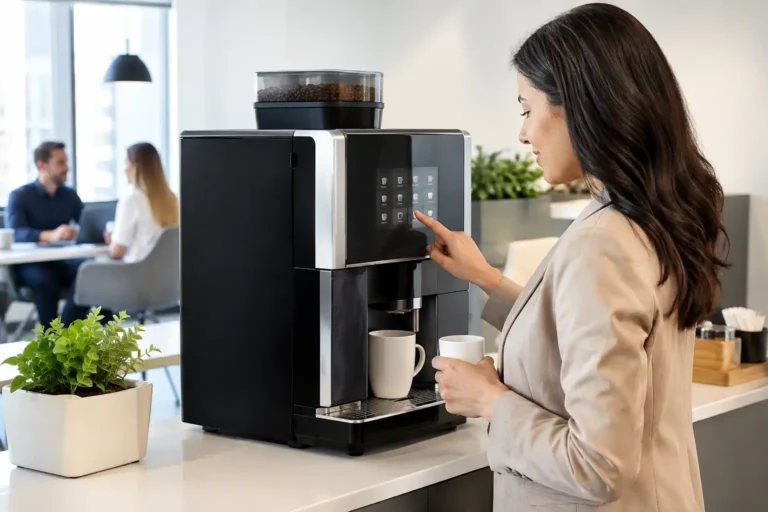
Look for equipment that makes the drinks your people will actually enjoy. Bean-to-cup Italian barista machines can prepare espresso, cappuccinos, café lattes, café Americanos, mochaccinos, hot chocolate, French vanilla drinks, and seasonal options at the touch of a button. That variety helps a coffee program feel like a genuine benefit rather than a basic pot of drip coffee.
Still, more options are not automatically better. If your team wants excellent coffee with minimal choices, a straightforward menu may encourage more consistent use. If you host clients or have a diverse staff with different preferences, broader drink selection can be well worth it.
Look Closely at Service, Not Just the Machine
Commercial espresso machines have moving parts, brewing systems, grinders, water lines, and milk-related components that need regular attention. In a workplace setting, maintenance is not an occasional nice-to-have. It protects drink quality and helps prevent downtime.
During an espresso lease review, ask how routine maintenance works in real life. Is cleaning included? How often is the machine serviced? Who responds when it needs repair, and how quickly can you expect help? Is there a replacement option if a repair takes longer than expected?
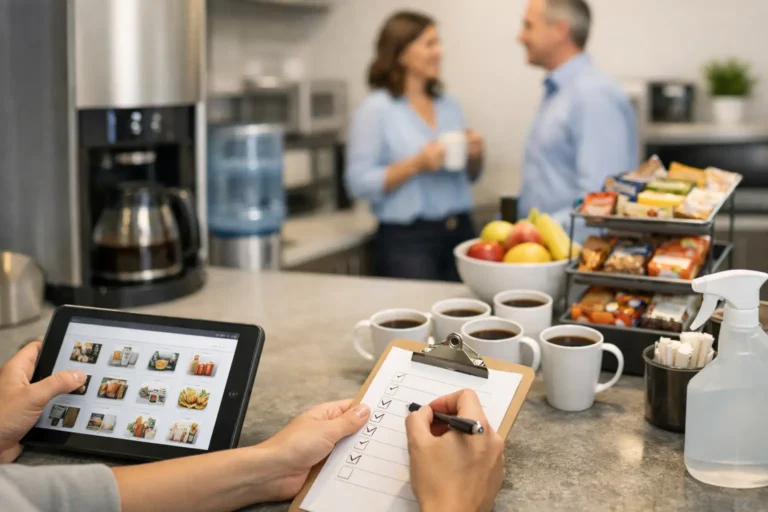
The strongest service arrangements are proactive. Weekly cleaning, restocking, and equipment checks can prevent small issues from becoming a frustrating interruption for the whole office. Fresh ingredients also matter. The best equipment cannot make a satisfying latte with stale beans or an empty hopper.
Local support is especially valuable here. A provider serving Canton businesses should understand that a coffee issue can affect employee morale, a customer meeting, or the rhythm of a busy office. You want a team that answers the phone and takes ownership of the problem, not a distant service number with an uncertain response time.
Clarify ingredients and restocking
Coffee programs are often judged by the machine, but employees remember what is in the cup. Find out whether the agreement includes fresh roasted coffee beans, chocolate, flavor options, cups, sweeteners, and other beverage supplies. Ask whether you can adjust your selections as employee preferences change.
Some workplaces need dairy-free choices, decaffeinated coffee, or environmentally friendly supplies. Others want seasonal beverages during colder months or a more premium menu for client visits. A customizable program gives you room to create a coffee station that fits your workplace rather than forcing your team into a one-size-fits-all setup.
Restocking should also be clearly defined. If supplies are included, determine how usage is tracked and what happens when a product runs out before the regular service visit. Convenience depends on details like these.
Compare Total Cost, Not the Monthly Payment
A monthly lease figure is easy to compare. The total cost of keeping a coffee program running is more useful. Equipment purchase prices, repair bills, filters, cleaning products, ingredients, employee time, and unexpected replacement needs can quickly change the math.
Ask for a clear explanation of what is included in the monthly arrangement and what may create an additional charge. There is no need for complicated financial language. A good provider should be able to explain the program in plain terms.
Review the agreement for contract length, renewal terms, early termination conditions, service-call coverage, and price changes for supplies. Longer terms can sometimes offer predictable pricing, but they should also fit your business plans. A growing company may need a larger machine or more beverage capacity next year. A smaller office may value flexibility more than a broad menu.
It also helps to consider the hidden cost of managing coffee internally. If an administrator spends time ordering beans, handling complaints, cleaning equipment, and calling for repairs, that time has value. A full-service solution can be the more practical choice even if its monthly number is not the lowest on paper.
Questions Worth Asking Before You Sign
Before selecting a provider, get direct answers to these four questions:
- What equipment, ingredients, maintenance, repairs, and restocking are included in the agreement?
- How quickly will someone respond if the machine stops working or needs attention?
- Can our drink menu, coffee selections, and supply choices be customized for our office?
- What happens if our employee count, usage level, or workplace needs change during the term?
The answers reveal whether you are leasing a machine or receiving a managed beverage service. Both can work, but they solve different problems. For a business that wants a hands-off experience, service coverage should carry as much weight as equipment specifications.
Choose a Program That Reflects Well on Your Business
Your coffee area says something about how you treat people. It does not need to be extravagant, but it should feel intentional. A clean, dependable espresso machine with fresh ingredients gives employees a reason to step away, recharge, and connect. It also lets you offer a café-style drink to a visitor without sending someone out for coffee.
For Canton businesses, the best arrangement is usually the one that combines quality with consistency. Your staff should be able to press a button and enjoy a good cappuccino or latte. Your office manager should not have to wonder who will clean the machine, refill the beans, or fix it when an error message appears.
Sip and Smile Gourmet Coffee approaches workplace coffee with that practical standard in mind: premium drinks, Italian-made equipment, and personal local support that keeps the program moving. When your lease review focuses on the complete experience instead of the equipment alone, you can choose a coffee solution that continues to make workdays better long after installation day.