Coffee Leasing Comparison for Canton Offices
A coffee leasing comparison for Canton offices: compare costs, service, drink quality, and flexibility before choosing a workplace coffee program today.
A breakroom coffee decision can look simple until the machine needs cleaning, the beans run low before a client meeting, or an employee asks why the new “premium” machine only makes one decent drink. A thoughtful coffee leasing comparison helps Canton businesses look beyond the monthly payment and choose a program that actually makes office life easier.
For most offices with 10 or more employees, the right question is not simply, “Should we lease a coffee machine?” It is, “What level of service, drink quality, and responsibility do we want our team to have?” A low monthly number may be appealing, but it can become expensive in time, frustration, and inconsistent employee experience if support is limited.
What a Coffee Leasing Comparison Should Include
Coffee equipment leasing is not one standard offer. Some providers lease only the machine. Others bundle equipment, ingredients, service, cleaning, and repairs into one workplace beverage program. Those models have very different costs and very different demands on your staff.
When comparing options, start by asking what is included in the agreement. Does the price cover installation? Are fresh beans, milk options, hot chocolate, and other beverage ingredients included or purchased separately? Who cleans the machine, restocks supplies, and responds when something stops working?
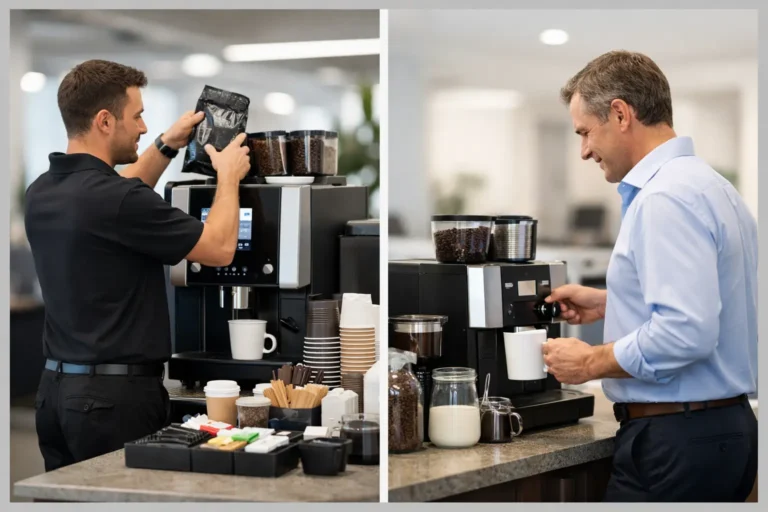
A machine-only lease can work for a small business with a staff member who is willing to manage coffee supplies and basic maintenance. For a busy office, medical practice, dealership, or professional services team, that arrangement often shifts more work inside the company than expected. The coffee machine is there, but someone still has to keep it running.
A full-service lease is designed for businesses that want a polished coffee experience without adding another recurring task to an office manager’s list. The provider handles the equipment and the operational details, while the business gets a dependable beverage station for employees and guests.
Compare Total Value, Not Just the Monthly Payment
The monthly equipment fee is easy to see. The hidden costs are usually where the real comparison begins.
Buying a commercial machine requires a larger upfront investment. Leasing can preserve cash flow and avoid putting a major equipment purchase on the books all at once. However, a lower lease payment does not automatically mean a lower total cost. If ingredients, filters, maintenance visits, repairs, and replacement parts are billed separately, the monthly expense can vary significantly.
It also helps to put a value on internal time. If your office administrator spends time ordering coffee, troubleshooting an error message, wiping down equipment, tracking supplies, and calling for repairs, those are real operating costs. They may not appear on an invoice, but they affect productivity.
Ask each provider for a clear explanation of what happens after installation. A useful proposal should show whether your payment includes equipment, routine service, emergency repairs, supply management, and the beverage ingredients your workplace wants. If something is excluded, you should know it before signing, not after the first service call.
Questions worth asking before you sign
You do not need to turn the process into a complicated procurement project. A few direct questions will reveal whether a lease is built around convenience or simply equipment financing:
- Who owns the machine, and what happens at the end of the term?
- What is included in routine maintenance, cleaning, and repairs?
- How quickly can the provider respond if the machine is down?
- Are coffee beans and beverage ingredients part of the program?
- Can we adjust the service level as our employee count changes?
- Are there delivery, installation, service-call, or early-termination fees?
The best answer is not always the one with the shortest contract or the lowest starting price. It is the arrangement that gives your business predictable costs and the right level of support.
Machine Quality Changes the Employee Experience
Not all commercial coffee machines create the same impression. A basic brewer may be enough for a team that only wants traditional drip coffee. But if your goal is to offer a workplace perk that people genuinely enjoy, beverage range matters.
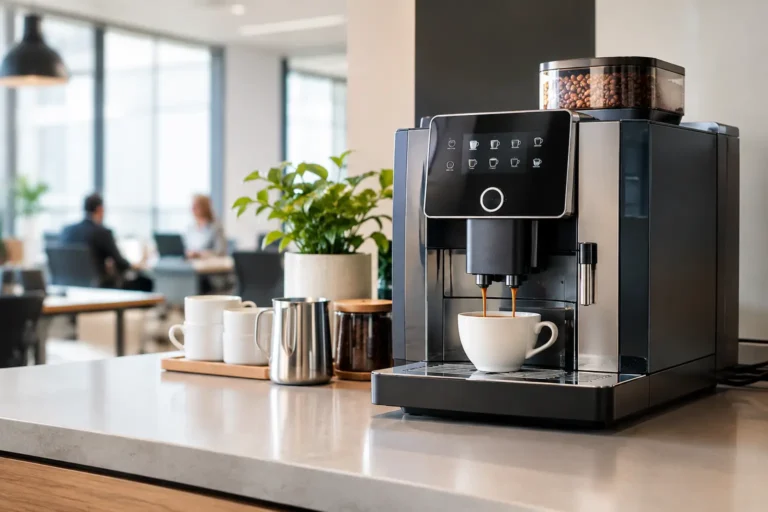
Bean-to-cup barista machines can prepare espresso-based drinks, cappuccinos, café lattes, café Americanos, mochaccinos, hot chocolate, French vanilla drinks, and seasonal selections at the touch of a button. That variety gives employees more choice without requiring a café counter, a trained barista, or a complicated morning routine.
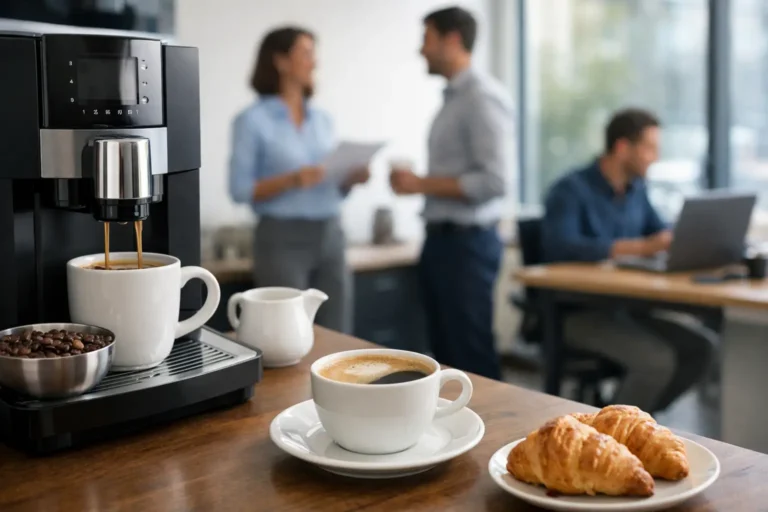
For client-facing businesses, the difference is even more visible. Offering a guest a fresh latte or cappuccino says more than offering a foam cup beside an aging pot of coffee. It supports a welcoming, professional atmosphere from the moment someone walks into your office.
When making a coffee leasing comparison, ask to see the equipment in action. Taste the coffee. See how quickly it makes drinks during a busy period. Look at the interface and determine whether it feels easy for employees and guests to use. A machine with a long drink menu is not helpful if the beverages are weak, slow, or difficult to prepare.
Service Is the Difference Between a Perk and a Problem
A commercial coffee machine receives regular use, which means it needs attention. Coffee oils, milk systems, water quality, grinder settings, and daily traffic all affect performance. Skipping routine care can lead to lower drink quality and more frequent breakdowns.
This is where a locally supported lease can be especially valuable. You want a provider that sees the machine as part of an ongoing service relationship, not as a box delivered at the beginning of a contract.
A quality service program should include regular cleaning and preventive maintenance, plus a clear process for repairs and restocking. Weekly support can be a strong fit for offices that want their beverage station to stay guest-ready without assigning the task to an employee. It also makes it easier to spot potential issues before the machine becomes unavailable.
For Canton-area businesses, working with a local provider can mean more personal communication and a more accountable response when needs change. Sip and Smile Gourmet Coffee, for example, pairs Italian-made barista equipment with fresh roasted beans, beverage supplies, ongoing maintenance, repairs, and restocking. That kind of all-in-one model is useful for employers who want to WOW staff and clients without managing a coffee program internally.
Choose a Lease That Can Grow With Your Office
The right lease should match your office now and remain practical if your needs change. A 12-person accounting firm may need a different setup than a 75-person manufacturing office, a medical waiting room, or a dealership showroom. Drink volume, visitor traffic, operating hours, and preferred beverages all affect the right machine and service schedule.
Before choosing, consider where the coffee station will be used most. Is it primarily an employee benefit? Is it part of the customer experience? Do you have multiple shifts? Would decaf, flavored beverages, dairy alternatives, or environmentally friendly cup and supply options matter to your team?
Flexibility matters because workplace coffee is not static. Hiring increases consumption. Seasonal menus can create excitement. A company that begins with one machine may eventually need a second location or a larger-capacity model. Your provider should be able to recommend changes based on actual usage rather than forcing you into an oversized or undersized arrangement from day one.
When Leasing Makes the Most Sense
Leasing is often the strongest choice when your business values convenience, wants premium drinks, and prefers a predictable monthly program over the responsibilities of ownership. It is especially practical when no one on your team has the time or desire to manage equipment maintenance and supply ordering.
Buying may make sense when a company has a very simple coffee setup, low usage, in-house maintenance capacity, and the budget to handle equipment repairs and replacement costs. But for many offices, the ownership savings can disappear once service interruptions and internal labor are factored in.
A full-service lease is less about getting a coffee machine and more about creating a better daily experience. The machine matters, but so does the fresh coffee, the beverage selection, the clean presentation, and the confidence that help is available when it is needed.
Before you compare another monthly quote, picture the 8:15 a.m. rush in your office. Choose the coffee program that leaves your people enjoying great drinks while someone else handles everything behind the counter.