Guide to Workplace Coffee Budgeting
A practical guide to workplace coffee budgeting for Canton businesses. Plan costs, avoid waste, and deliver better coffee without extra work.
That breakroom coffee line tells you more than you think. If employees are leaving the office for drinks, or clients are quietly passing on what you offer, your coffee setup is already affecting morale, productivity, and how your business comes across. A smart guide to workplace coffee budgeting starts there – not with the cheapest option, but with the right level of service, quality, and consistency for your team.
For most offices, coffee spending goes sideways for one of two reasons. Either the company underbudgets and ends up with a disappointing setup nobody really uses, or it overspends on equipment, supplies, and service that do not match actual demand. The goal is not to spend more. The goal is to budget with a clear picture of what your workplace needs and what it costs to keep it running well.
What workplace coffee is really costing you
A basic coffee budget usually starts with beans, cups, and creamers. That is fine for a small office with modest expectations. But once you have more than 10 employees, regular visitors, or a front-facing office environment, coffee becomes an experience issue as much as a supply issue.
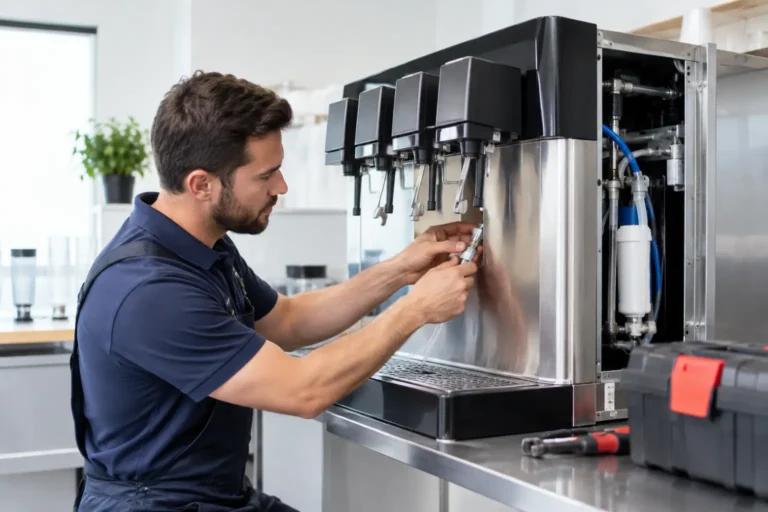
That means your budget needs to account for more than consumables. You also need to think about equipment, maintenance, cleaning, repairs, restocking time, and waste. If someone on your team is constantly tracking supplies, troubleshooting machines, or making last-minute warehouse runs, those labor costs belong in the budget too.
This is where many businesses underestimate what they are already spending. The machine may look affordable on paper, but if it needs frequent attention or only makes basic drip coffee while your staff heads out for lattes anyway, you are paying for a system that is not doing the job.
A practical guide to workplace coffee budgeting
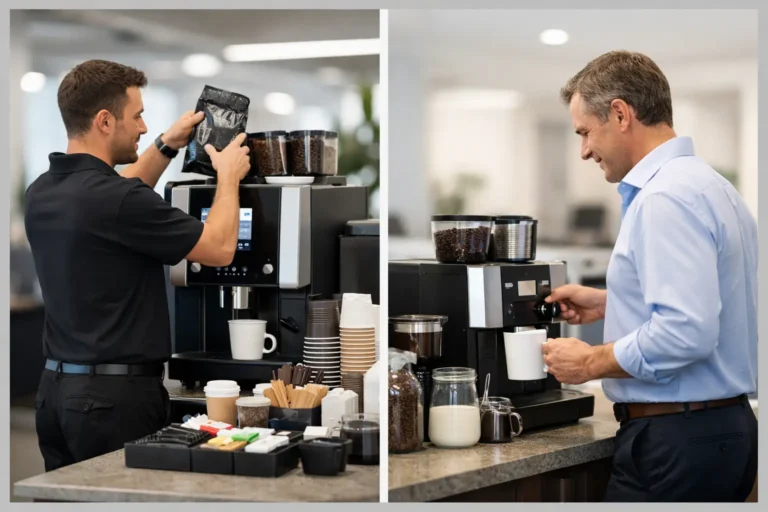
The easiest way to build a coffee budget is to work backward from use. Start with how many people you serve each day, what they actually drink, and how often the station is used by employees versus guests. A law office with frequent clients has different needs than a warehouse office where staff mostly want a fast morning cup.
Begin with daily volume. If 25 employees each average 1.5 drinks a day, that is roughly 38 beverages per workday. Over a typical month, that is a meaningful amount of coffee, milk-based ingredients, sweeteners, cups, and machine use. If your office also hosts visitors, interviews, or vendor meetings, add a buffer instead of treating those drinks as occasional surprises.
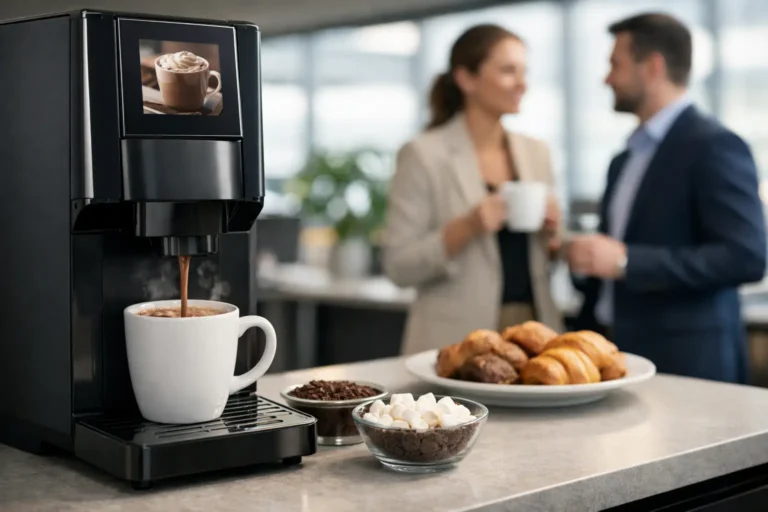
Then look at beverage expectations. Some workplaces are perfectly happy with quality brewed coffee. Others want espresso drinks, cappuccinos, café lattes, hot chocolate, and seasonal options. There is no universal right answer here. It depends on your culture, your client traffic, and how much value you place on a premium breakroom experience.
Once you know volume and drink type, you can build a much more realistic monthly estimate.
The four budget areas most offices miss
The first is equipment ownership. Buying a machine outright can seem like the budget-friendly move, especially if you are comparing it to a full-service monthly program. But ownership often shifts risk back to your business. Repairs, replacement parts, cleaning demands, and downtime all become your problem.
The second is service time. If your office manager is managing inventory, descaling machines, or calling around when something stops working, that work is not free. It may not show up on the coffee line item, but it absolutely affects your operating cost.
The third is inconsistency. Running out of supplies or dealing with a machine that works only some of the time creates friction fast. Employees notice. Clients notice too. A workplace coffee setup only helps culture and hospitality when it is dependable.
The fourth is underuse caused by poor quality. Cheap coffee often looks efficient until you realize your team is still spending money elsewhere and leaving the office for better drinks. If the program is not attractive enough to use, the value is low even if the invoice is small.
How to set a realistic monthly range
A useful guide to workplace coffee budgeting should help you decide what level of spend makes sense without pretending every office works the same way. A realistic monthly budget usually falls into one of three categories.
If your office only needs straightforward coffee for a small team, your budget can stay lean. In that case, the focus is on dependable supply, decent taste, and minimal hassle. You are not trying to create a café. You are trying to keep people happy and caffeinated without constant oversight.
If you have a mid-sized office, regular meetings, or a stronger focus on employee experience, the budget often needs to stretch beyond basic drip coffee. This is where beverage variety starts to matter. A machine that offers espresso-based drinks and specialty options can make a noticeable difference in how often the station gets used and how people feel about the workplace.
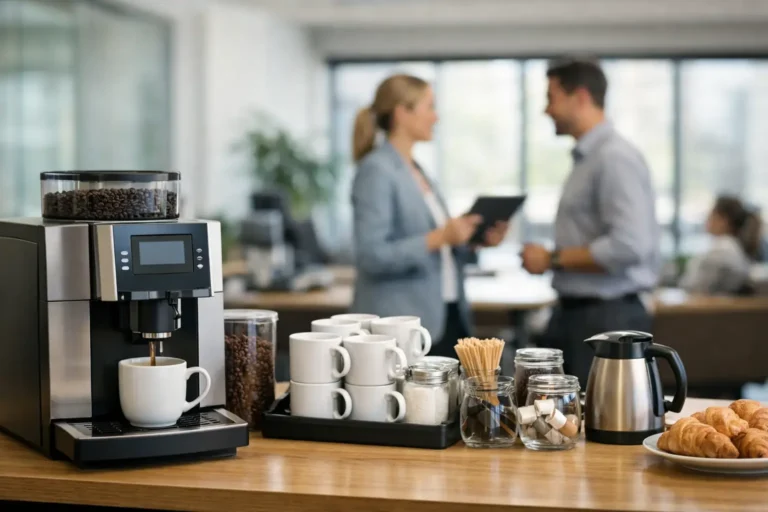
If your office welcomes clients, candidates, or partners on a regular basis, coffee becomes part of your presentation. That does not mean you need to overspend. It means you should treat the beverage station as part of the customer experience. A polished setup with quality drinks can do more for your image than another tray of bottled water ever will.
Budgeting for convenience versus budgeting for control
Some businesses prefer to piece together their own coffee program. That can work if someone on staff has the time and interest to manage it. You may have more direct control over ordering and product selection, but you also take on more moving parts.
Other businesses would rather hand the whole process off and keep the result, not the workload. That model tends to be easier to budget because costs are more predictable and service is built in. It also reduces those hidden interruptions that come with machine issues, supply shortages, and inconsistent upkeep.
There is a trade-off. A self-managed setup may look cheaper at first. A full-service model may cost more per month on paper. But when you compare labor, repairs, downtime, and quality, the gap is often smaller than expected.
How to avoid overspending without cutting quality
The simplest mistake is buying for image rather than actual use. If your team wants excellent coffee but only a few people drink specialty beverages, you may not need the most elaborate setup. On the other hand, if your office has grown and your breakroom still runs on a grocery-store machine, staying too small can cost you in satisfaction and convenience.
The fix is to match the setup to behavior. Review employee count, drink preferences, visitor volume, and the amount of time your team can realistically spend managing the station. Then choose a program that covers current demand with a little room to grow.
It also helps to look at standardization. Fewer product variations can reduce waste, but too little variety can make the station feel like an afterthought. A strong middle ground is a curated selection of high-use options that appeals to most people without creating inventory chaos.
Why premium coffee can still be a smart budget decision
Premium does not always mean extravagant. In many offices, premium simply means the coffee tastes good, the machine works, and the experience is easy. That combination tends to increase employee use, reduce coffee runs, and create a better impression for visitors.
For employers who care about retention, culture, and hospitality, coffee is one of the few workplace perks people interact with almost every day. That makes it more visible than many benefits that cost far more. When it is done well, it feels thoughtful. When it is done poorly, it feels cheap.
That is why many Canton-area businesses prefer a managed solution from a local partner like Sip and Smile Gourmet Coffee. Instead of budgeting separately for equipment, ingredients, maintenance, repairs, and restocking, they can plan around a dependable service that keeps the whole program running.
The budget question to ask before you decide
Before you settle on a number, ask one practical question: do you want to buy coffee supplies, or do you want to provide a consistently good coffee experience?
Those are not exactly the same thing. One focuses on product cost. The other focuses on workplace value. The best coffee budget usually lands in the middle – disciplined enough to avoid waste, thoughtful enough to support your team, and simple enough that it does not create more work than it solves.
If your coffee station is meant to help you welcome clients, keep employees on site, and make the workday better, budget for that outcome. The cheapest option rarely delivers it. The smartest one usually does.