Who Maintains Commercial Coffee Machines?
Who maintains commercial coffee machines? Learn who handles cleaning, repairs, and restocking so your office coffee program stays easy.
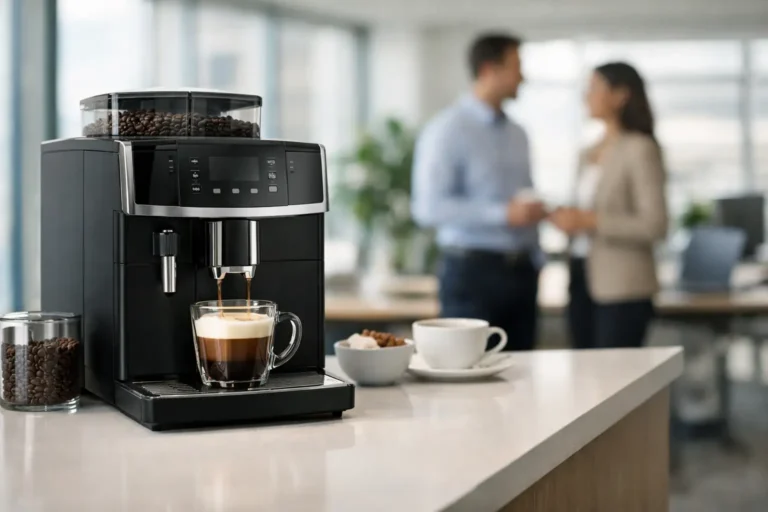
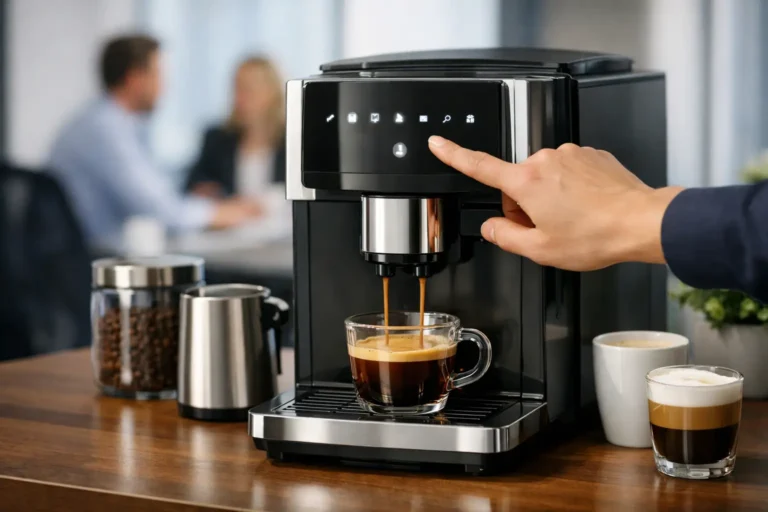
That question usually comes up right after the machine arrives, the first drinks impress the office, and someone realizes this is not a countertop brewer from the supply closet. If you are asking who maintains commercial coffee machines, the short answer is this: it depends on how your coffee program is set up. In some workplaces, staff members handle basic daily care while a service provider manages deeper cleaning, repairs, and supply restocking. In others, the coffee service company handles nearly everything.
For most offices, that second option is the one that actually works. A premium coffee setup looks great in the breakroom or lobby, but it only stays that way when someone is responsible for keeping it clean, stocked, calibrated, and running properly. If no one clearly owns that job, maintenance quickly turns into a shared task that nobody really has time for.
Who maintains commercial coffee machines in an office?
There is no single answer for every business because commercial coffee equipment comes with different service models. If a company buys a machine outright, maintenance may fall to an office manager, facilities team, or whoever is willing to take on one more responsibility. That often includes wiping down surfaces, emptying drip trays, refilling ingredients, and calling for repairs when something stops working.
The challenge is that commercial espresso and bean-to-cup systems are not simple appliances. They have brew groups, milk systems, water connections, grinders, internal lines, and programmed settings that all affect drink quality. A machine can still power on and technically work while producing weak espresso, inconsistent foam, slow dispense times, or error messages that frustrate employees and guests.
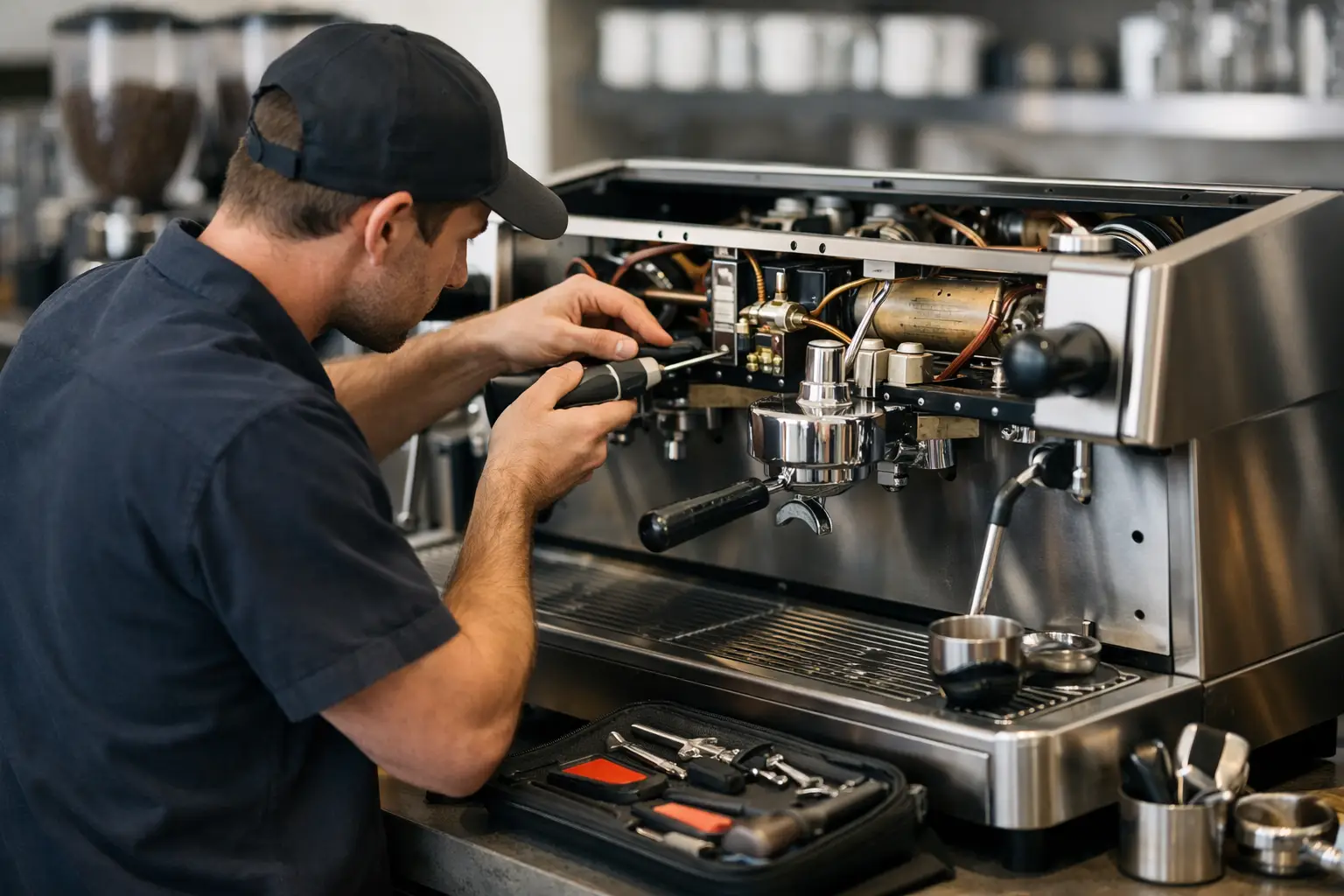
That is why many businesses rely on a workplace coffee service company instead. In that arrangement, the provider usually installs the equipment, trains the office on basic use, and then takes responsibility for ongoing machine support. That support often includes scheduled cleaning, preventive maintenance, repairs, and ingredient replenishment. For busy offices, that is the difference between offering café-style drinks confidently and babysitting a machine between meetings.
What maintenance actually includes
When people hear maintenance, they sometimes think it only means fixing a machine after it breaks. In reality, the day-to-day care is what keeps costly service calls and drink-quality problems from happening in the first place.
A well-maintained commercial coffee machine needs regular cleaning inside and out. That includes removing coffee residue, cleaning milk components if the system uses fresh milk, emptying waste bins, rinsing internal parts, and managing mineral buildup from water. It also means checking that grinders are working correctly, drink settings are dialed in, and the machine is dispensing at the right temperature and volume.
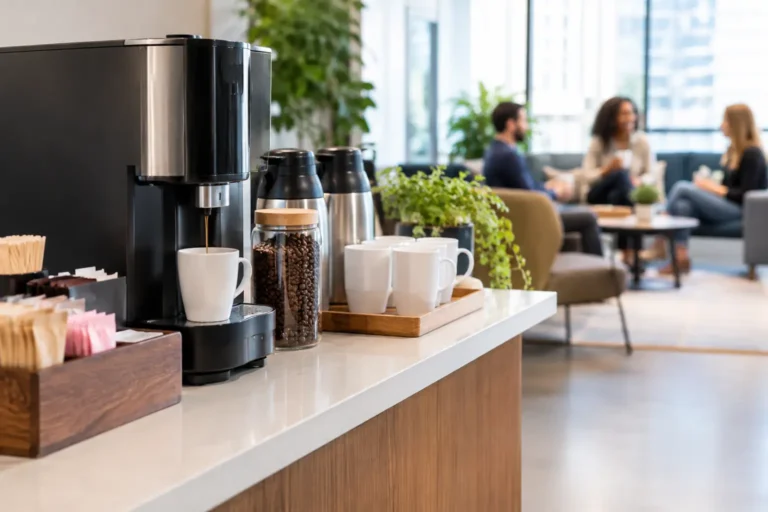
Restocking is part of maintenance too, even if people do not always label it that way. A premium beverage station does not feel premium when the beans are stale, the chocolate powder is empty, the cups are gone, or the French vanilla ran out on Tuesday. From the employee experience side, reliability includes both machine performance and product availability.
Then there is preventive service. Commercial units benefit from routine inspections before something fails. Gaskets wear down. Brew parts need replacement. Sensors get dirty. Water filtration affects both taste and machine health. Catching those issues early is less disruptive than waiting for a no-dispense error when clients are in the office.
The difference between daily care and professional service
Most offices can manage very light upkeep if the machine is designed for convenience. Wiping the touch screen, emptying the drip tray, and reporting a problem when it appears are reasonable tasks. Asking your staff to dismantle internal components, troubleshoot grinder issues, descale on schedule, or figure out why milk foam quality changed is another story.
That is where many companies run into trouble. The machine was supposed to be a workplace perk, but now someone in HR or operations is searching for a manual, watching videos, and hoping they do not make the issue worse. That hidden time cost matters, especially when the original goal was to make the office more welcoming, not more complicated.
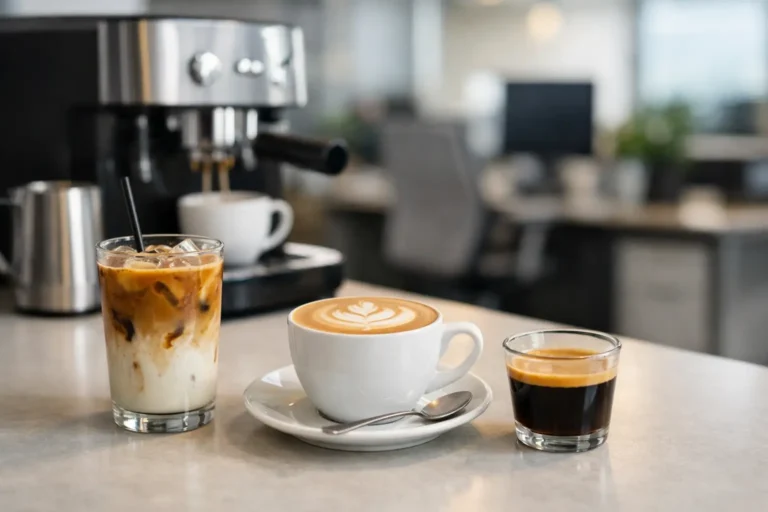
Professional service makes more sense when the machine is central to employee satisfaction or client hospitality. If your office wants espresso drinks, cappuccinos, café lattes, café Americanos, hot chocolate, and seasonal beverages at the touch of a button, the support behind the machine should match the quality of the drinks.
Who should be responsible inside your business?
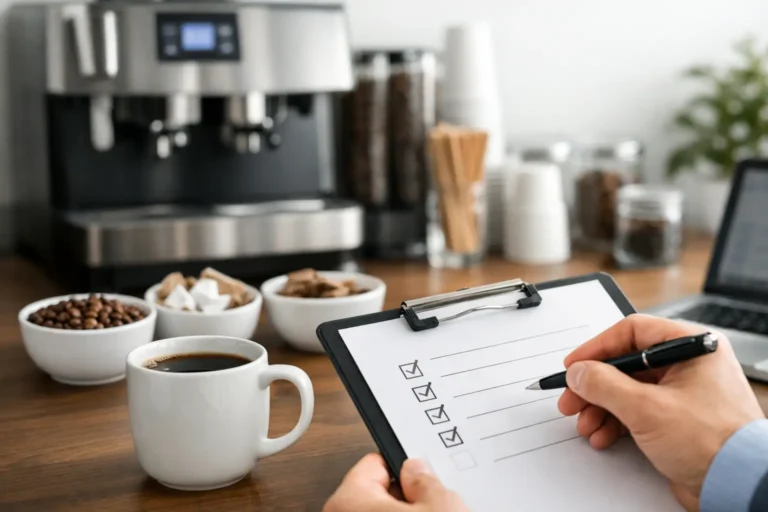
Even with full-service support, your company still needs a clear point person. Usually that is an office manager, administrator, HR lead, or operations manager. Their job is not to repair the machine. Their job is to have one reliable service contact, approve the setup, and make sure any issue gets reported quickly.
That arrangement works well because it keeps accountability simple. Your team does not need to become coffee technicians. They just need an easy path to service when something needs attention. The provider handles the technical side, and your office keeps the convenience.
If you own your machine and do not have a service agreement, responsibility tends to get blurry. Someone may be willing to refill hoppers or wipe the machine, but fewer people want to manage recurring cleaning protocols or emergency repair logistics. Over time, that usually leads to inconsistent upkeep, more downtime, and drinks that stop matching the premium experience you wanted in the first place.
Signs your current maintenance setup is not enough
A commercial coffee machine does not have to fail completely to signal a service problem. Sometimes the warning signs are smaller and easier to miss.
If drinks start tasting inconsistent, if the machine seems slower than usual, if employees mention it is frequently out of ingredients, or if your front office keeps apologizing for equipment issues, maintenance is already affecting the experience. The same is true if no one is quite sure who last cleaned it properly or when it was last serviced.
One of the biggest red flags is when the machine becomes a recurring internal task. If your staff is spending time troubleshooting, shopping for supplies, coordinating repair visits, or trying to maintain a premium beverage station between their actual responsibilities, the coffee program is no longer doing its job. It is creating friction instead of removing it.
Why full-service maintenance is often the better business decision
For most companies with more than a handful of employees, outsourcing machine care is less about luxury and more about practicality. It protects uptime, keeps drink quality consistent, and frees your team from managing equipment they were never hired to maintain.
It also creates a better impression. Employees notice when the coffee station works well. Clients notice when they are offered a cappuccino or café latte from a clean, professional machine instead of a basic pot on a warmer. That experience reflects on your business, which means maintenance is not just an equipment issue. It is part of workplace culture and hospitality.
There is also a cost trade-off to consider. Buying equipment may seem straightforward, but ownership usually brings service costs, supply management, cleaning responsibilities, and replacement planning. A full-service model shifts those operational details to a provider whose job is to keep the program running. For many offices, that is the more predictable and lower-stress option.
Companies in the Canton area often prefer that hands-off approach because it gives them the benefits of a high-end coffee program without adding another thing to manage. That is exactly why providers like Sip and Smile Gourmet Coffee build service around installation, weekly care, repairs, and restocking instead of just dropping off a machine and hoping for the best.
The better question to ask
Instead of only asking who maintains commercial coffee machines, ask who is supposed to own the result. If the goal is a polished, reliable beverage experience for your staff and visitors, maintenance cannot be an afterthought.
The best setup is the one that keeps the machine clean, stocked, and working without turning your office team into part-time service technicians. When your coffee program is built that way, the machine stays where it belongs – as a benefit your people enjoy, not a task your team has to manage.