Office Coffee Service for Businesses That Works
Office coffee service for businesses should be easy, reliable, and premium. See what to look for to keep staff happy and operations simple.
That sad pot of burnt breakroom coffee says more about a workplace than most leaders realize. Employees notice it. Clients notice it. And the person stuck ordering supplies, cleaning machines, and dealing with service calls definitely notices it. A strong office coffee service for businesses fixes more than the morning caffeine routine – it improves daily experience without adding another task to your team’s plate.
For many companies, coffee started as a basic necessity. Put a drip machine in the corner, buy whatever grounds are on sale, and call it done. That worked when expectations were lower. It does not work as well now, especially in offices trying to improve employee satisfaction, support return-to-office efforts, or make a better impression on visitors.
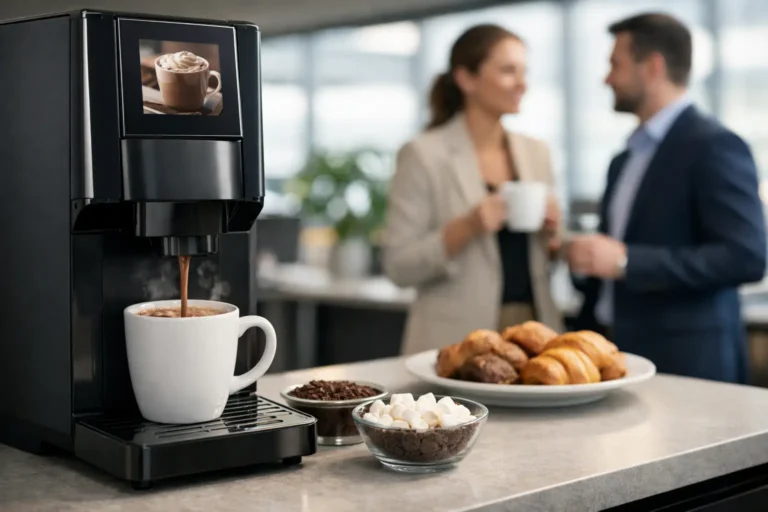
People are used to better coffee. They want options. Some want espresso. Some want cappuccino or a café latte. Others want hot chocolate, French vanilla, or a seasonal drink that feels a little more thoughtful than generic breakroom fare. When your workplace can offer café-style beverages without creating a management headache, the value goes beyond coffee.
Why office coffee service for businesses matters more now
A quality beverage setup sends a quiet but clear message: this company pays attention to the details. That matters internally and externally.
Inside the office, coffee becomes part of the daily routine that shapes morale. It is one of those small perks that people use constantly, which makes it more visible than many larger benefits. A polished beverage station can help employees feel taken care of, encourage quick informal conversations, and make the office more inviting.
For client-facing businesses, the effect is just as real. If visitors are welcomed with a fresh cappuccino or café Americano instead of a weak cup from an aging pot, the experience feels more professional. It reflects well on your brand without requiring a big operational change.
The key is making sure the service matches the expectation. Premium coffee only feels like a benefit when it is reliable. If the machine is down, ingredients run out, or no one knows who is supposed to clean it, the perk turns into an annoyance.
What businesses actually need from a coffee service
Most offices are not looking to become mini coffee shops. They want a service that feels premium but runs in the background.
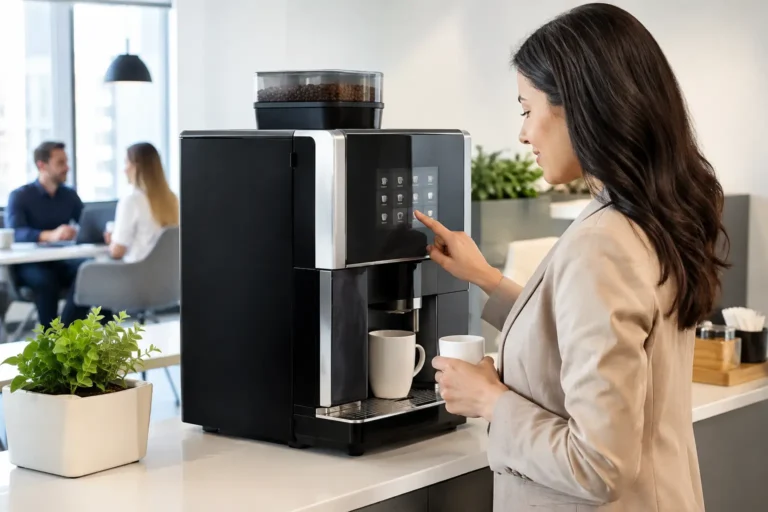
That usually means a few things. First, the equipment needs to be easy to use. Employees should be able to walk up, press a button, and get a quality drink in seconds. If a machine is too complicated, people avoid it or use it incorrectly.
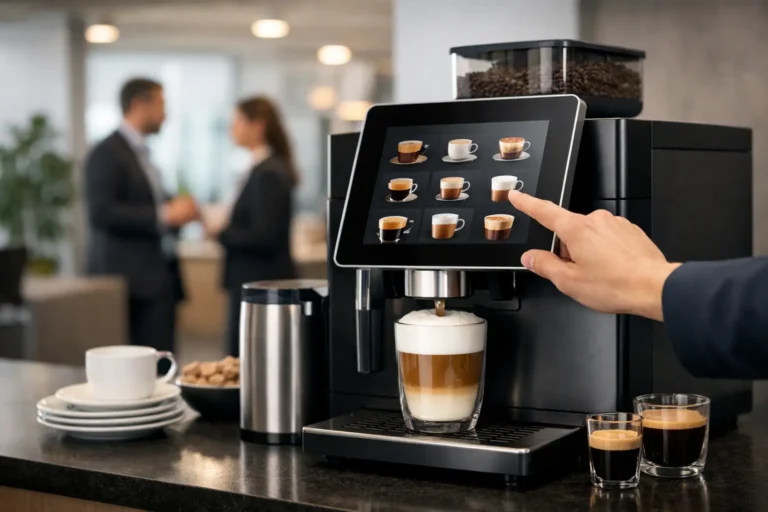
Second, variety matters. Not every office wants the same menu, and not every employee drinks the same thing. A better office coffee service for businesses should go beyond basic brewed coffee and give companies room to offer espresso-based drinks, hot chocolate, flavored options, and seasonal choices when appropriate.
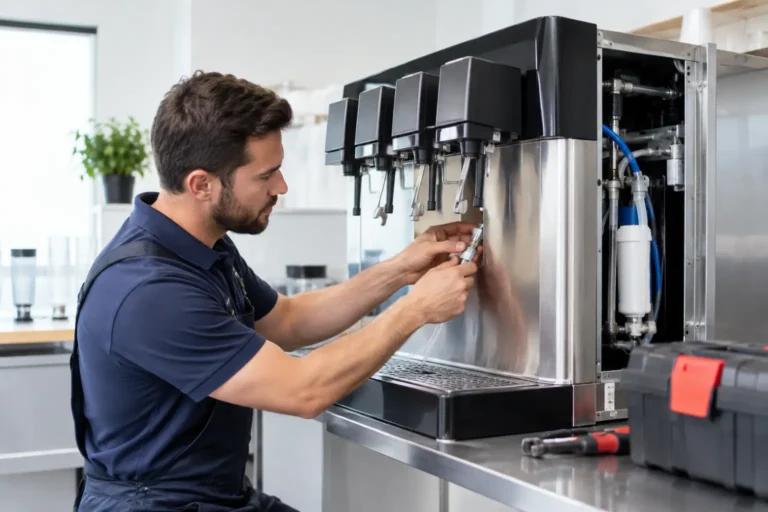
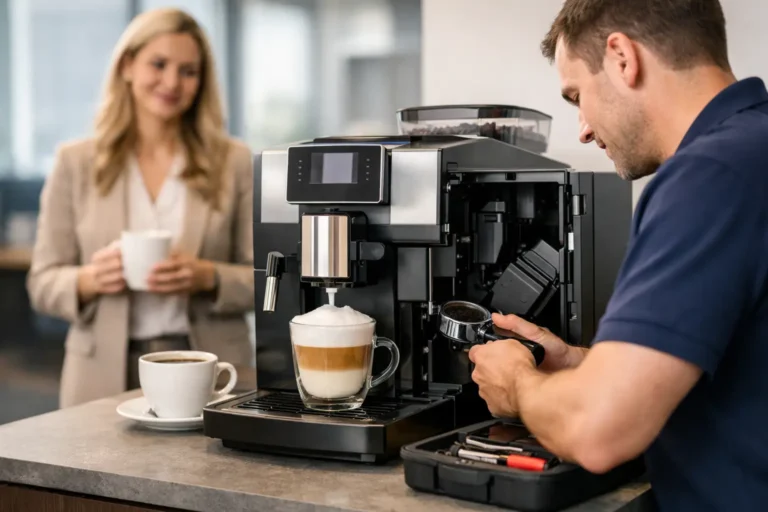
Third, support is where the real difference shows up. Anyone can place a machine in a breakroom. The real question is who handles the rest. When a provider installs the equipment, supplies the ingredients, performs regular cleaning, manages repairs, and keeps the station stocked, your internal team stays focused on work instead of beverage logistics.
That service piece is often what separates a smart investment from a frustrating one.
The biggest mistake companies make
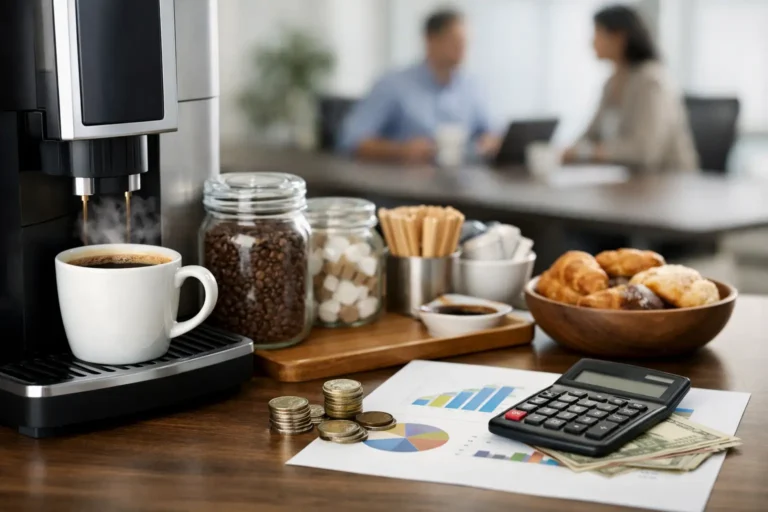
The most common mistake is evaluating office coffee strictly by product cost. On paper, a lower-end setup can look cheaper. In practice, it often creates hidden costs that are easy to overlook.
Someone has to compare machines, place orders, track inventory, wipe down equipment, troubleshoot issues, and call for service when something stops working. If supplies run out midweek or the machine starts producing inconsistent drinks, the office manager becomes the coffee program manager whether that was the plan or not.
Then there is the equipment itself. Buying a commercial machine outright may seem appealing at first, but ownership shifts the risk to your business. Repairs, replacement decisions, and maintenance schedules become your problem. If your needs change, you are still tied to that equipment.
For many small to mid-sized businesses, a fully managed service model makes more sense because it removes those friction points. You get the benefit without taking on the burden.
What to look for in an office coffee provider
If you are comparing options, start with the day-to-day experience rather than the sales pitch. Ask how the service actually works once the machine is in your office.
A dependable provider should make setup simple. Installation should be handled for you. Training should be minimal because the equipment should be user-friendly. Ongoing restocking should happen on a predictable schedule, and there should be a clear plan for cleaning and maintenance.
Machine quality also matters. Businesses that want to offer a more elevated experience should pay attention to whether the provider uses true commercial-grade equipment designed for frequent use. Italian-made barista machines, for example, can deliver the kind of café-style beverages employees and clients actually get excited about, especially when paired with quality beans and beverage ingredients.
Customization is another sign of a stronger partner. A law office may want a polished client beverage station. A manufacturing office may care more about speed, volume, and reliability. A medical or professional office may want a mix of coffeehouse drinks and non-coffee options to serve a broader group. The right service should fit your workplace instead of forcing a one-size-fits-all package.
And if sustainability matters to your organization, ask about environmentally friendly products and supply choices. That may not be the first decision point, but it can be a meaningful bonus when the service aligns with your broader values.
The case for a hands-off coffee program
The best coffee programs are almost invisible to the people managing them. That is a good thing.
A hands-off model works because it removes the small recurring tasks that tend to pile up. No one on your staff should be remembering to order cups, clean internal machine parts, or figure out why a drink dispenser is acting up. Those tasks seem minor until they start interrupting the workday over and over.
That is why many Canton-area businesses prefer a full-service approach. When one provider handles equipment, ingredients, service calls, weekly maintenance, and restocking, the program stays consistent. You get a better result with less internal effort.
This is also where local service can make a difference. Working with a nearby provider often means more responsive support, more accountability, and a more personal understanding of what local businesses need. If something needs attention, you want a partner who treats your office like an ongoing relationship, not just an account number.
Sip and Smile Gourmet Coffee is built around that model, which is why businesses that want premium drinks without the hassle tend to see the value quickly.
When a premium coffee setup makes sense
Not every business needs the same level of beverage service, and that is worth saying plainly. If you have a very small team with limited office traffic, a simple setup may be enough. If your office has more than 10 employees, regular visitors, or a strong focus on employee experience, the equation usually changes.
A premium setup tends to make the most sense when you want to improve workplace culture, create a stronger first impression, or offer a meaningful perk without adding one more internal responsibility. It is especially useful in offices where hospitality matters and where leadership wants amenities that feel polished, not patched together.
The return is not always measured in coffee sales or direct dollars. Sometimes it shows up in retention, office satisfaction, smoother client interactions, and fewer headaches for administrators. That makes it a practical decision, not just a nice extra.
A better question to ask before you choose
Instead of asking, “What is the cheapest way to serve coffee?” ask, “What kind of experience do we want this office to deliver?”
That question leads to better decisions. It shifts the focus from basic supply purchasing to employee experience, client perception, and operational ease. It helps you choose a solution that actually fits the way your business runs.
If your goal is to offer quality drinks, keep your breakroom looking sharp, and avoid managing equipment and inventory yourself, then a full-service coffee program is not an indulgence. It is a practical workplace upgrade.
Good office coffee should feel easy. When the right machine is installed, the right beverages are stocked, and the right support is built in, your team gets a better day and your business looks more put together. That is a small change people notice every single morning.