What Drinks Should Offices Offer?
Wondering what drinks should offices offer? Build a beverage mix that boosts morale, impresses clients, and stays easy to manage daily.
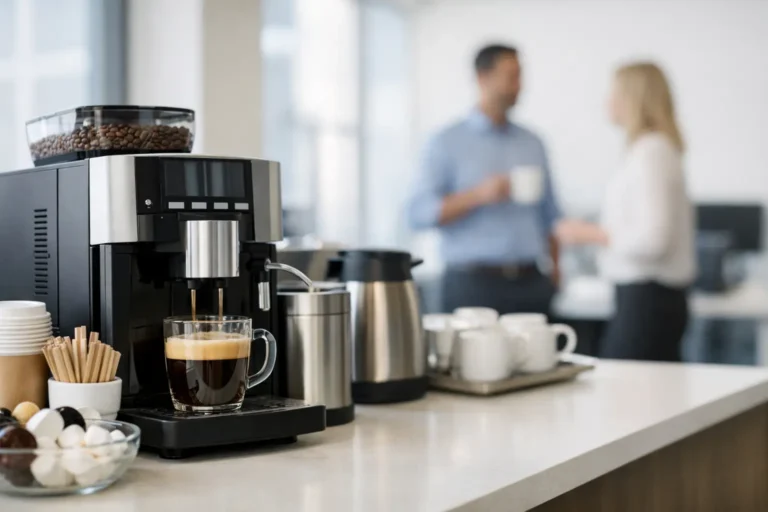
The quickest way to tell whether an office beverage setup is working is simple: watch what happens at 9:15 a.m. If employees are leaving the building for coffee, settling for weak breakroom pots, or apologizing to clients for limited options, the drink program is not doing its job. For employers asking what drinks should offices offer, the best answer is not “more.” It is the right mix of quality, variety, and convenience.
A strong office beverage program should make the workday better without creating more work for your team. It should satisfy regular coffee drinkers, give non-coffee drinkers something they actually want, and present your company well when visitors walk in. That balance matters more than trying to stock every possible drink.
What drinks should offices offer to meet real demand?
Most offices do best when they think in layers instead of one-size-fits-all choices. You need a dependable core, a few premium options, and enough variety that people feel considered. When a drink station only offers basic drip coffee and bottled water, it checks a box. It does not create much enthusiasm.
The core usually starts with coffee, because that is still the daily driver in most workplaces. But even here, expectations have changed. Employees are used to café-quality drinks outside the office, and many now expect a similar experience at work. That does not mean you need a staffed coffee bar. It means the coffee should taste good, be consistent, and offer more than one style.
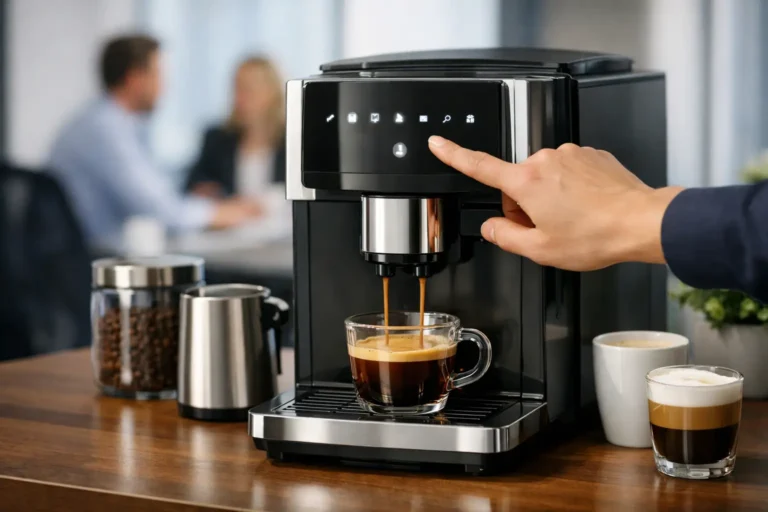
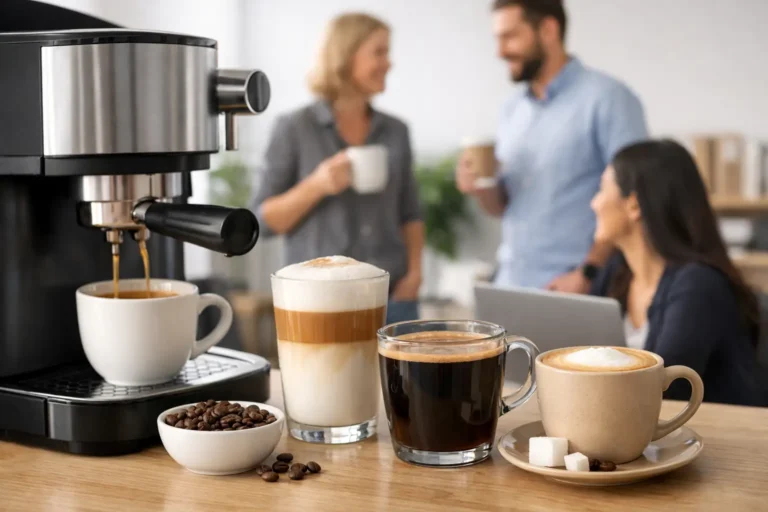
Espresso-based drinks have become especially valuable in offices because they satisfy different preferences without needing a complicated setup. One machine can serve an Americano drinker, a cappuccino fan, and the employee who wants a latte in the afternoon instead of another plain cup of coffee. That kind of range keeps the beverage station useful all day, not just during the first morning rush.
Coffee should still be the centerpiece
If you are deciding what drinks should offices offer, coffee remains the anchor because it gets used the most and carries the most visibility. People notice when it is good, and they definitely notice when it is not.
Basic brewed coffee still has a place, especially in larger teams where speed matters. But relying on a single pot of regular coffee can feel dated fast. A better setup usually includes traditional coffee alongside specialty options like espresso, café lattes, cappuccinos, and café Americanos. That gives employees a reason to stay in the office for their break instead of making a coffee run.
There is also a morale factor here that decision-makers sometimes underestimate. Premium coffee is not just caffeine. It signals that the company pays attention to small daily details that shape the employee experience. When people can grab a quality drink without leaving the building, the day feels a little easier.
For client-facing businesses, coffee does double duty. It helps your team, and it says something about your standards. Offering a fresh cappuccino or latte in a reception area feels more polished than pointing a guest toward a lukewarm pot that has been sitting since 8:00.
Offices should offer more than coffee
A smart beverage program does not assume every employee wants coffee. Some avoid it completely. Others want an occasional alternative in the afternoon. If your selection stops at coffee, you are missing part of your audience.
Hot chocolate is one of the easiest wins in an office because it serves multiple groups at once. It works for non-coffee drinkers, gives employees a comfort drink during colder months, and adds a welcoming option for guests. French vanilla and similar flavored drinks also do well because they feel like a treat without asking people to leave the office for one.
Seasonal beverages can make an office setup feel fresh without turning it into a novelty. Limited-time drink options break routine and create a small perk employees genuinely notice. The key is keeping those seasonal choices easy to access and easy to maintain. If they are complicated to prepare, they usually become more trouble than they are worth.
Tea can also be worthwhile, depending on your team. In some offices, it is essential. In others, it gets ignored. That is where usage patterns matter. The best beverage menu is not the broadest one. It is the one people actually use.
The best office drink selection balances quality and simplicity
There is a difference between offering choices and creating clutter. A beverage station with too many low-quality options can feel just as disappointing as one with too few. Offices get better results when they narrow in on drinks people want repeatedly and deliver those well.
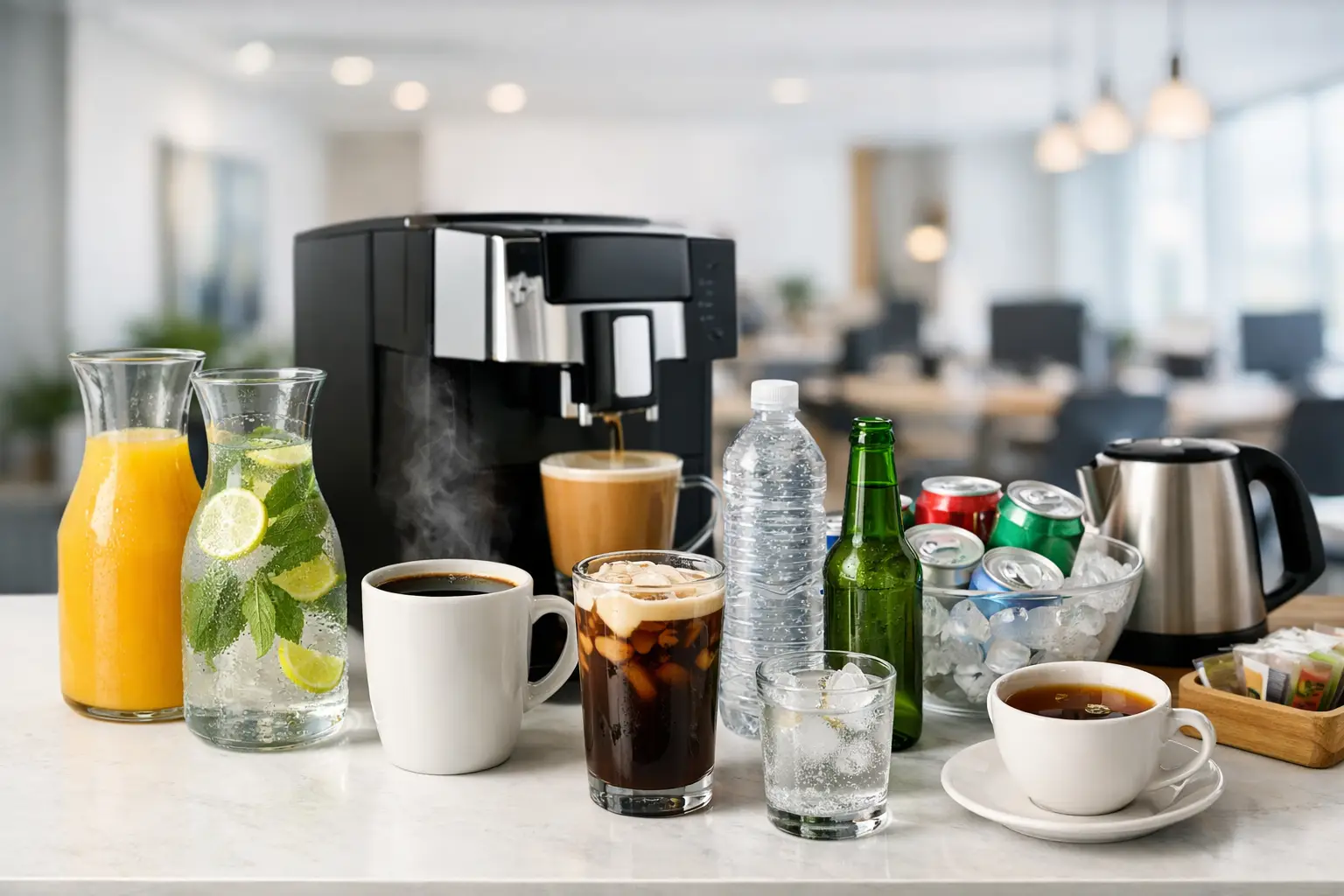
That usually means keeping a short list of strong performers: high-quality coffee, espresso-based drinks, hot chocolate, one or two flavored options, and possibly tea or cold refreshment depending on the workplace. Once that foundation is right, the whole setup feels more premium.
This is also where equipment matters. Many offices want better drinks, but they do not want the burden of running a mini café. That is reasonable. If the machine is hard to use, inconsistent, or constantly needs attention, the program loses value fast. Convenience is part of quality in a workplace setting.
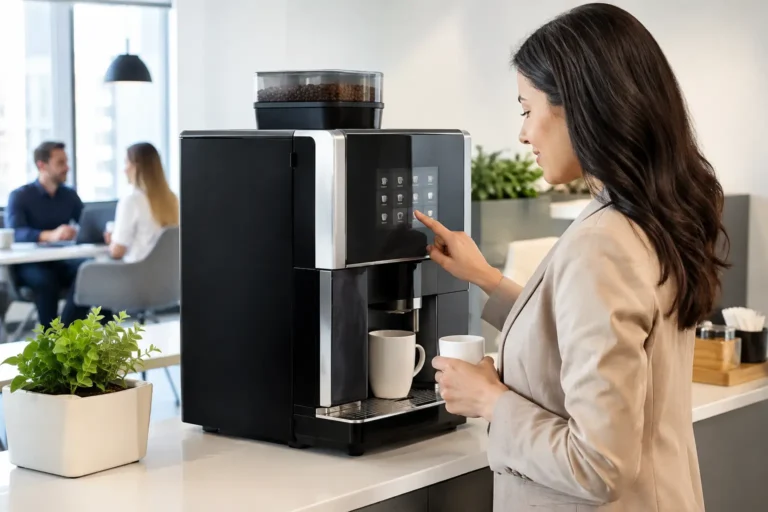
A touch-button system that delivers café-style drinks quickly is often the sweet spot. Employees get variety. Management gets consistency. No one on your staff has to become the office beverage technician.
Think about who uses the drinks and when
Not every office has the same beverage needs. A law office greeting clients all day may prioritize presentation. A manufacturing office may care more about speed and volume. A medical practice may need a setup that works equally well for staff and waiting visitors. The right answer depends on the people using it.
For employee-heavy environments, daily repeat use matters most. The drinks should be fast, familiar, and good enough that people choose them every day. For client-facing spaces, a smaller menu can still work if it feels elevated and reliable.
Timing matters too. Morning demand is usually coffee-driven, but afternoon demand often shifts toward lighter or more indulgent drinks. That is one reason cappuccinos, mochaccinos, hot chocolate, and flavored beverages perform so well in office settings. They expand the station beyond pure caffeine delivery.
Cost matters, but so does waste
Some companies hesitate to upgrade drinks because they focus on the price per cup. That is understandable, but it is only part of the math. If employees are leaving for coffee runs, productivity slips. If clients are underwhelmed by your reception experience, that carries a cost too. If you buy cheap supplies that nobody enjoys, much of it goes to waste.
The better question is whether the beverage program earns its place. In many offices, it does. It supports retention, improves the day-to-day employee experience, and gives guests a better impression of your business.
That said, premium does not have to mean complicated or wasteful. The strongest setups are usually managed systems with portion control, dependable service, and a menu tailored to real demand. That keeps quality high and guesswork low.
A beverage program should not become one more task
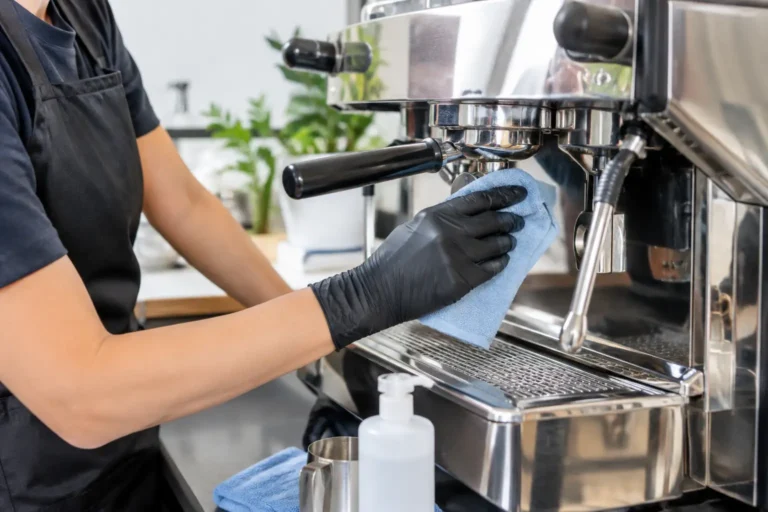
This is where many offices get stuck. They know better drinks would help, but they do not want to handle ordering, cleaning, repairs, and restocking. That hesitation makes sense. A beverage program stops being a perk when it becomes another thing the office manager has to chase.
The best office drink solution is one that feels polished for employees and clients while staying almost effortless behind the scenes. That is why full-service support matters. When installation, supply delivery, maintenance, and repairs are handled for you, offering better drinks becomes much easier to justify.
For businesses in the Canton area, that is exactly where Sip and Smile Gourmet Coffee fits. You can offer café-style drinks that genuinely impress people without buying equipment or assigning someone in-house to keep it all running.
So what should an office actually offer?
For most workplaces, the ideal beverage lineup includes quality coffee as the base, espresso-based drinks for variety, and a few non-coffee favorites like hot chocolate and flavored specialty drinks. If your team includes regular tea drinkers, tea belongs in the mix. If your office hosts visitors often, presentation should carry extra weight.
The goal is not to build the biggest menu. It is to create a beverage experience that feels thoughtful, easy, and worth using every day. When the drinks are genuinely good and the service is handled properly, the office notices.
A better beverage station will not solve every culture problem, but it can make your workplace feel more welcoming, more polished, and a lot more appreciated – one cup at a time.