How to Choose Workplace Espresso Equipment
Learn how to choose workplace espresso equipment that fits your team, budget, and service needs without adding daily work or ownership costs.
That moment when a client asks for a latte instead of drip coffee tells you a lot about your breakroom. It is also usually the moment companies start asking how to choose workplace espresso equipment without creating one more thing to manage. The right setup should make your office feel more polished, keep employees happy, and stay easy to run week after week.
For most businesses, this decision is not really about the machine alone. It is about matching drink quality, daily demand, upkeep, and service support to the way your workplace actually operates. A beautiful espresso machine that nobody knows how to clean or restock will wear out its welcome fast. A simpler system with dependable support often delivers more value than a feature-heavy machine that turns into an office project.
Start with the experience you want to create
Before comparing models, think about what the coffee station needs to do for your business. Some offices want a reliable employee perk that makes mornings better and helps with retention. Others need a client-facing setup that feels more like hospitality. In many workplaces, it is both.
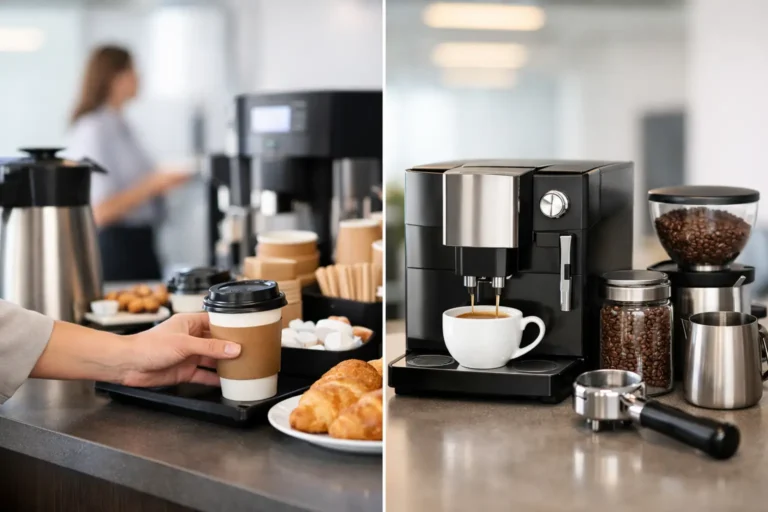
That distinction matters because it changes what kind of equipment makes sense. If your goal is quick, café-style drinks with minimal effort, a bean-to-cup espresso system is often the best fit. If your office wants a more hands-on barista setup, you will need more training, more cleaning, and usually more staff involvement. That can work in certain environments, but most offices are not looking to turn the front desk into a coffee bar.
The better question is simple: do you want to serve premium drinks, or do you want to manage a machine? Most decision-makers prefer the first option.
How to choose workplace espresso equipment for real daily use
The smartest way to evaluate equipment is to look at your normal day, not your ideal one. How many people will use it? When are the rush periods? Will guests use it too? Is someone in-house expected to handle supplies and cleaning, or do you want that taken off your plate?
A machine can look perfect in a showroom and still miss the mark in your office. Capacity matters. A small unit may be fine for a team of 12, but not for a company with 60 employees hitting the breakroom between 8:00 and 9:00 a.m. at the same time. Speed matters too. If drink preparation slows people down or causes lines, usage drops and the benefit fades.
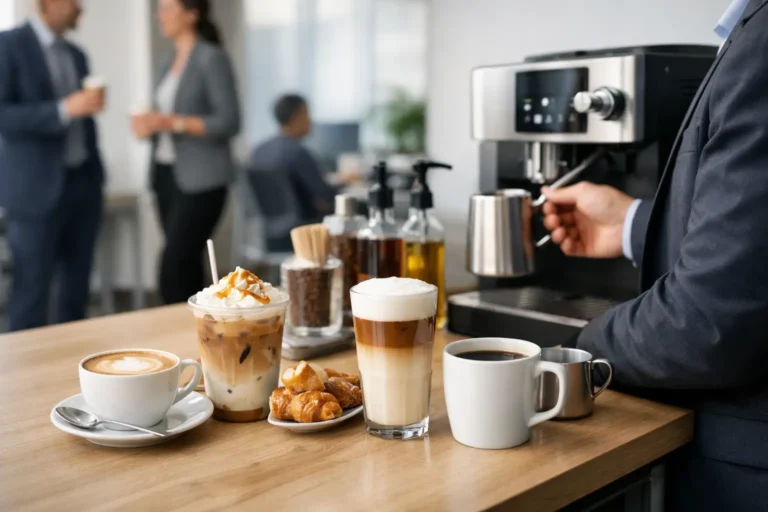
You also want to think beyond espresso shots alone. In many offices, the most popular drinks are cappuccinos, lattes, Americanos, hot chocolate, and flavored beverages. Equipment that can handle a wider menu with one-touch simplicity tends to get used more often. It also serves a broader range of tastes, which is important when the coffee station is meant to impress both employees and visitors.
Convenience usually beats complexity
There is a reason one-touch commercial machines have become so popular in workplace settings. They deliver consistency without asking employees to learn espresso technique. That matters more than people think.
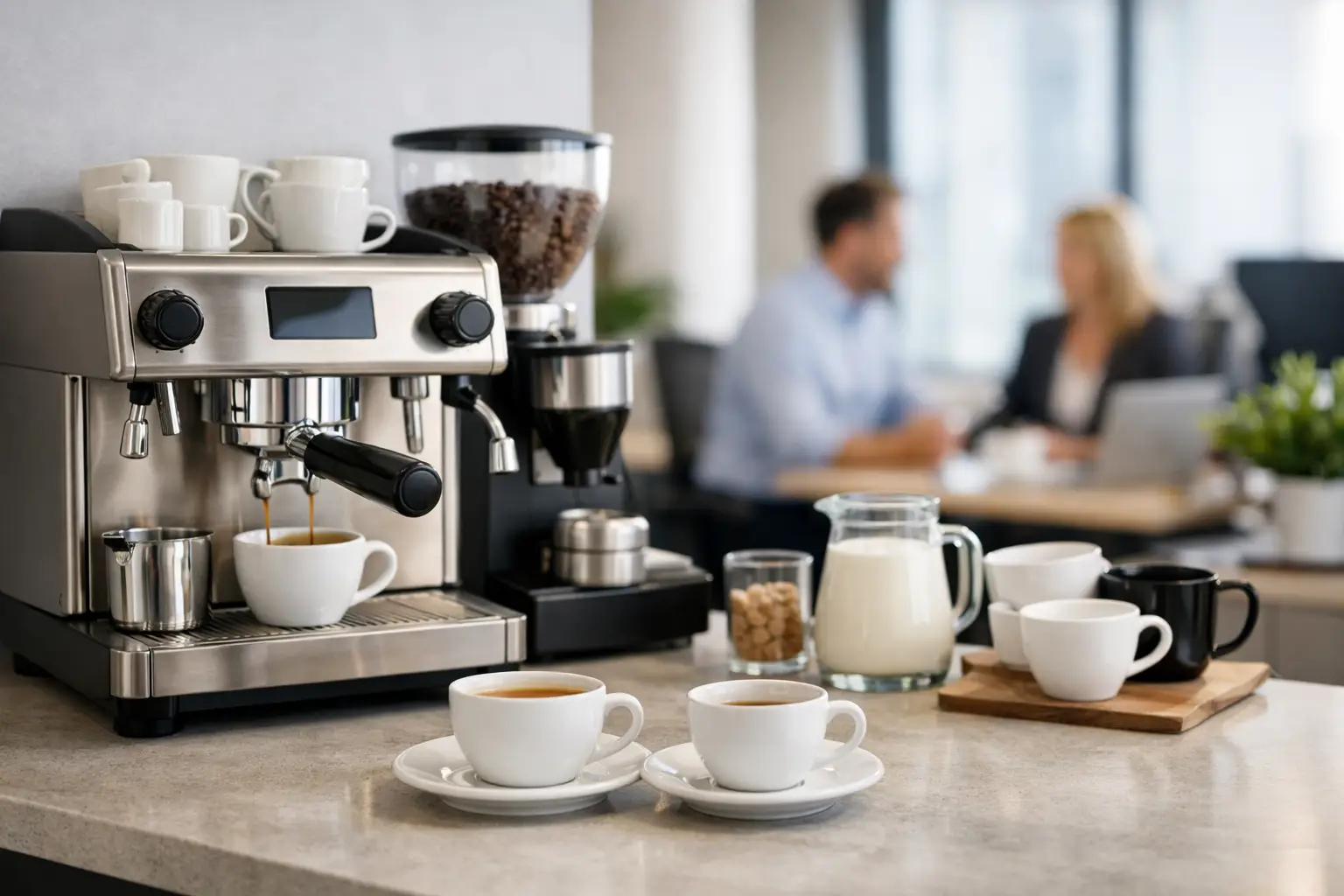
Traditional espresso equipment can produce excellent drinks, but it comes with a steeper learning curve and more room for inconsistency. Milk steaming, shot timing, grinder adjustment, and cleaning all require attention. In a busy office, that usually means one of two things: the machine is underused, or it becomes one person’s unofficial job.
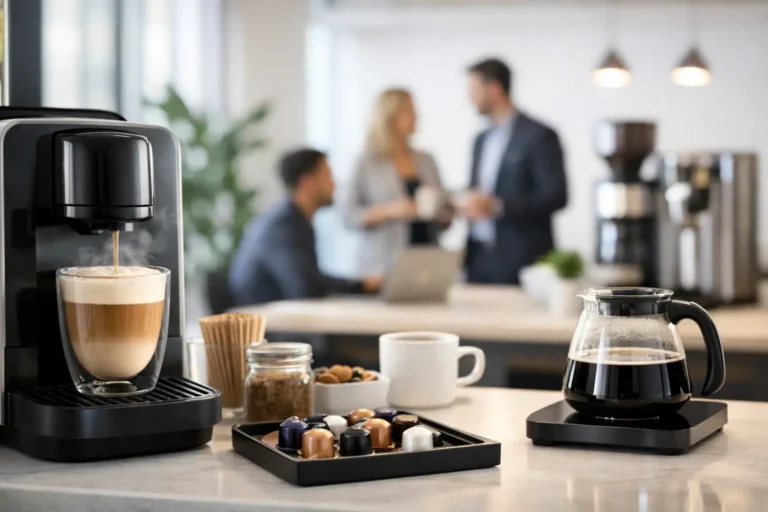
By contrast, Italian-made automatic barista machines are built for businesses that want premium drinks without the hassle. Employees press a button and get a cappuccino, latte, or Americano in moments. The experience feels elevated, but the process stays simple.
That is often the sweet spot for employers who want to offer something better than standard breakroom coffee while keeping operations easy.
Don’t overlook service and maintenance
This is where many companies make the wrong call. They focus on machine specs and forget that espresso equipment needs regular attention. Beans need to be replenished, ingredients restocked, parts cleaned, and issues handled quickly when they come up.
If you are deciding how to choose workplace espresso equipment, service should be part of the equipment decision from the start. A machine is only as good as the support behind it. When service is slow or inconsistent, even the best unit becomes a frustration.
For most businesses, owning equipment outright sounds straightforward until maintenance becomes their problem. Repairs, descaling, supply management, and weekly cleaning can eat up staff time fast. Leasing or partnering with a full-service provider often makes more practical sense because it removes the burden from your team.
That model works especially well for companies that want a polished beverage program without assigning someone to manage it. Installation, restocking, maintenance, and repairs are handled for you, so the office gets the benefit without the daily oversight.
Match the machine to your team size and traffic
An espresso setup should feel easy during peak use, not just quiet moments. That means choosing equipment with enough capacity for your headcount and office rhythm.
For a smaller office, a compact commercial machine may be all you need, especially if drink variety is moderate and usage is spread throughout the day. For a larger team or a client-heavy environment, you may need a higher-volume system with stronger output and larger ingredient storage.
There is also a practical question of placement. If the machine is going in a shared breakroom, the footprint matters. If it is in a reception area or conference space, appearance matters too. Good workplace equipment should look professional, fit the space comfortably, and operate without making the area feel crowded or messy.
In other words, the best machine is not the one with the longest feature list. It is the one your team can use easily, your space can support, and your provider can keep running reliably.
Think about total cost, not just price
Budget matters, but purchase price is only one piece of the decision. Supplies, service calls, employee time, cleaning responsibilities, and downtime all affect the real cost of your coffee program.
A lower-cost machine may look attractive at first, but if it breaks often, needs frequent manual care, or produces inconsistent drinks, the savings disappear quickly. On the other hand, premium equipment backed by service can be more cost-effective over time because it protects staff time and keeps the experience dependable.
This is where outsourced workplace coffee service has a real advantage. Instead of buying equipment and managing every moving part yourself, you get a complete beverage solution built around predictable support. That can make budgeting easier and reduce the surprises that come with ownership.
For many Canton-area businesses, that is the difference between having an espresso machine and having a workplace coffee program that actually works.
Beverage quality still matters
Convenience is important, but nobody gets excited about a machine that makes mediocre drinks. If you are adding espresso equipment to improve morale or impress guests, beverage quality has to be part of the equation.
Look for equipment that uses fresh whole beans and can produce a range of café-style drinks with consistent flavor. The machine should support the type of experience you want your office to be known for. If the drinks taste flat or overly generic, employees notice. Clients do too.
Quality also includes ingredients. Better beans, better chocolate, and better flavor options create a noticeably better result in the cup. That is why the strongest setups are usually not machine-only solutions. They combine equipment with the right products and ongoing service to keep standards high.
Choose a partner, not just a product
The best espresso setup for your office is one that fits your people, your space, and your expectations without creating more work. That usually means thinking beyond equipment features and asking who will keep everything running smoothly after installation.
A dependable workplace coffee partner helps you choose the right machine size, stock the right beverage options, and handle the maintenance that keeps the system easy to enjoy. That is a very different experience from dropping a machine into the breakroom and hoping for the best.
At Sip and Smile Gourmet Coffee, we see this firsthand. Businesses want café-quality drinks, but they also want simplicity. They want employees and visitors to enjoy the experience, and they want their team focused on work instead of machine upkeep.
If that sounds familiar, choose the option that makes your office feel more welcoming without making your day more complicated. That is usually the right machine, and the right service, all at once.