Espresso Machines Versus Coffee Brewers at Work
Compare espresso machines versus coffee brewers for your office, from drink choice and cost to upkeep, and build a breakroom people enjoy daily.
A pot of regular coffee may get people through the morning. A café-style drink can make them feel genuinely appreciated. When comparing espresso machines versus coffee brewers, the right choice for a Canton workplace comes down to more than taste. It affects the employee experience, the impression you make on visitors, the time your team spends managing the breakroom, and how much variety your coffee program can offer.
For many offices, the question is not whether coffee matters. It is whether the current setup reflects the kind of workplace they want to create.
Espresso Machines Versus Coffee Brewers: The Core Difference
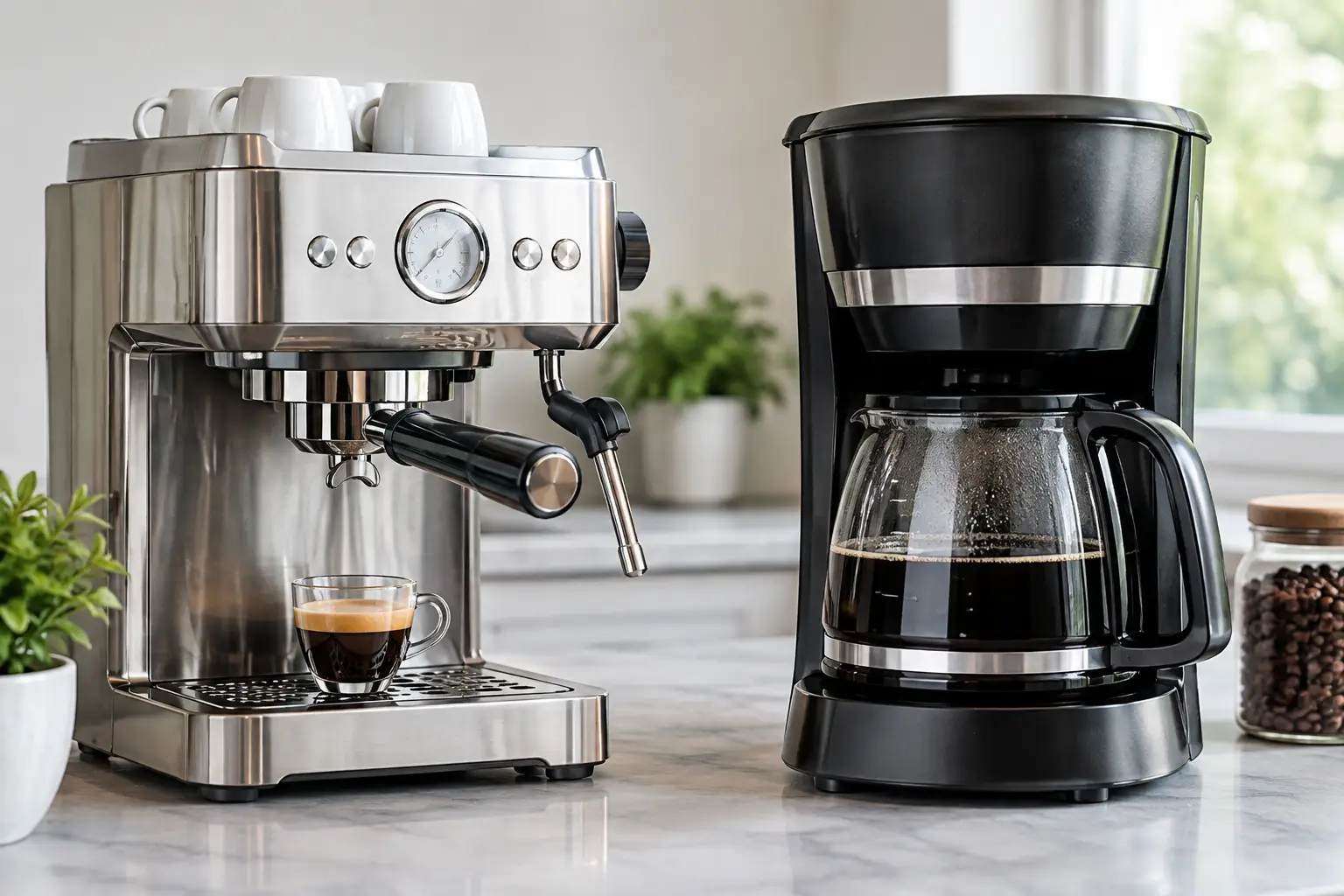
A traditional coffee brewer is designed to make coffee in volume. It heats water and passes it through ground coffee, producing a full pot or airpot of drip coffee. It is familiar, straightforward, and often a practical fit for teams that primarily want a fast cup of black coffee.
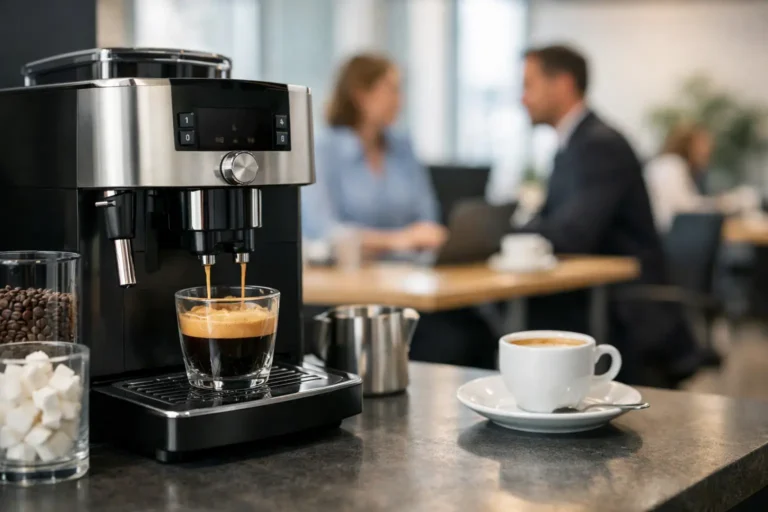
An espresso machine uses pressure to push hot water through finely ground coffee. The result is a concentrated espresso base that can be served on its own or turned into drinks such as cappuccinos, café lattes, Americanos, mochas, and flavored specialty beverages.
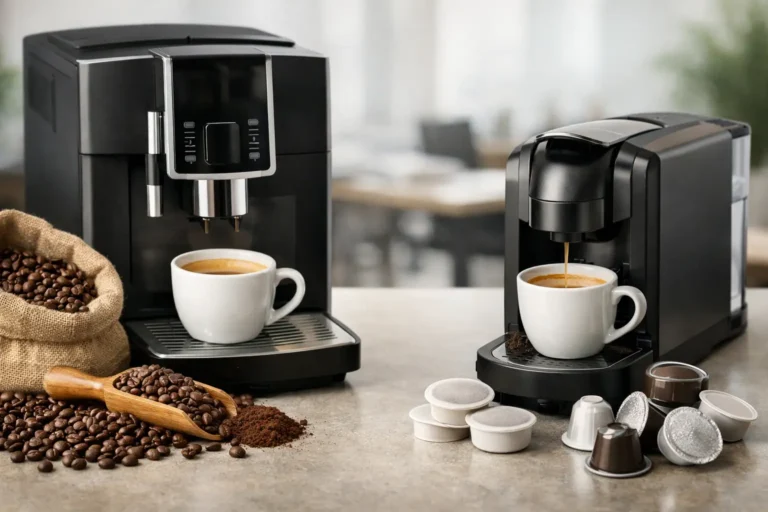
That difference matters because a brewer generally offers one core experience: brewed coffee. A commercial bean-to-cup espresso machine can create a full beverage station at the touch of a button. For an office with varied preferences, that is a meaningful upgrade.
When a Coffee Brewer Makes Sense
A quality commercial brewer still has an important place in many workplaces. If most employees prefer simple drip coffee, drink coffee throughout the day, and value speed over drink variety, a brewer can be an efficient choice.
Brewers also work well for meetings, training sessions, and busy client events where serving several people quickly is the priority. A pot or dispenser keeps coffee readily available without requiring each person to make an individual drink.
The trade-off is that brewed coffee can feel basic if it is the only option. Creamers, sweeteners, and flavored syrups can add some choice, but they do not give employees the same experience as a freshly prepared latte, cappuccino, or hot chocolate. There is also the familiar issue of a pot sitting too long on a warmer. Even good coffee loses its appeal when it tastes stale by midmorning.
For a small team with traditional coffee habits, that may be perfectly acceptable. For a growing business focused on culture and hospitality, it may not be enough.
Why Offices Choose Espresso Machines
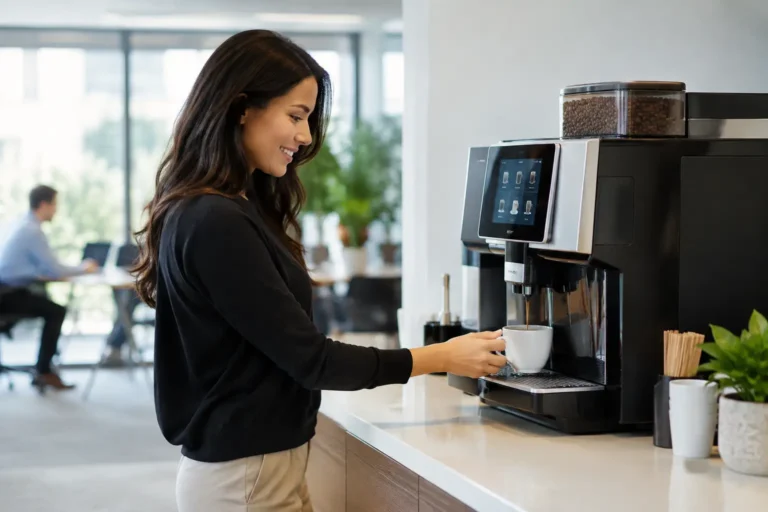
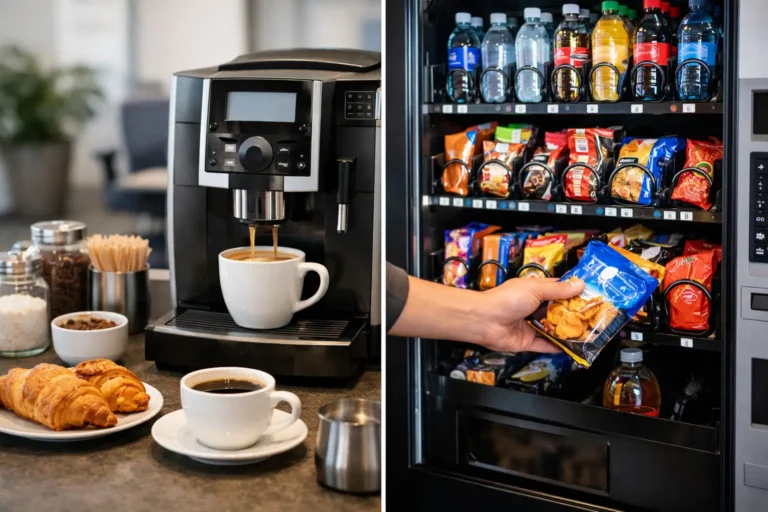
A commercial espresso machine changes the breakroom from a place people visit out of necessity to an amenity they enjoy. Employees can select a drink that fits their mood: bold espresso before a deadline, an Americano for a familiar coffee profile, a latte in the afternoon, or a hot chocolate or French vanilla drink for someone who does not drink coffee.
That range makes the program more inclusive. Not every employee wants black coffee, and not every visitor wants to make a cup from a communal pot. A bean-to-cup machine gives people an individual, fresh beverage without the training and cleanup required by a traditional café setup.
For employers, the benefit is not simply a better drink. It is a visible daily perk. A premium coffee station gives people a reason to take a real break, connect with coworkers, and feel that their employer has thought about their comfort. It also gives clients a warmer welcome than a single-serve pod or an aging pot of coffee on a counter.
Think Beyond the Purchase Price
The cost conversation around espresso machines versus coffee brewers can be misleading if it starts and ends with the equipment price. A basic brewer is usually less expensive to purchase. But a workplace coffee program has ongoing costs and responsibilities: beans, filters, milk or powdered ingredients, cleaning supplies, repairs, water quality, restocking, and staff time.
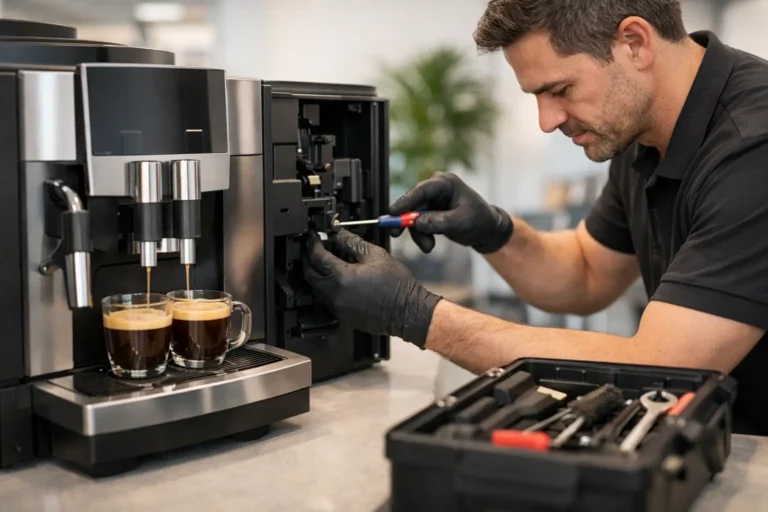
A high-quality commercial espresso machine is a larger investment when purchased outright, particularly one capable of producing several drinks automatically. It also needs regular care to maintain flavor, reliability, and sanitation. Neglect the cleaning schedule, and even an excellent machine can produce disappointing drinks or require avoidable repairs.
That is why many businesses prefer a full-service arrangement instead of owning and operating the equipment themselves. With Sip and Smile Gourmet Coffee, businesses can receive the machine, fresh roasted beans, beverage ingredients, regular cleaning, maintenance, repairs, and restocking as part of a managed office coffee solution. The goal is simple: your team enjoys the drinks, while someone else handles the work behind them.
Convenience Is a Bigger Factor Than It Appears
A brewer seems simple until someone is responsible for all the small tasks around it. Who notices the coffee is low? Who rinses the carafe? Who orders filters? Who deals with a leak, a burned-out warmer, or a machine that suddenly stops heating? In a busy office, those jobs tend to land on an administrator or office manager already managing far more important responsibilities.
Espresso equipment can create similar demands when it is unmanaged. Milk systems, grounds containers, ingredient hoppers, and brewing components all need attention. The difference is that a professionally supported machine does not have to become an internal project.
For employers with more than 10 people, removing that operational burden is often worth more than shaving a little from the monthly beverage budget. Reliability is part of the employee experience. When the coffee station is empty, dirty, or out of order, people notice. When it is consistently stocked and ready, they notice that too.
The Client Experience Matters, Too
Coffee is one of the first gestures of hospitality in an office. It may be offered during an interview, while a customer waits for a meeting, or when a vendor visits your facility. A fresh latte, cappuccino, or café Americano communicates care in a way that disposable packets rarely do.
This does not mean every business needs an elaborate coffee bar. The best program matches your environment. A warehouse office may need durable convenience and a strong cup of coffee. A medical office may need a clean, approachable beverage option for staff and visitors. A professional services firm may want a polished machine in a reception area that reinforces its client-first standards.
The common thread is thoughtful hospitality. Your coffee solution should make life easier for your team while making your workplace feel more welcoming.
How to Choose the Right Setup for Your Office
Start with behavior, not equipment. Consider how many people use the coffee station each day, what they currently drink, and what frustrates them about the existing setup. If employees bring specialty drinks in from nearby cafés, that is useful information. If the pot is constantly empty, stale, or ignored, that tells you something too.
Next, think about the experience you want to provide. A brewer may be the right answer for reliable, high-volume drip coffee. An automatic espresso machine may be the better fit when you want drink variety, a premium amenity, and a more memorable client welcome. Some workplaces benefit from both: a brewer for meetings and large groups, plus an espresso machine for everyday individual drinks.
Finally, consider who will run the program. The best equipment choice is one your business can keep clean, stocked, and functioning without adding stress to the office. If you want café-style quality without assigning coffee duties to your staff, professional service support is not an extra. It is part of making the program work.
A well-chosen coffee station does more than fill cups. It gives your people a small, dependable moment of comfort in the workday and gives every guest a reason to feel welcome before the conversation even begins.