Leased Espresso Machine vs Owned: Which Fits?
Compare a leased espresso machine vs owned equipment for your Canton office. See costs, service, flexibility, and the right fit for your team and budget.
A great office coffee program should make the morning better, not add another maintenance task to an already full workload. When weighing a leased espresso machine vs owned equipment, the real question is not simply which option costs less upfront. It is which one gives your Canton workplace the dependable, café-quality experience your staff and visitors will enjoy without creating surprise costs or operational headaches.
For many businesses, the answer comes down to how much they want to manage themselves. Buying offers control and long-term asset ownership. Leasing, especially when paired with full service, can turn premium coffee into a predictable workplace amenity rather than another piece of equipment to oversee.
Leased Espresso Machine vs Owned: The Core Difference
An owned espresso machine is a capital purchase. Your company buys the equipment, keeps it on the books, and is responsible for its upkeep throughout its life. You decide which beans, syrups, milk products, cleaning supplies, and repair providers to use.
A leased machine typically involves a recurring monthly payment for use of the equipment. The details vary widely. Some leases cover only the machine, while others are part of a managed beverage program that includes installation, ingredients, restocking, preventive cleaning, maintenance, and repairs.
That distinction matters. A low monthly lease payment can look attractive until you discover it excludes service calls, water filtration, cleaning products, or replacement parts. On the other hand, a full-service arrangement can make budgeting much easier because the company providing the machine handles the daily details behind a consistently good cup.
When Owning an Espresso Machine Makes Sense
Purchasing can be a strong choice for a business with a dedicated facilities team, a clear equipment budget, and a preference for managing vendors directly. Once the machine is paid for, there is no ongoing lease payment. For a high-use location that expects to run the same equipment for many years, ownership may provide a lower long-term equipment cost.
Ownership also gives your team complete freedom to choose products and service partners. A company with an in-house café operation, for example, may want that control. It can select a particular machine model, source ingredients independently, and establish its own maintenance routine.
The trade-off is that the responsibility stays with you. Commercial espresso equipment needs more attention than a standard drip brewer. It requires regular cleaning, proper water filtration, occasional calibration, and qualified repair when a component fails. If the machine is down on a busy Monday morning, someone at your company must place the service call, approve the repair, and find a temporary coffee solution.
There is also the upfront investment to consider. A commercial bean-to-cup machine capable of preparing espresso, cappuccinos, lattes, Americanos, hot chocolate, and flavored drinks is a premium piece of equipment. The purchase price is only one part of the budget. Your business should also account for installation, plumbing or water setup where needed, supplies, routine service, and eventual replacement.
Why Many Offices Prefer Leasing
For office managers and business owners, leasing often wins because it reduces friction. Instead of comparing repair invoices, monitoring bean inventory, and reminding staff to deep-clean the machine, you have a defined program and a support partner responsible for keeping it running.
A well-structured lease can preserve cash for other priorities. Rather than making a large upfront purchase, your business spreads costs into a predictable monthly expense. That can be especially helpful for growing companies, offices opening a new location, or employers upgrading their employee experience without tying up capital in equipment.
Leasing can also make it easier to match the machine to your current team size. An office of 15 people has different needs than a call center with 100 employees or a client-facing professional practice. If your workforce changes, a service provider may be able to recommend an equipment setup and beverage plan that better fits the new demand.
Most importantly, a managed lease is about continuity. Employees do not care who owns the machine when they want a latte before a meeting. They care that it works, the beans are fresh, the milk or powdered ingredients are available, and the drinks taste good. Regular maintenance and restocking protect that experience.
Look Beyond the Monthly Payment
The best decision is rarely found by comparing a lease payment to a purchase price alone. Compare the total cost of operating the coffee program over time.
With ownership, calculate the equipment cost, delivery and installation, cleaning products, filters, water treatment, bean and ingredient purchasing, maintenance, repairs, and the staff time required to coordinate it all. An owned machine may look less expensive on paper if you leave out the service and labor required to keep it guest-ready.
With leasing, ask for a clear explanation of what the monthly arrangement includes. You should know whether it covers installation, routine cleaning, scheduled maintenance, repairs, parts, replacement equipment if needed, beans, beverage ingredients, cups, and restocking. Also ask about contract length, upgrade options, usage expectations, and what happens if your office relocates or grows.
A dependable provider will answer those questions directly. The goal is not to find the cheapest number on day one. It is to find a program that delivers reliable quality without surprise expenses or avoidable downtime.
Service Is the Deciding Factor for Premium Coffee
Commercial espresso machines are designed to serve a lot of drinks, but they are not set-it-and-forget-it appliances. Coffee oils build up. Brewing components need cleaning. Water quality affects flavor and machine performance. Ingredients must be stocked correctly, and settings need attention to keep beverages consistent.
That is why service should carry real weight in a leased espresso machine vs owned comparison. If your office wants café-style beverages at the touch of a button, ask who will protect the quality behind that button.
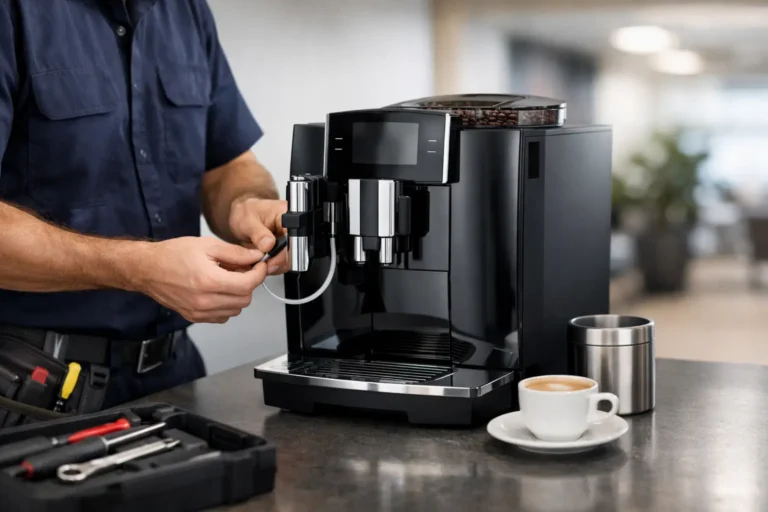
An office with a capable internal maintenance team may be comfortable owning the process. Most workplaces, however, would rather have their employees focused on customers, projects, and daily operations. A local full-service coffee partner can install the equipment, provide fresh roasted beans and gourmet beverage supplies, perform weekly cleaning and maintenance, and respond when service is needed.
This is where a leased program can feel less like renting a machine and more like outsourcing an amenity. Your team gets the benefit of a polished coffee bar without becoming the coffee bar manager.
Consider What Your Office Wants to Serve
A basic coffee maker solves a basic coffee need. A premium workplace beverage program creates a different kind of experience. It gives employees choices and gives visitors a welcoming detail they notice.
Before choosing either path, think about the drinks your office actually wants available. Espresso-based choices such as cappuccinos, café lattes, café Americanos, mochaccinos, French vanilla drinks, seasonal beverages, and hot chocolate can make the breakroom feel more generous and client areas more hospitable. But a wider menu also increases the need for quality ingredients, routine cleaning, and a machine built for the volume.
For employers competing for talent or looking for an easy way to improve office culture, that experience has value. A quality coffee break encourages small conversations, gives teams a reason to step away from their desks, and makes the workday feel more considered. For professional offices, it can also be a simple way to offer clients something better than a disposable cup of ordinary coffee.
Questions to Ask Before You Decide
Before signing a lease or approving a purchase, get specific about your office’s needs. How many people will use the machine each day? Will it sit in a breakroom, reception area, showroom, or client lounge? Do you need a wide drink menu, or is high-volume black coffee the priority? Who will clean, refill, troubleshoot, and arrange repairs?
Then consider the kind of budget certainty your business prefers. Ownership can reward a company willing to invest upfront and manage the asset over time. Leasing can be a better fit when you value a fixed monthly approach, ongoing support, and the flexibility to focus on your business instead of equipment care.
For many Canton-area employers, the choice becomes clear once they put a dollar value on time, downtime, and employee experience. Sip and Smile Gourmet Coffee helps businesses create a customized, hands-off coffee program with Italian-made barista machines, fresh ingredients, and local service support.
The right coffee setup should give your people one less thing to think about and one more reason to smile when they walk into work.