11 Questions Before Choosing Coffee Vendor
Ask these 11 questions before choosing coffee vendor for your office to avoid downtime, surprise costs, and disappointing drink quality.
That first bad cup tells you a lot. If the machine is down, supplies are missing, or the coffee tastes like an afterthought, your team notices right away. That is why asking the right questions before choosing coffee vendor support matters so much. For offices in Canton that want more than a basic pot in the breakroom, the vendor you choose affects employee experience, client impressions, and how much time your staff spends dealing with problems.
This is not just about coffee. It is about whether your office gets a dependable, polished beverage program or one more thing your admin team has to chase down. The best vendor should make your day easier, not add another service issue to manage.
Why questions before choosing coffee vendor support matter
A coffee program can look great in a proposal and still create headaches once it is installed. Some vendors focus on the machine but not the service behind it. Others offer low upfront pricing, then leave you with inconsistent restocking, limited drink options, or slow repair response.
A better approach is to evaluate the full experience before you sign anything. Ask how the service works week to week, what happens when something breaks, and who is responsible for keeping the station stocked and clean. Those answers will tell you more than a brochure ever will.
1. What kind of drinks can your employees and guests actually get?
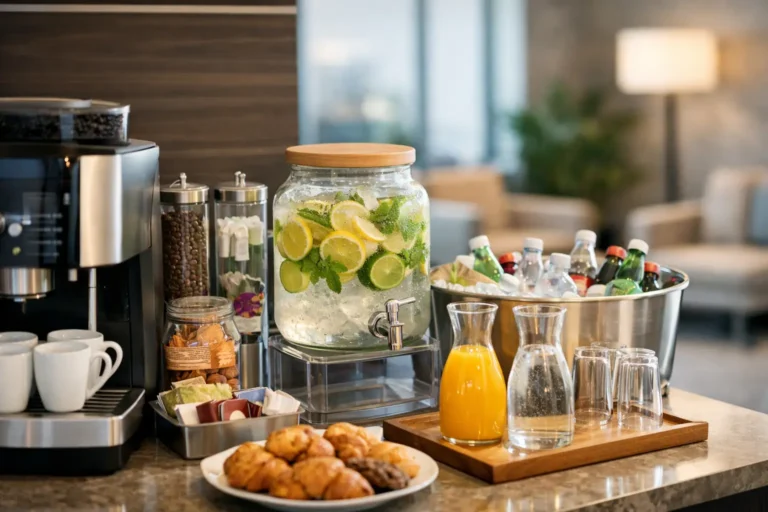
Not every office wants the same setup. A small team may be happy with fresh brewed coffee, while a larger workplace may want espresso drinks, cappuccinos, café lattes, café Americanos, hot chocolate, and seasonal options that make the breakroom feel a little more special.
This question matters because drink variety affects daily use. If your office includes different tastes and preferences, a one-size-fits-all coffee plan usually falls short. A wider menu can increase employee satisfaction and create a better experience for visiting clients, but it also needs to be backed by a machine and service plan that can keep up.
2. Do you provide the equipment, or do we have to buy it?
This is one of the biggest financial questions to ask early. Some vendors expect businesses to purchase equipment outright. Others place the machine as part of an ongoing service program.
For many offices, not owning the equipment is the more practical choice. It reduces upfront cost and removes the burden of figuring out repairs, replacement parts, and long-term maintenance. If your goal is convenience, ask whether the vendor handles installation, service, and equipment support as part of the package or whether those costs show up separately later.
3. Who handles cleaning, maintenance, and repairs?
This question separates a true service partner from a product supplier. A great machine is only great when it is working properly and being maintained consistently.
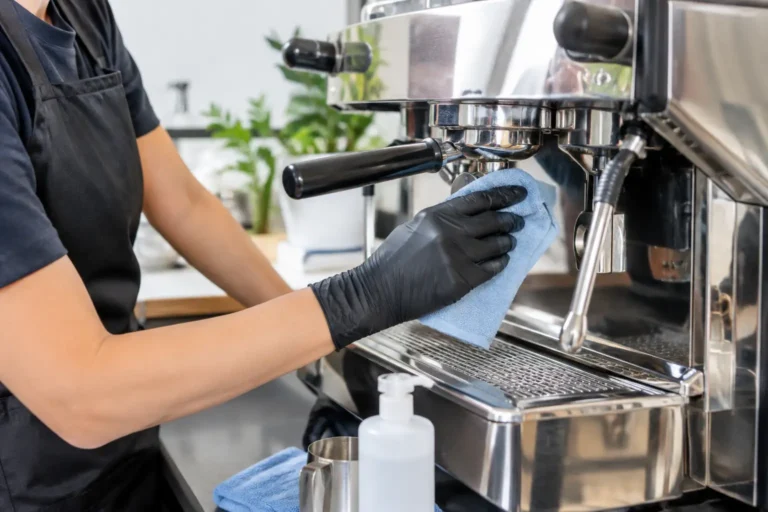
If your office manager or receptionist ends up cleaning internal parts, troubleshooting drink issues, or calling in service tickets, the coffee program is no longer convenient. Ask exactly what the vendor handles. Weekly cleaning, preventive maintenance, repairs, and regular check-ins should be clearly defined. If the answer sounds vague, expect gaps later.
4. How often do you restock supplies?
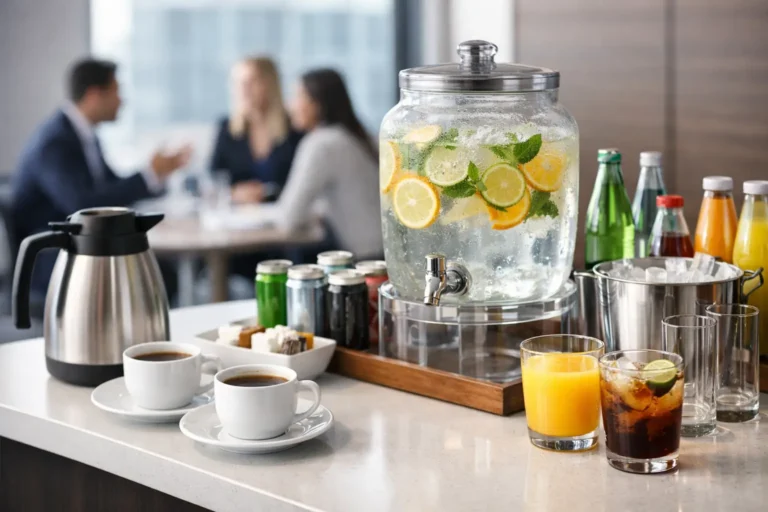
Running out of beans, cups, milk alternatives, syrups, or hot chocolate mix turns a nice workplace perk into a frustration. Restocking should not be reactive. It should be built into the service model.
Ask how often the vendor visits and how they track usage. A vendor serving a 15-person office may use a different schedule than one serving a 100-person office, and that is fine. What you want is a plan that matches your actual consumption so your staff is not sending emergency emails because the coffee station is empty by Wednesday.
5. What happens when the machine goes down?
Even quality equipment can have issues. The real question is how fast the vendor responds and how easy it is to get help.
Ask who to call, what response times look like, and whether service is local. A nearby provider often has an advantage because they can respond faster and understand the expectations of businesses in the area. If your office depends on the beverage station every day, downtime is not a small issue. It affects morale, hospitality, and your team’s confidence in the service.
6. Can the service be customized to our office?
A law office, manufacturing company, medical practice, and sales team may all want very different beverage setups. Good vendors do not force every business into the same package.
Ask whether the menu, machine type, supply mix, and visit schedule can be adjusted to fit your team. Customization matters because it helps you avoid overpaying for things you do not need while still creating a coffee experience that feels thoughtful and premium. The right vendor should be able to recommend a solution, not just sell a standard plan.
7. Are there hidden costs in the agreement?
This is where many businesses get caught off guard. A quote may sound straightforward until delivery fees, service calls, ingredient minimums, or equipment-related charges start appearing.
Ask for a clear breakdown of what is included. You want to know whether installation, maintenance, repairs, cleaning, and restocking are covered. It is also smart to ask about contract length and any fees tied to changes, cancellations, or upgrades. A dependable vendor should be comfortable giving direct answers here.
8. What is the quality of the coffee and beverage ingredients?
Employees can tell the difference between a premium beverage program and a basic breakroom setup pretending to be one. If you want café-style drinks, ingredient quality has to support that promise.
Ask about the beans, drink mixes, and flavor options being served. Fresh roasted coffee and better ingredients usually create a much stronger overall impression than generic bulk supplies. That matters not only for daily team satisfaction, but also for the way your office presents itself to customers, visitors, and job candidates.
9. Is the equipment easy for employees and guests to use?
A sophisticated machine is not helpful if people avoid it because it feels confusing. For office settings, ease of use matters almost as much as drink quality.
Ask whether the system produces drinks at the touch of a button, how much training is needed, and whether the interface is intuitive for first-time users. A simple experience keeps lines moving, reduces user error, and makes the coffee station feel like a benefit instead of a project.
10. Do your products and service choices align with our workplace values?
For some companies, this may mean environmentally friendly products. For others, it may mean supporting a local business, offering options for different dietary preferences, or creating a more hospitality-focused office culture.
This question matters because a coffee program is part of your workplace experience. It sends a message about what kind of environment you are building. If sustainability, local service, or a higher-end client experience matters to your company, your vendor should help reinforce that, not work against it.
11. Will this actually save our team time?
This may be the most important question of all. A premium coffee setup only makes sense if it reduces work for your staff while improving the experience for everyone else.
Ask yourself what happens after installation. Will someone in your office still need to order supplies, track inventory, clean the machine, and coordinate repairs? Or does the vendor truly handle the ongoing details? The right solution should feel hands-off from your side. If your office is still doing the managing, you are not really buying convenience.
Questions before choosing coffee vendor services in Canton
For local businesses, service coverage matters more than people sometimes realize. A vendor can promise great support, but if they are stretched thin or not truly local, response times may not match the sales pitch.
That is why businesses in the Canton area should ask where the service team is based, how often they are already in the area, and how quickly they can respond when something needs attention. Local support often leads to better consistency, more personalized service, and fewer delays when your office needs help.
If you are comparing providers, pay attention to who makes the process feel simple. The best workplace coffee service is not the one with the longest feature list. It is the one that reliably shows up, keeps everything running, and makes your office look good without creating extra work.
At Sip and Smile Gourmet Coffee, that is exactly how we believe office coffee should work. Premium drinks, dependable equipment, and ongoing support should come together in a way that feels easy from day one.
When you ask better questions up front, you give your business a much better chance of ending up with a coffee program your team actually uses and appreciates.