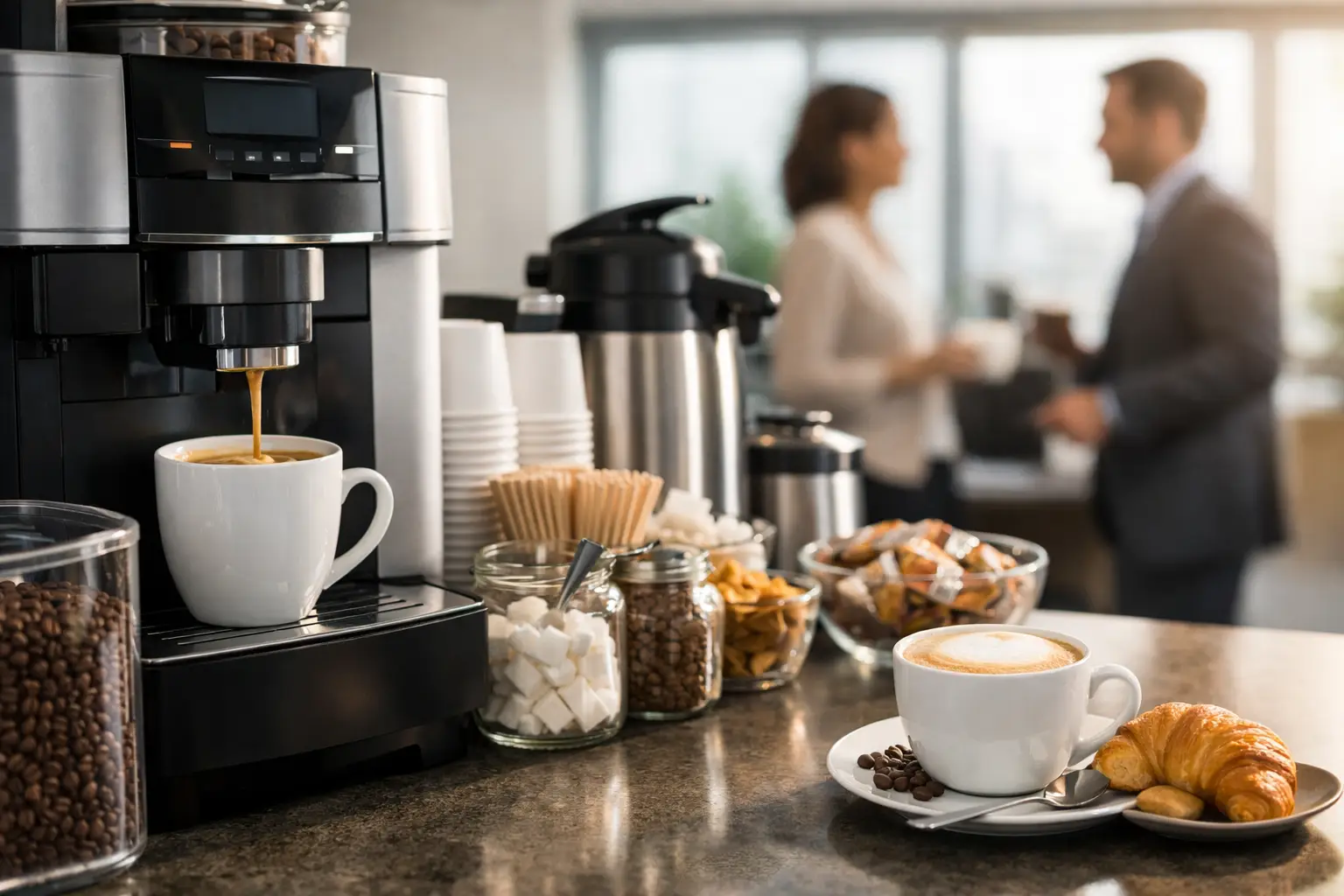
What Is a Full Service Coffee Provider?
What is a full service coffee provider? Learn how businesses get machines, supplies, cleaning, repairs, and restocking without added work.
A breakroom coffee setup sounds simple until someone has to own it. The machine needs cleaning, supplies run low at the worst time, and when equipment goes down, employees notice fast. That is where the question matters: what is a full service coffee provider, and why do so many businesses prefer that model over managing coffee in-house?
A full service coffee provider is a company that handles the entire workplace coffee program for you. Instead of just dropping off coffee beans or selling you a machine, the provider installs equipment, supplies beverages, maintains the machines, handles repairs, and keeps everything stocked and running. For a business, that means better coffee without adding one more task to an office manager’s plate.
For companies that want more than a basic pot in the corner, this kind of service changes the experience completely. It turns coffee from a recurring problem into a managed amenity.
What is a full service coffee provider in practical terms?
In practical terms, a full service coffee provider acts like your outsourced coffee department. You are not piecing together equipment from one vendor, beans from another, and service calls from someone else. One partner manages the full setup and keeps it working.
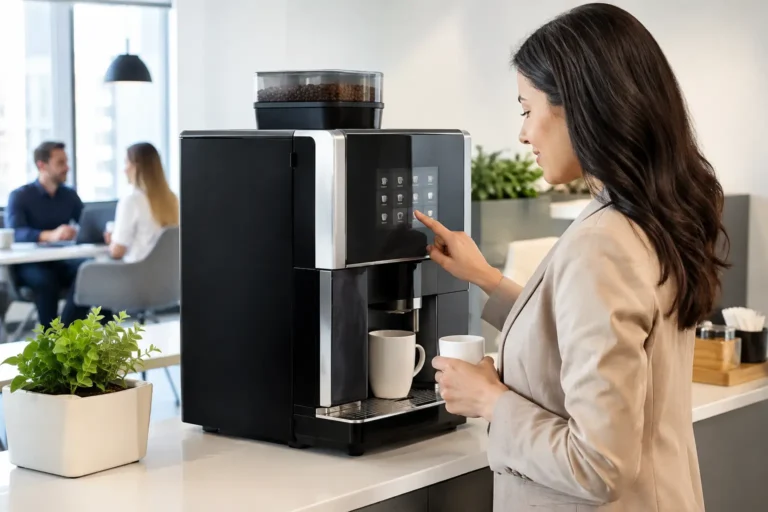
That usually starts with helping you choose the right machine for your office size, traffic, and drink preferences. A smaller office may need a different setup than a busy lobby, production floor, or client-facing waiting area. The provider looks at how your team uses the space and recommends a solution that fits.
From there, the service typically includes installation, product delivery, scheduled maintenance, cleaning, repairs, and restocking. If your workplace wants espresso drinks, cappuccinos, lattes, hot chocolate, or flavored beverages, a full service provider can build that into the program. If your needs are simpler, the service can be scaled accordingly.
The key difference is responsibility. With a full service provider, the burden of keeping the program running does not fall on your staff.
What a full service coffee provider usually includes
A true full service model covers more than coffee. It covers the day-to-day reality of operating beverage equipment in a workplace.
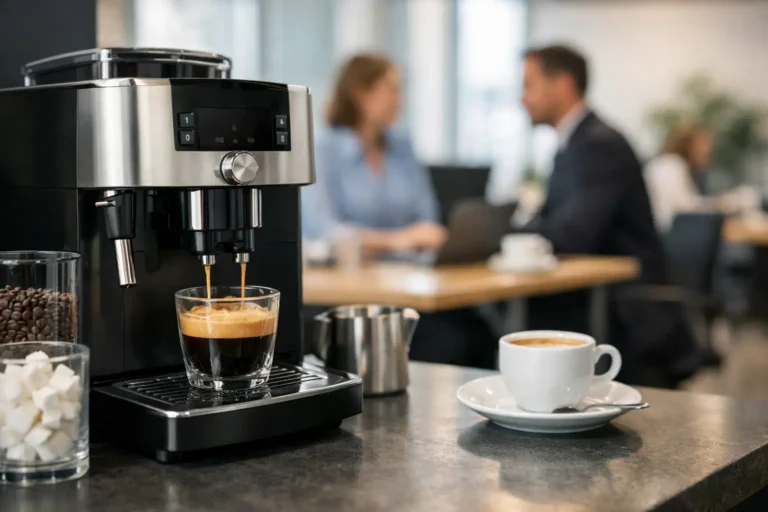
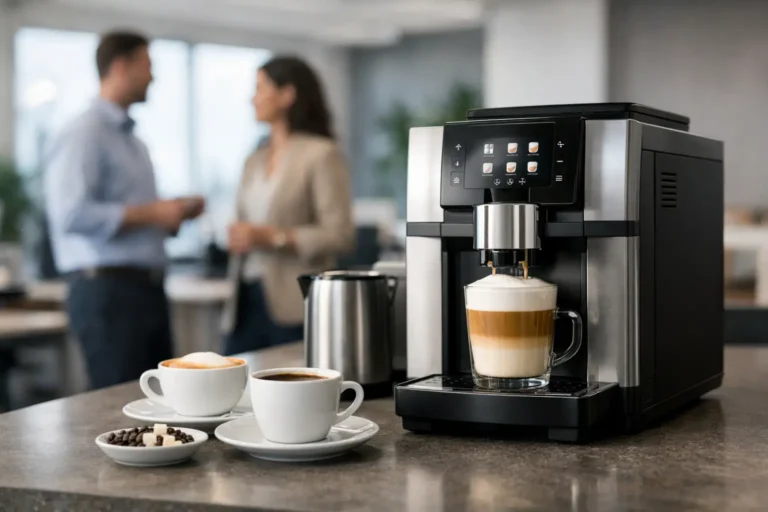
First, there is the equipment itself. Many businesses want commercial-grade machines that can produce consistent drinks quickly and look polished in an office kitchen, breakroom, or reception area. In higher-end programs, that may mean bean-to-cup or barista-style machines that make espresso-based drinks at the touch of a button.
Second, there are the ingredients and supplies. That includes coffee beans, espresso, powdered mixes, cups, sweeteners, creamers, stirrers, and any specialty beverage products your team uses regularly. A good provider helps you avoid both overordering and running out.
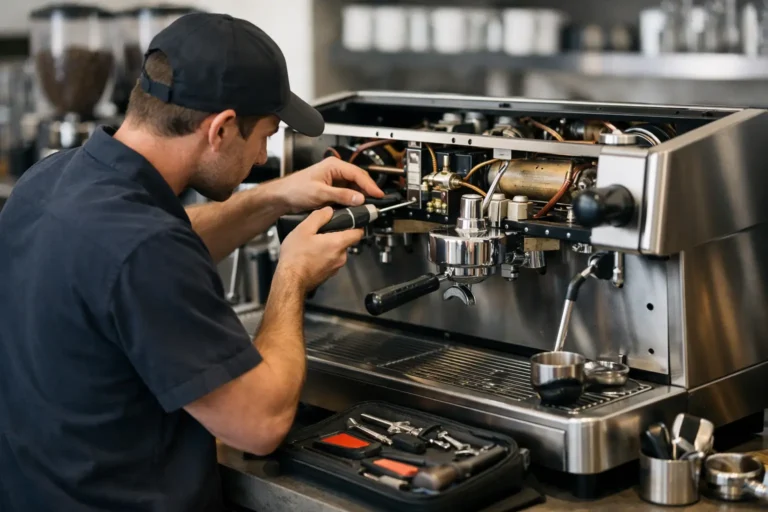
Third, there is service and upkeep. This is often the piece businesses underestimate. Machines need regular cleaning. Parts wear down. Water lines, brewing components, and milk or powder systems need attention to keep drinks tasting right and equipment performing as expected. When that support is built into the program, problems get handled before they become disruptions.
Finally, there is ongoing account support. Tastes change. Headcount grows. Seasonal drinks become popular. A full service partner adjusts your setup as your workplace changes instead of leaving you locked into a one-size-fits-all program.
Why businesses choose this model
Most office managers and operations leaders are not looking to become coffee experts. They want a breakroom or client area that feels well run, welcoming, and easy to maintain. A full service coffee provider solves for exactly that.
The biggest reason businesses choose this model is convenience. You do not have to research machines, negotiate with multiple vendors, train staff on maintenance, or spend time ordering products every week. The provider handles it.
Reliability is a close second. When a coffee setup is unmanaged, little issues pile up quickly. The machine gets neglected, supplies become inconsistent, and drink quality drops. A full service approach gives you a system instead of a patchwork fix.
There is also the experience factor. Better coffee sends a message. It tells employees their daily environment matters. It gives guests and clients a stronger first impression. For many businesses, that is not a luxury purchase. It is part of workplace culture and hospitality.
Full service vs. coffee delivery only
This is where some confusion happens. Not every coffee company is a full service coffee provider.
A delivery-only company may bring coffee products to your office on a schedule, but your team still manages the machine, monitors inventory, and deals with service issues. If the equipment breaks, you are the one making calls and waiting for help. If cleaning gets skipped, the drinks suffer.
A machine seller is different too. They may provide great equipment, but once the sale is done, maintenance and day-to-day operation often become your responsibility. That can work for some organizations, especially if they have in-house facilities support and want to manage the program directly. But for many offices, owning the equipment creates more work than expected.
A full service provider sits in a different category. The value is not just the machine or the coffee. The value is the ongoing management behind it.
Is a full service coffee provider worth it?
It depends on what your time is worth and what kind of experience you want to create.
If your office only needs a basic drip setup for a small team, a simpler arrangement may be enough. But if you have more than a handful of employees, welcome visitors regularly, or want café-style beverages without assigning the work internally, full service usually makes more sense.
The cost conversation should include more than monthly pricing. It should also include staff time, equipment downtime, inconsistent ordering, repair surprises, and the overall quality of the employee and guest experience. A cheaper do-it-yourself setup can become expensive once those hidden costs show up.
For many growing businesses, the better question is not whether premium coffee costs more. It is whether managing it yourself is really saving anything.
What to look for in a full service coffee provider
Not all providers offer the same level of support, so it helps to ask direct questions.
Start with service scope. Do they install the machine? Do they handle cleaning and preventative maintenance? Are repairs included? Will they restock supplies on a schedule, or are you expected to monitor inventory yourself? If the answer is vague, that is a red flag.
Next, look at beverage quality and customization. If your workplace wants more than standard brewed coffee, make sure the provider can support that consistently. Espresso drinks, cappuccinos, café lattes, café Americanos, hot chocolate, French vanilla, and seasonal beverages require the right equipment and supply planning.
Response time matters too. If your machine has an issue, how quickly will someone step in? Local service can make a real difference here, especially for offices that want dependable support and a partner who understands their business personally.
It also helps to evaluate flexibility. Your team may grow, your preferences may change, or you may want to upgrade the experience over time. A good provider makes those adjustments manageable.
Who benefits most from this kind of service?
A full service coffee provider is especially useful for offices that want a polished workplace perk without creating more admin work. That includes professional offices, medical practices, manufacturers, banks, retail headquarters, and small-to-mid-sized businesses that care about employee satisfaction and client experience.
It is a strong fit for companies with 10 or more employees, shared breakrooms, or customer-facing spaces. In those environments, beverage quality gets noticed, and convenience matters.
This model is also ideal for businesses that want to avoid buying equipment outright. Instead of taking on ownership, maintenance, and replacement concerns, they can treat coffee service as an outsourced amenity with ongoing support built in.
For employers in Canton, Ohio, that local, hands-off model is exactly why companies turn to providers like Sip and Smile Gourmet Coffee. They want premium drinks, dependable machines, and one partner who keeps the whole program running.
The real value behind the service
At its best, a full service coffee program does more than supply drinks. It removes friction.
Your office gets quality beverages that feel like a real upgrade. Your employees get something they use and appreciate every day. Your clients see a workplace that pays attention to details. And your staff is not stuck cleaning machines, chasing supplies, or troubleshooting equipment between their regular responsibilities.
That is the simplest answer to what is a full service coffee provider: it is a partner that makes premium workplace coffee easy to offer and easy to maintain. If your business wants better coffee without more hassle, that is not an extra. It is smart operations.