Top Reasons Companies Outsource Coffee Programs
Top reasons companies outsource coffee programs include lower costs, better service, happier staff, and less admin for busy offices.
When the office coffee setup turns into one more thing your team has to chase down – empty bean hoppers, inconsistent drink quality, surprise repair issues, and supply orders that somehow get missed again – it stops feeling like a perk and starts feeling like a side job. That is one of the top reasons companies outsource coffee programs. They want the benefit of a premium workplace beverage experience without asking someone on staff to manage it.
For many businesses, especially growing offices, the real question is not whether coffee matters. It clearly does. The better question is who should be responsible for keeping that program running well every day. For companies that want café-style drinks, dependable equipment, and a polished experience for employees and visitors, outsourcing often makes more sense than building and managing the program in-house.
Why the top reasons companies outsource coffee programs keep coming down to time
Most offices do not set out to create a coffee management role. It just happens. An office manager notices supplies are low. An admin resets a machine. Someone from operations calls for service. A receptionist wipes down the counter between meetings. None of these tasks seems huge on its own, but together they create a steady stream of interruptions.
That lost time is expensive because it pulls capable employees away from the work they were actually hired to do. If your team is already balancing vendors, facilities, scheduling, onboarding, and day-to-day support, coffee oversight becomes one more operational detail competing for attention.
Outsourcing changes that equation. Instead of treating the coffee station like a mini department inside your business, you hand the responsibility to a provider whose job is to keep the program stocked, clean, and working. For decision-makers, that is often the biggest win. You remove friction from the office without lowering the quality of the experience.
Cost control matters more than sticker price
A lot of companies first look at office coffee through the lens of equipment cost. That is understandable, but it is only part of the picture. Buying a machine is one expense. Owning the entire program is another.
When a company manages coffee internally, costs tend to spread out in ways that are easy to underestimate. There is equipment purchase or lease cost, product ordering, cleaning supplies, maintenance, repairs, downtime, and the labor involved in keeping everything presentable. If the machine goes down, there is also the hidden cost of disruption and frustration.
An outsourced model often feels more predictable because the service, support, and replenishment are built into the arrangement. That does not mean every outsourced program is automatically cheaper in every situation. A very small office with minimal coffee needs may be fine with a basic self-managed setup. But for companies that want specialty beverages, dependable service, and a consistently professional presentation, outsourcing can be the more economical choice over time because it limits surprise expenses and reduces waste.
Better coffee quality without becoming coffee experts
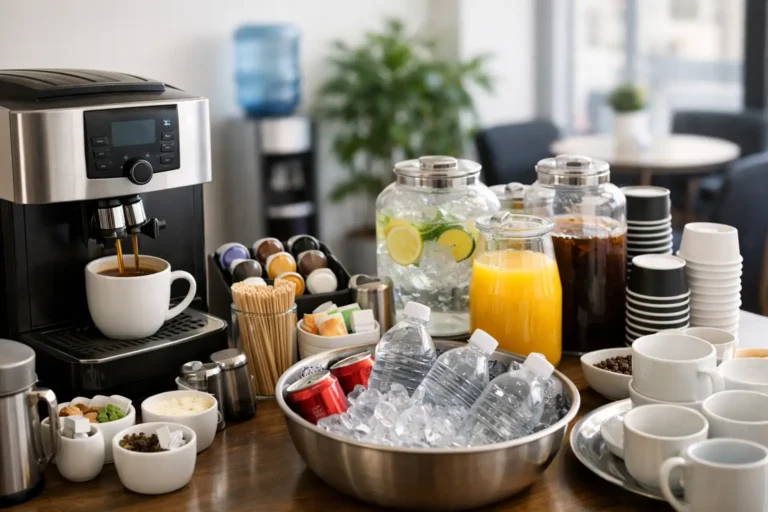
Employees notice the difference between basic breakroom coffee and a well-run beverage program. Clients do too. If your office wants espresso drinks, cappuccinos, lattes, americanos, hot chocolate, or seasonal options, quality becomes harder to maintain with a patchwork approach.
This is another reason companies outsource. They do not want to become experts in machine selection, drink programming, bean freshness, product compatibility, or cleaning schedules. They want a provider who already knows how to match the right equipment and beverage mix to the workplace.
A strong outsourced coffee partner helps businesses avoid the common trap of buying a machine that looks impressive at first but is difficult to maintain or poorly suited to actual demand. The right setup should fit your headcount, traffic patterns, and taste preferences. It should also deliver the same good cup on Monday morning that it does on Friday afternoon.
That consistency matters. A coffee program reflects on the workplace the same way a clean lobby or organized conference room does. It signals attention to detail.
Service and maintenance are where in-house programs often break down
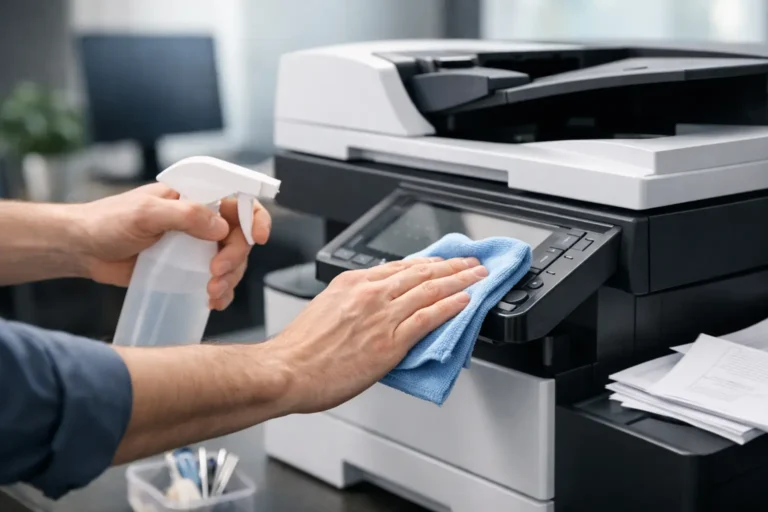
Coffee equipment works best when someone is actively taking care of it. Machines need cleaning. Parts wear out. Ingredients need to be rotated and restocked. When that support is inconsistent, the office starts dealing with clogged machines, weak drinks, messy stations, and avoidable downtime.
This is one of the top reasons companies outsource coffee programs instead of trying to piece together service as issues come up. Reactive maintenance is frustrating and usually more expensive in practice. By the time someone notices a problem, the office has already lost the convenience and morale boost the coffee station was supposed to provide.
With an outsourced service model, maintenance is not an afterthought. It is part of the program. That means routine cleaning, restocking, repairs, and weekly attention can happen before small issues become major ones. For busy offices, that reliability is worth a lot.
There is also a presentation factor. A premium machine with old milk powder residue, low supplies, or neglected surfaces does not feel premium for long. Ongoing service keeps the coffee area looking as good as it performs.
Employee experience is no longer a small perk
Workplace amenities play a bigger role in retention and office culture than they used to. Good coffee alone will not solve bigger staffing or morale problems, of course. But it does shape the everyday experience employees have with your workplace.
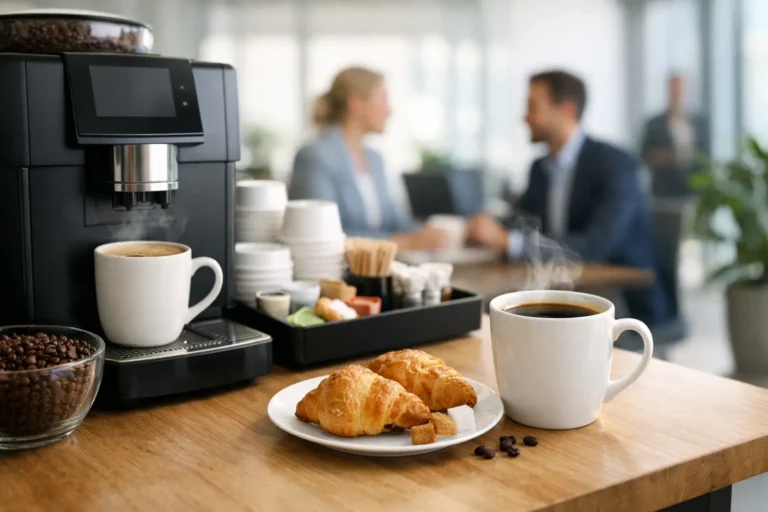
A thoughtful coffee program tells people the company cares about comfort, hospitality, and the little things that make the day better. It gives teams a reason to gather, pause, and recharge. It can also make the office more appealing for hybrid employees who are deciding whether coming in feels worth it.
When companies outsource this part of the office experience, they can often offer more than they could realistically manage on their own. Instead of one or two basic options, they can provide café-style drinks at the touch of a button, along with seasonal flavors or specialty beverages that feel like a real upgrade.
That matters for client-facing businesses as well. Offering a visitor a quality cappuccino or latte creates a different impression than pointing them toward a tired drip pot in the corner. It feels more polished, more intentional, and more in line with the image many businesses want to project.
Customization is easier with the right partner
Not every workplace needs the same coffee program. A medical office has different traffic patterns than a law firm. A manufacturing office may want speed and simplicity, while a sales office may care more about variety for guests and staff. One reason outsourcing works so well is that a good provider can tailor the setup to the business instead of forcing the business to adapt to the machine.
That could mean choosing equipment that handles higher demand, offering a mix of coffee and hot chocolate options, or selecting ingredients and products that better fit employee tastes and sustainability goals. Customization is hard to do well when a company is sourcing equipment from one vendor, ingredients from another, and repair help from wherever it can find it.
With a full-service provider, those pieces are coordinated. The program tends to feel simpler because it actually is simpler.
Local support can make a big difference
For businesses in and around Canton, Ohio, service response time is not a small detail. If your coffee machine is down and your provider is distant, slow to schedule, or hard to reach, the office feels it right away. That is why many companies prefer working with a local partner that knows the area and can respond quickly.
A local company also tends to understand the service expectations of nearby businesses. You are not just another account in a national queue. You want someone who shows up, keeps the program running, and makes adjustments as your office changes.
That personal side of service is one reason businesses choose providers like Sip and Smile Gourmet Coffee. They want premium beverages, but they also want a dependable relationship and a hands-off experience that does not create more work internally.
When outsourcing is the smart move and when it may not be
Outsourcing is a strong fit for companies that value convenience, quality, consistency, and service. It is especially useful for offices with 10 or more employees, client traffic, or a desire to offer more than standard coffee.
Still, it depends on the situation. A very small office with simple tastes and low usage may be perfectly happy with a basic self-serve setup from a retail store. If expectations are modest, outsourcing may be more than the business needs.
But once a company wants café-style drinks, professional equipment, regular maintenance, and a polished experience without assigning staff to manage it, outsourcing becomes much easier to justify. At that point, the question is less about coffee and more about how you want your workplace to run.
The best office coffee programs are not the ones that demand attention. They are the ones that quietly work, day after day, while your team focuses on everything else that matters.