Sustainable Breakroom Beverage Trends That Work
See sustainable breakroom beverage trends that reduce waste, improve coffee quality, and make workplace hospitality easier to manage every day for teams.
A breakroom coffee program says a lot before anyone takes a sip. Clients notice the quality of the drinks offered. Employees notice whether supplies are always available. And leadership notices when disposable cups, stale coffee, and constant supply runs become another operational headache. That is why sustainable breakroom beverage trends are gaining traction with Canton-area employers: the best changes reduce waste while making the beverage experience better and easier to manage.
Sustainability does not have to mean asking your team to settle for weak coffee or a complicated cleanup routine. A well-planned workplace beverage program can serve café-style drinks, limit unnecessary waste, and keep the responsibility off your office manager’s desk.
Sustainable Breakroom Beverage Trends Start With Better Coffee
One of the most practical shifts is moving away from single-serve coffee pods and large pots that sit for hours. Both can create waste in different ways. Pods add packaging waste, while brewed coffee often gets poured out once it loses its fresh flavor.
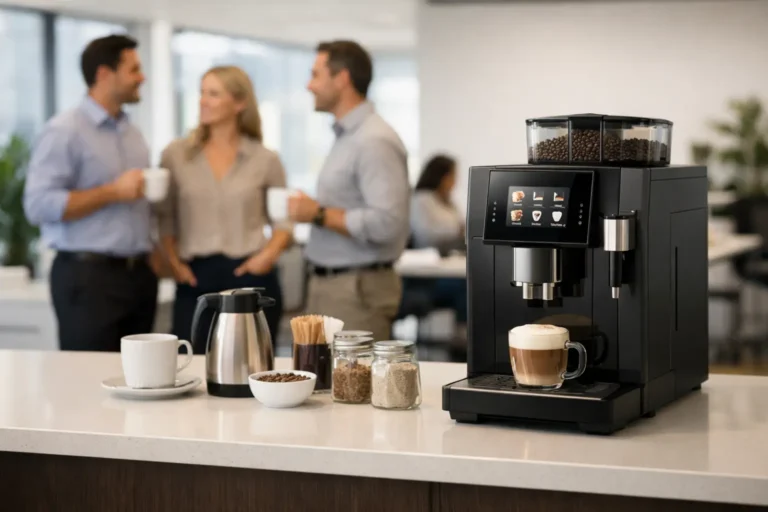
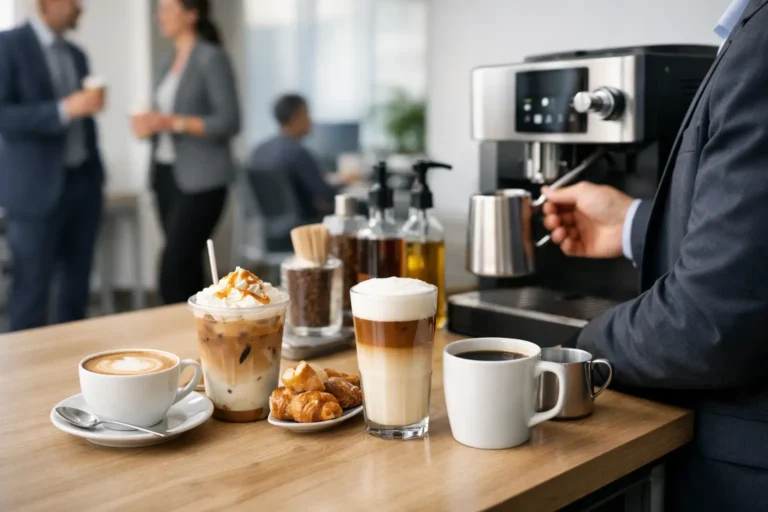
Bean-to-cup and espresso-based machines offer a more thoughtful alternative. They grind and brew coffee by the drink, so employees can choose an espresso, cappuccino, café latte, Americano, or hot chocolate without preparing a full pot that may not get used. Fresh roasted beans also create a more premium experience for staff and visitors.
This approach is not right for every workplace. A very small office with limited coffee demand may prefer a simpler setup. But for businesses with more than 10 employees, a machine that prepares drinks on demand can help control portions, improve consistency, and reduce the amount of coffee that ends up down the drain.
Freshness Is a Waste-Reduction Strategy
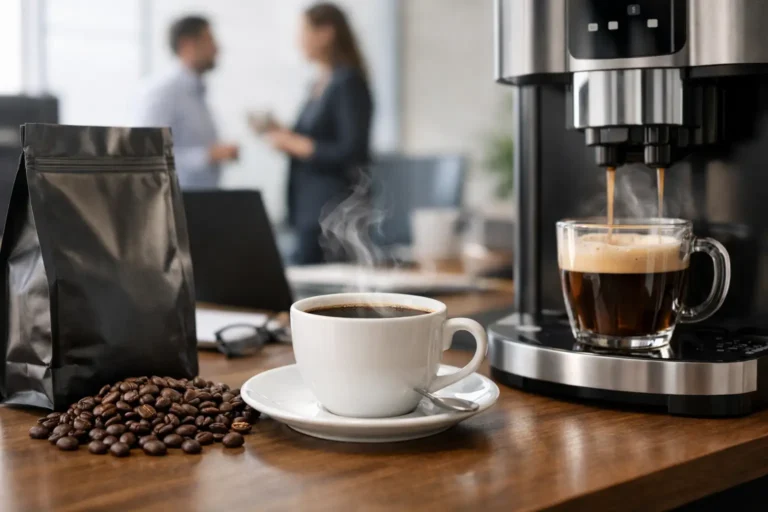
Sustainability is often discussed in terms of packaging, but product waste matters just as much. When people enjoy what is in their cup, they are less likely to abandon it after two sips. Fresh beans, quality ingredients, and reliable equipment make a difference here.
The same principle applies to creamers, syrups, cocoa, and seasonal flavors. Stocking products your team actually uses is smarter than filling shelves with options that expire untouched. A customized beverage program gives employees variety without turning the breakroom into a storage closet.
Choose Reusables Without Creating More Work
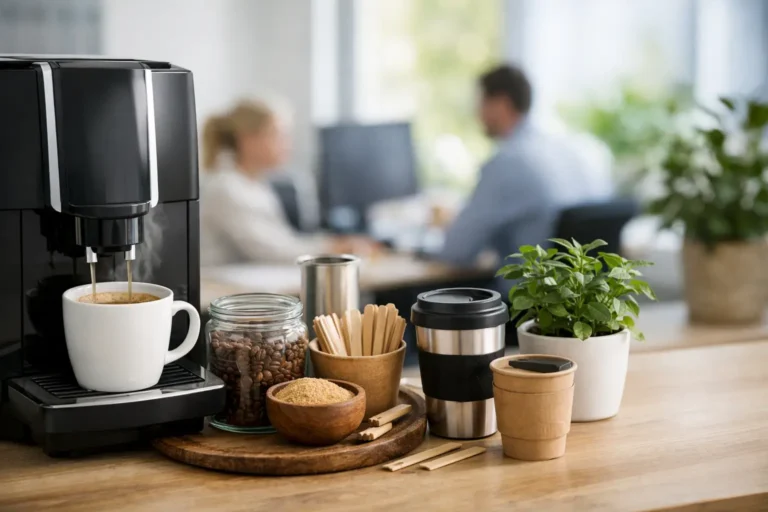
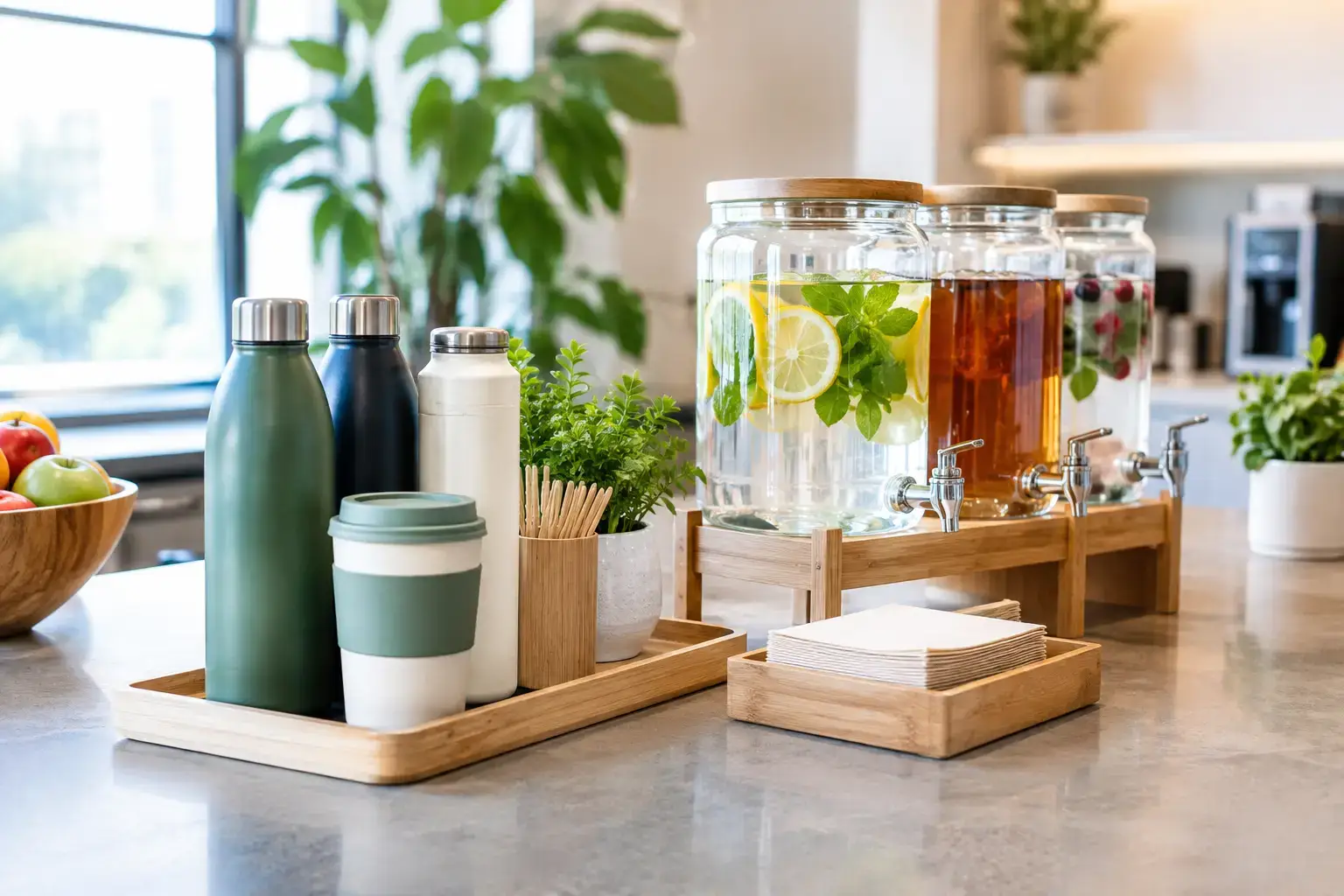
Reusable mugs, tumblers, and glasses remain a clear part of sustainable breakroom beverage trends. They can dramatically reduce the number of disposable cups used in an office, especially when the company makes them easy to access and easy to clean.
The practical question is not whether reusables are good. It is whether your workplace has a system employees will follow. A few mismatched mugs in a cabinet will not change much if there is no dishwasher, drying space, or shared expectation around cleanup.
For many offices, the most effective approach is simple: encourage employees to bring a favorite mug, provide durable company mugs for everyday use, and keep compostable or recyclable disposable cups available for guests, meetings, and busy days. That balance respects convenience while reducing the default dependence on throwaway products.
Look Beyond the Cup and Lid
The cup is visible, but it is only one part of the beverage program. Sustainable choices can also include responsibly sourced coffee, recyclable supply packaging where available, and products that use less material without sacrificing performance.
It helps to be honest about trade-offs. A compostable cup is not automatically better if local waste services do not accept it or if it ends up in the regular trash. A recyclable container is only useful when it is clean and accepted by the local recycling program. Before changing supplies, ask what your building can realistically collect and process.
A dependable beverage partner can help simplify those decisions. Rather than ordering random products from multiple vendors, businesses can choose supplies that fit their equipment, usage levels, and workplace goals. Fewer emergency orders and fewer incorrect purchases can reduce waste that never shows up in a recycling bin.
Energy-Efficient Equipment Matters, but Service Matters Too
Commercial coffee equipment has become more efficient, with programmable settings and automatic standby features that can reduce energy use during low-demand hours. Those features are worth considering, particularly for offices that operate on a predictable schedule.
Still, the machine itself is only part of the equation. Equipment that leaks, overheats, produces inconsistent drinks, or sits out of service can create unnecessary product and energy waste. Regular cleaning and maintenance keep machines working properly, protect drink quality, and help prevent a small issue from becoming a replacement-level problem.
For busy office managers, this is where a full-service program has real value. Sip and Smile Gourmet Coffee installs commercial beverage equipment, stocks the ingredients, and handles ongoing cleaning, repairs, and restocking. Your team gets the benefit of a polished coffee experience without assigning someone internally to troubleshoot a machine or monitor every supply level.
Right-Sized Restocking Prevents Expired Inventory
Overordering can look like preparation, but it often becomes waste. Cases of flavoring, powdered beverages, cups, or beans can sit too long when ordering is based on guesswork instead of actual consumption.
Regular service visits make it easier to align inventory with how your team drinks. An office that loves lattes may need more milk-based beverage ingredients. A customer-facing business may go through more cups and hot chocolate during winter. A workplace with several remote-work days may need less of everything than it did a year ago.
This is why flexibility matters. Sustainable service is not a fixed box of supplies delivered on autopilot. It is a program that changes as your staffing, seasons, and preferences change.
Offer a Menu People Will Use
A sustainability-focused breakroom should still feel generous. Employees are more likely to participate in waste-reducing habits when the beverage program feels like an upgrade, not a restriction.
That can mean offering café lattes and cappuccinos alongside black coffee, adding French vanilla or mocha options, and rotating a seasonal drink when it makes sense. It can also mean including quality hot chocolate for employees and visitors who do not drink coffee. A broader menu helps more people use the same well-managed system instead of bringing in individually packaged drinks from elsewhere.
At the same time, more choices are not always better. An oversized menu can lead to unused ingredients and confusing machine settings. Start with the drinks your team is most likely to enjoy, then adjust based on real feedback and usage.
Make Sustainability Visible and Simple
Employees should not need a training session to make a better choice. Clear signage near the beverage station can gently encourage reusable mugs, show where to place recyclable materials, and explain how to use the machine properly. Keep the message positive and brief.
Good breakroom design also helps. Place mugs where people can see them before reaching for disposable cups. Give used coffee grounds a designated collection container if your facility has a practical composting option. Keep the station clean and well supplied, because people are more likely to respect a space that feels cared for.
The goal is not perfection. Every office has different building services, employee habits, and budget priorities. The best sustainable beverage program is one your team can maintain comfortably while still delivering the quality that makes employees feel appreciated.
A better breakroom does not need to be complicated. Start with fresh, made-to-order drinks, right-sized supplies, dependable equipment care, and simple habits that cut waste without adding friction. When the program works for your people and your operations, sustainability becomes part of great workplace hospitality.