Coffee Machine Cleaning Schedule for Offices
A practical coffee machine cleaning schedule for offices that protects drink quality, prevents downtime, and keeps every workplace service-ready daily.
That first cappuccino of the morning tells employees and visiting clients a lot about your workplace. It should be hot, fresh, and consistent – not slowed down by a flashing cleaning alert, stale-tasting coffee, or a machine that needs attention. A clear coffee machine cleaning schedule protects the premium experience your team expects while preventing small maintenance issues from becoming disruptive service calls.
For a busy Canton-area office, the right schedule depends on the type of equipment, daily drink volume, water quality, and whether the machine makes milk-based beverages. A single-serve brewer has different needs than a commercial bean-to-cup espresso machine. Still, the principle is simple: handle the small daily tasks consistently, schedule deeper cleaning before buildup affects quality, and rely on qualified service for the work that belongs in experienced hands.
Why Office Coffee Machines Need a Real Schedule
Coffee machines work hard in an office setting. A unit that produces espresso, café lattes, Americanos, hot chocolate, and French vanilla drinks can serve dozens of beverages between the first meeting and the afternoon rush. Coffee oils, milk residue, mineral scale, loose grounds, and powder buildup all accumulate in different parts of the system.
When cleaning is left to “whenever someone has time,” quality usually slips first. Espresso may run slowly, milk foam may lose its texture, or drinks may develop an off taste. Over time, buildup can contribute to clogs, leaks, error messages, and avoidable downtime. That is not the impression an employer wants to create when staff or clients visit the breakroom.
A dependable routine also makes responsibilities clear. Your team should not have to guess whether a warning light can wait or whether the machine needs professional attention. A schedule turns coffee care into a quick, predictable part of workplace operations.
A Coffee Machine Cleaning Schedule by Frequency
The best schedule separates simple user tasks from professional maintenance. Staff can keep the beverage area tidy and help the machine perform well day to day. A workplace coffee provider can handle deeper cleaning, inspections, adjustments, and repairs without adding another recurring project to an office manager’s workload.
Every day: protect taste and presentation
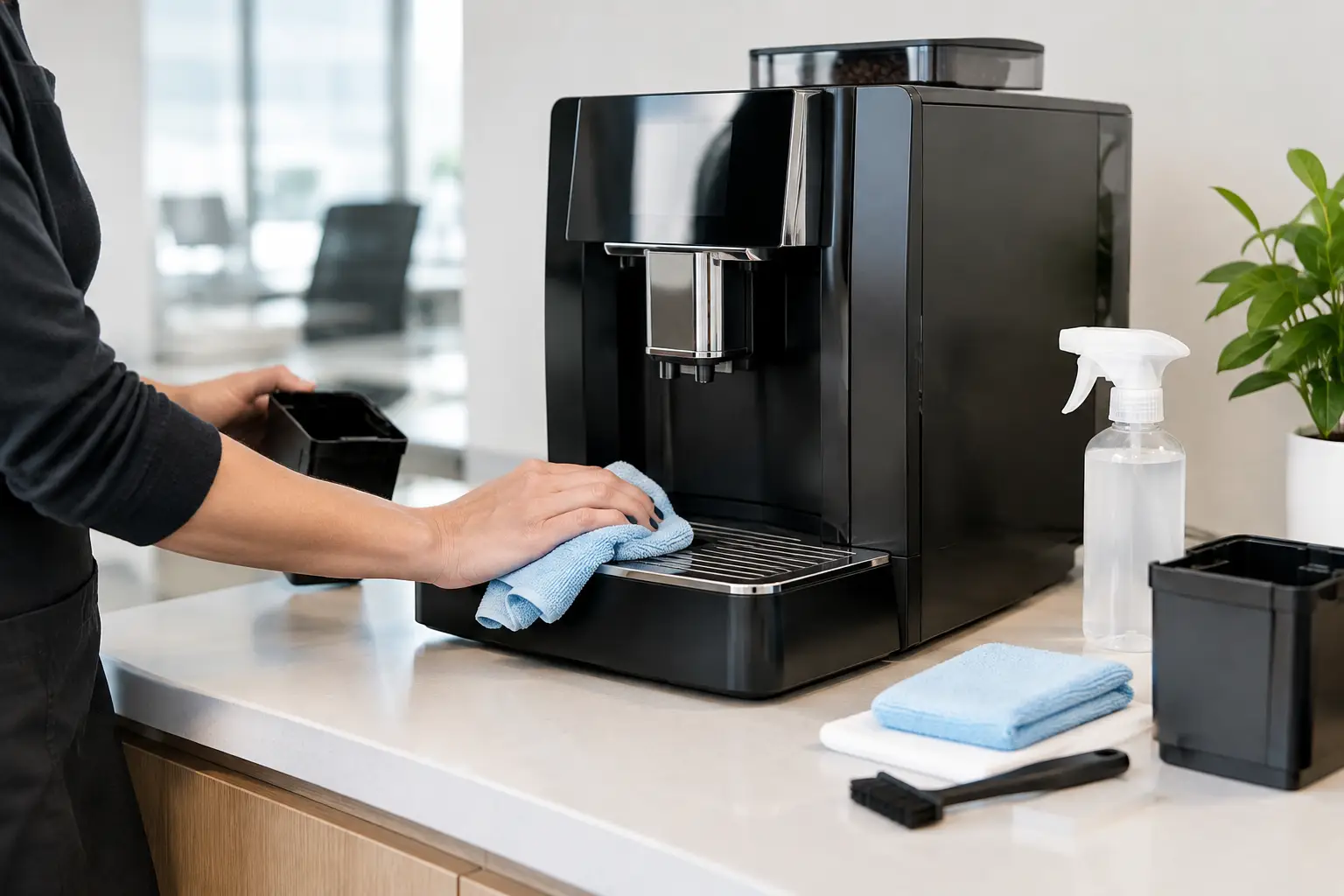
At the end of each business day, empty the drip tray and grounds container if your machine has them. Wipe the exterior, beverage spouts, touchscreen or control panel, and cup area with a clean, food-safe cloth. These quick steps prevent odors, spills, and the worn appearance that can make even a premium machine feel neglected.
If the machine makes milk drinks, the milk system deserves special attention. Follow the manufacturer’s rinse cycle after use and clean any removable milk container or components as directed. Milk residue should never be allowed to sit overnight. It can affect flavor, create sanitation concerns, and make the next morning’s first latte far less appealing.
Refill beans, water, cups, lids, stirrers, and beverage ingredients as needed. This is also the right time to notice changes in performance, such as unusual noises, weak coffee, slow dispensing, or a machine message that does not clear after its recommended cycle.
Every week: clean the parts people do not see
Weekly cleaning is where a polished beverage program stays ahead of preventable problems. Empty and wash removable components according to the equipment instructions, including the drip tray, grounds bin, water tank when applicable, and milk container. Let components dry fully before returning them to the machine.
Wipe around the brew area and remove loose coffee grounds from accessible surfaces. Do not use sharp tools or force components open. Commercial machines have seals, sensors, and moving parts that need the right handling. A well-meaning deep clean can cause more trouble if it is not done according to the model’s requirements.
For offices using powdered beverages such as hot chocolate or French vanilla, check the dispensing area for residue. Keeping those chutes and mixing areas clean helps each drink taste as intended and prevents clumping.
Monthly: review performance and complete approved cleaning cycles
Most commercial coffee equipment has built-in cleaning prompts or programmed rinse cycles. Monthly is a good time to confirm that required cleaning tablets, solution cycles, or filter checks have been completed based on the manufacturer’s directions. The precise timing may be driven by drink count rather than the calendar, so always follow the machine’s prompts when they appear.
Use this monthly check to review the full experience. Are beans being stored properly? Are cups and supplies organized? Does the machine look clean enough for a client to use without hesitation? Is the beverage menu still meeting what employees enjoy? A coffee station is a workplace amenity, but it is also a small hospitality moment repeated all day.
Quarterly or as needed: address scale and system care
Descaling removes mineral deposits that can build up inside water lines and heating systems. The correct descaling frequency varies. Hard water, high beverage volume, and machine design all matter, which is why a fixed quarterly rule is not right for every office. Some machines monitor water usage and will prompt for service at the appropriate time.
Never ignore a descale alert, but do not use a generic cleaner unless it is approved for your equipment. The wrong product can damage internal components or leave behind flavors that affect every drink. For a commercial espresso system, this work is often best completed by a trained service provider who can also inspect the machine while it is being maintained.
Who Should Handle Each Task?
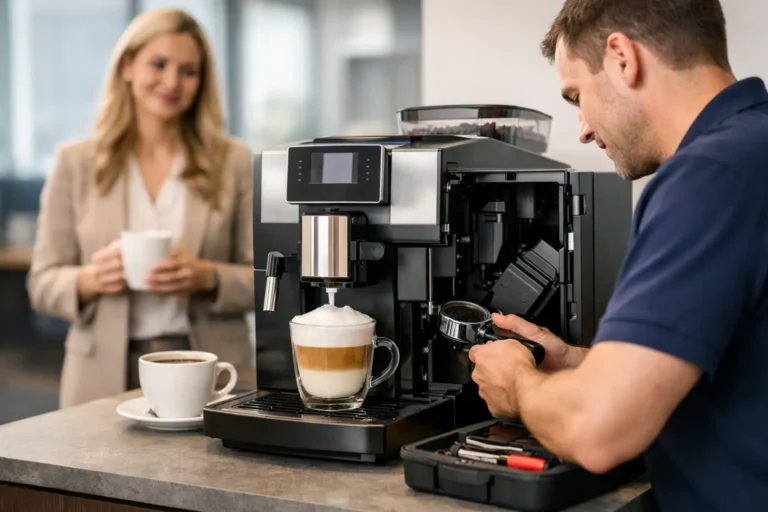
A practical office plan keeps employee tasks short and safe. Staff can empty trays, wipe surfaces, run routine prompted rinses, and report issues. They should not be expected to diagnose internal faults, disassemble brew groups beyond normal user-accessible parts, or attempt repairs between meetings.
That distinction matters for both uptime and accountability. An office manager has enough to coordinate without tracking water filters, sourcing cleaning products, troubleshooting a milk system, or scheduling emergency repairs. With a full-service program, the provider can build cleaning and maintenance into regular visits, replenish supplies, and catch developing issues before the machine stops serving drinks.
Sip and Smile Gourmet Coffee provides that hands-off approach for workplaces that want café-style beverages without taking on the equipment management behind them. Regular support keeps the focus where it belongs: giving staff and guests a great cup, not giving someone another breakroom task.
Signs Your Schedule Needs Attention
Even with a routine in place, a machine can signal that it needs help sooner. Treat a change in beverage quality as useful information, not a minor inconvenience. Bitter or weak coffee, inconsistent espresso shots, watery milk foam, slow drink delivery, leaks, unusual noises, and recurring alerts all deserve a prompt response.
A dirty drip tray or full grounds bin is usually a quick fix. Repeated messages, persistent leaks, or changes in temperature are different. Continuing to run the machine can turn a manageable service visit into longer downtime. Ask employees to report issues early, ideally with a quick note about what happened and which drink selection was used.
Make the Schedule Easy to Follow
The most effective cleaning plan is the one people can actually maintain. Keep the daily routine posted near the machine in plain language. Store only approved cleaning supplies nearby, and make sure the person responsible for closing the office or tidying the breakroom knows where they are.
For larger teams, avoid assigning deep maintenance to a rotating group of employees. Shared ownership can easily become no ownership. Instead, reserve internal responsibilities for simple daily care and arrange dependable professional support for the work that requires product knowledge, parts, or calibration.
A clean coffee machine does more than prevent service interruptions. It keeps each espresso, latte, and hot chocolate worthy of the workplace you are building – welcoming for clients, appreciated by employees, and easy for your team to provide every day.