Are Commercial Espresso Machines Reliable at Work?
Are commercial espresso machines reliable? Learn what affects uptime, maintenance needs, and why service support matters for busy Canton-area workplaces.
A cappuccino at 9:15 a.m. should not turn into a call to the facilities team. For office managers and business owners asking, are commercial espresso machines reliable, the honest answer is yes – when the machine, daily use, water conditions, and service plan are matched correctly. A professional machine can deliver café-style drinks day after day, but it is not a set-it-and-forget-it appliance.
The good news is that reliability does not have to mean adding another task to your team’s list. With the right workplace coffee partner, your employees get the lattes, Americanos, hot chocolate, and specialty drinks they enjoy while someone else handles the cleaning, supplies, and maintenance behind the scenes.
Are Commercial Espresso Machines Reliable for Offices?
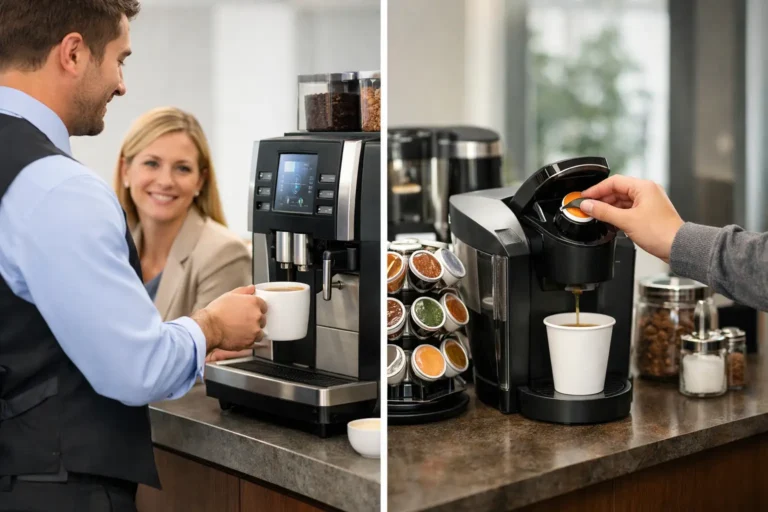
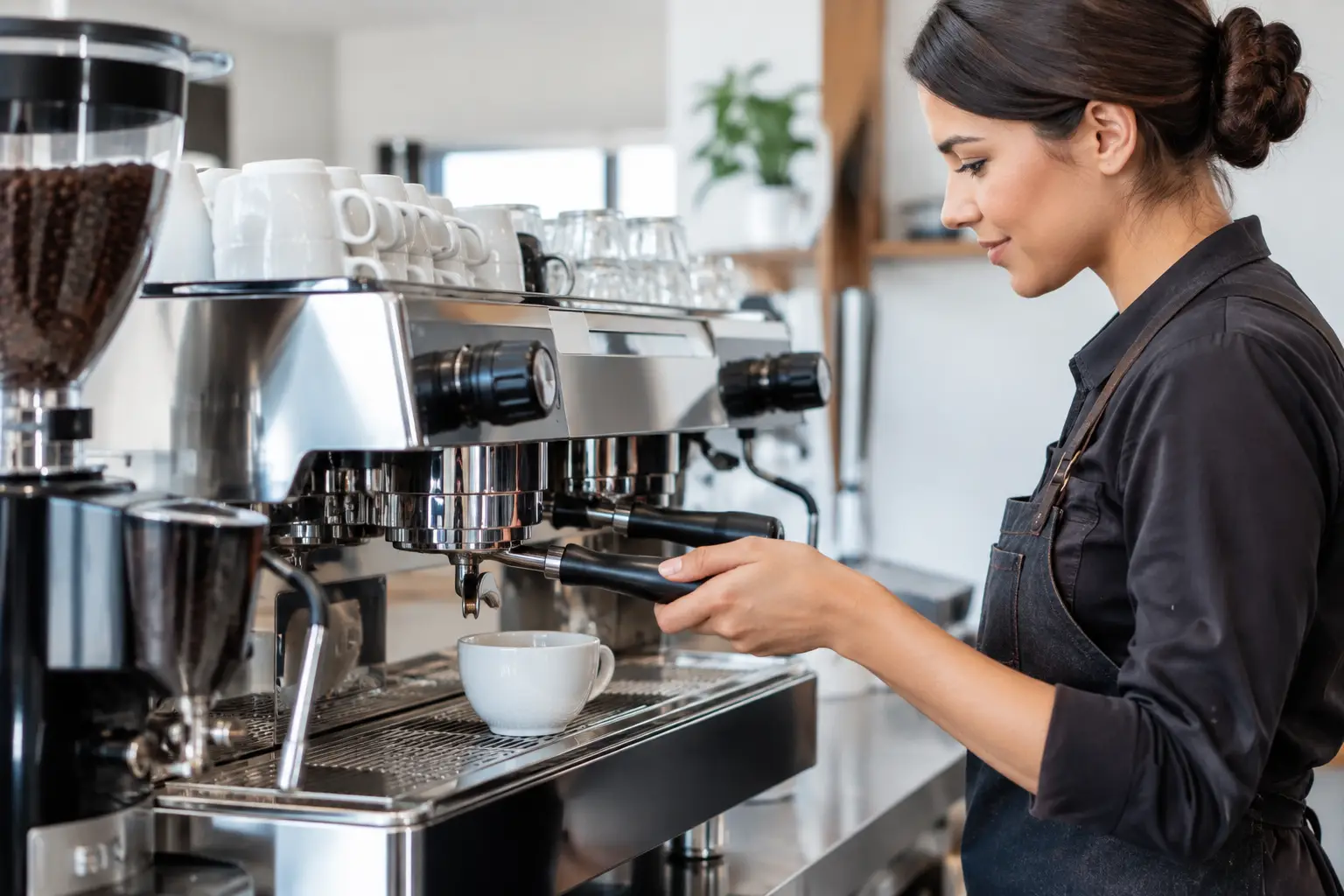
Commercial espresso machines are built for frequent use. Unlike a consumer coffee maker designed for a few drinks each morning, a commercial unit is made to grind beans, heat water, steam or froth milk, and prepare beverages repeatedly throughout the workday. That design makes it a strong fit for offices with 10 or more employees, client waiting areas, medical practices, dealerships, and other businesses where hospitality matters.
Still, not every commercial machine is equally reliable in every setting. A compact model may be perfect for a team of 15 but struggle in a busy office where 75 people use it during the same two-hour window. Likewise, a machine can have excellent internal components and still experience avoidable issues if it is not cleaned, stocked, or serviced on schedule.
For most businesses, the better question is not simply whether the machine will last. It is whether the coffee program has been designed to keep the machine available when people want a drink. That is where equipment selection and ongoing support make the difference.
What Determines Commercial Espresso Machine Reliability?
The quality of the equipment
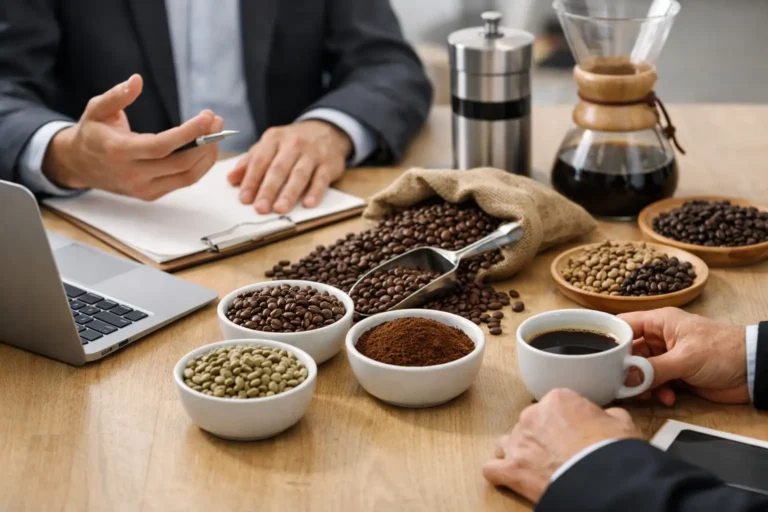
Italian-made barista machines and other professional-grade systems are designed for consistency. Their grinders, brewing groups, boilers, and milk systems are made for higher volume and more demanding use than home equipment. Quality parts matter because they influence everything from drink temperature to how well the machine performs during a morning rush.
A higher-quality machine may cost more to purchase outright, but it often brings better drink quality, stronger durability, and easier access to parts and trained service. For a workplace, that can be a smarter investment than choosing the lowest-priced machine and dealing with more interruptions later.
Matching capacity to your team
Reliability often comes down to capacity. A machine that is undersized for the office will be pushed past its intended workload. It may need more frequent cleaning cycles, run low on ingredients, or take longer to recover between drinks. Employees may interpret that as an unreliable machine, even when the real issue is that the equipment was not matched to demand.
Before placing equipment, consider how many people will use it, the busiest times of day, and the drinks they prefer. Espresso-based beverages, cappuccinos, lattes, and mochas typically place different demands on a machine than black coffee alone. A knowledgeable provider can recommend a setup that fits the actual rhythm of your workplace.
Water quality and filtration
Water is one of the biggest factors in espresso machine performance. Minerals can build up inside boilers, valves, and brewing components. Over time, scale affects heating, water flow, and flavor. In severe cases, it can shorten the life of important parts.
Proper filtration protects the equipment and helps each drink taste the way it should. This is especially relevant for businesses that want to serve premium coffee consistently. Fresh roasted beans cannot overcome poor water quality or a machine that needs descaling.
Daily care and regular maintenance
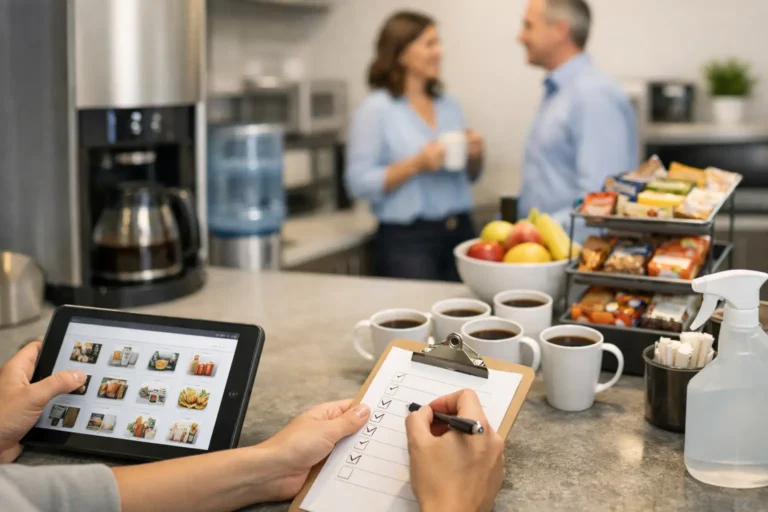
Even the best commercial espresso machine needs care. Coffee oils collect in brewing areas, milk residue can affect frothing systems, and waste containers need attention. Most modern bean-to-cup machines make basic cleaning easier with guided rinse cycles and automatic alerts, but someone still needs to complete those tasks.
Regular preventive maintenance is just as important. It allows a technician to address wear before it becomes a shutdown. Replacing a small component during a planned visit is far less disruptive than waiting for a machine to stop working on a Monday morning.
The Trade-Off: Convenience Versus Ownership
Some companies choose to buy a commercial espresso machine outright. Ownership can make sense for businesses that have staff members who are comfortable managing cleaning, ordering beans and ingredients, arranging repairs, and tracking maintenance schedules. It also gives the company full control over equipment choices.
The trade-off is that ownership puts the responsibility on your team. When the machine needs attention, the office manager may be the one researching repair companies. When beans run low before a client meeting, someone has to make the supply run. When a cleaning alert appears, someone needs to know exactly what to do.
A full-service program changes that equation. Instead of buying equipment and building an in-house process around it, the business receives equipment, beverage supplies, upkeep, repairs, and restocking as part of one managed solution. The goal is not merely to have a dependable machine. It is to have a dependable coffee experience.
Why Service Support Matters as Much as the Machine
No mechanical equipment is immune to wear. The difference between an inconvenience and a real workplace disruption is the response when something needs attention. A reliable commercial coffee service should make support simple, timely, and familiar with the equipment installed at your location.
That matters because a machine can be technically dependable yet still feel frustrating if help is hard to reach or repair timelines are unclear. Local service provides an advantage here. A provider who knows your workplace, beverage preferences, and equipment can spot patterns, keep common supplies on hand, and address concerns without making your staff start from scratch each time.
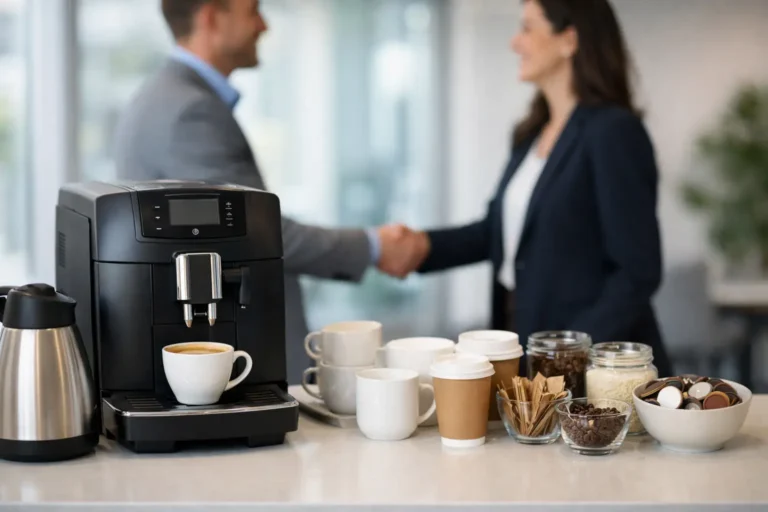
At Sip and Smile Gourmet Coffee, that support model includes installation, fresh roasted beans and beverage ingredients, weekly maintenance, cleaning, repairs, and restocking. It is designed for Canton-area businesses that want to offer a premium perk without turning coffee management into another internal project.
Signs Your Office Coffee Setup Needs Attention
A slow decline in performance is easy to miss when everyone is busy. Watch for drinks that are weaker than usual, temperatures that vary, milk foam that is inconsistent, unusual noises, longer brew times, or recurring error messages. Empty ingredient hoppers and neglected cleaning prompts can also create the impression that the equipment is failing when the problem is simply lack of routine care.
Employee feedback is useful, too. If people stop using the machine, go out for coffee more often, or mention that a favorite drink is no longer available, the program may need adjustment. The solution might be maintenance, but it could also be a better ingredient selection, a higher-capacity machine, or a more dependable restocking schedule.
How to Get Dependable Results From Day One
Start with the employee experience you want to create. If your goal is to welcome clients with café-quality beverages or give staff a daily perk they genuinely enjoy, choose a setup that supports more than plain coffee. Look for a machine that can reliably prepare the drinks your team will actually order, from espresso and café lattes to French vanilla and hot chocolate.
Then make service part of the decision, not an afterthought. Ask who installs the machine, how often it will be maintained, who handles cleaning products and ingredients, and what happens if the equipment needs repair. Clear answers reduce surprises and protect your time.
A great workplace coffee program should feel easy from the first cup to the last. When the equipment is sized correctly, cared for consistently, and backed by responsive local service, a commercial espresso machine becomes more than reliable. It becomes one less thing your team has to worry about – and one more reason staff and visitors enjoy being there.