Corporate Beverage Planning for Better Workdays
Corporate beverage planning helps Canton offices serve better coffee, control costs, and create a polished experience for employees and clients every day.
A half-empty pot of burnt coffee sends a message before anyone says a word. So does a client waiting in reception with nothing better than a packet of powdered drink mix. Thoughtful corporate beverage planning gives your workplace a more welcoming feel while providing staff with a practical, everyday perk they will actually use.
For Canton businesses with 10 or more employees, the goal is not to turn the breakroom into a complicated café operation. It is to offer consistently good drinks, make a strong impression on visitors, and remove one more task from the office manager’s already full list.
Start Corporate Beverage Planning With the People Using It
The right beverage program depends on who comes through your doors and how they use the space. A busy office with an early morning rush has different needs than a client-facing showroom, medical practice, manufacturing office, or professional services firm.
Begin with a few straightforward questions. How many people work on site on a typical day? Are employees primarily coffee drinkers, or do they also ask for hot chocolate, tea, decaf, and flavored options? Do clients, vendors, or interview candidates spend time in your reception area? Is the breakroom a quick stop, or a place where people gather and recharge?
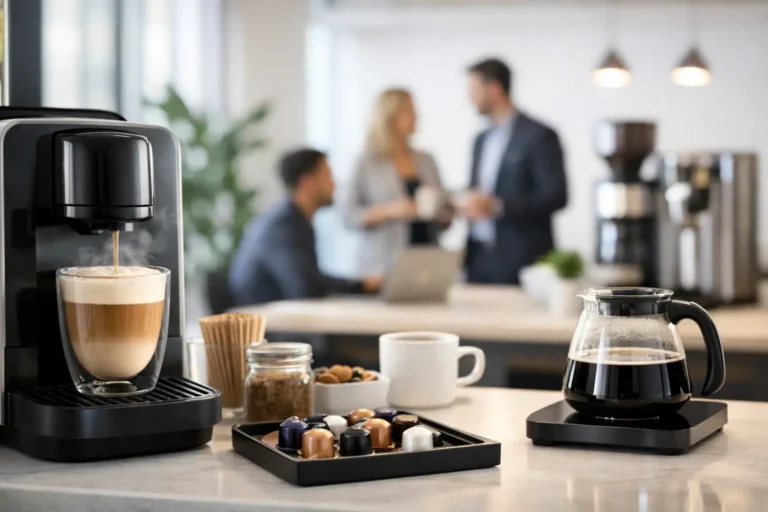
Coffee remains the anchor for most workplace programs, but a single basic drip option may not match what employees expect. Café lattes, cappuccinos, espresso, Americanos, French vanilla drinks, and hot chocolate give people a choice without forcing someone in the office to stock, clean, and troubleshoot several different appliances.
There is a balance to strike. Too few options can make a new program feel underwhelming. Too many can create waste and make ordering harder than it needs to be. A well-planned program offers familiar favorites first, then adds choices based on actual demand rather than guesswork.
Think About More Than the Morning Coffee Rush
Many offices plan for 8:00 a.m. and forget the rest of the day. Yet a good beverage station supports the afternoon meeting, the unexpected visitor, the employee staying late to finish a project, and the candidate arriving for an interview.
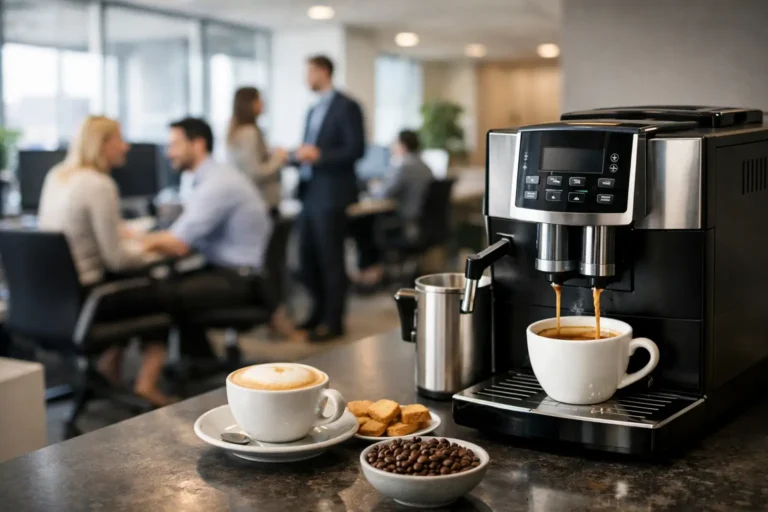
That is why convenience matters as much as drink variety. A touch-of-a-button commercial barista machine can provide a polished coffeehouse-style drink in moments. It also helps deliver a more consistent result than an employee attempting to prepare specialty drinks with separate equipment and ingredients.
Set a Budget Around Value, Not Just Supplies
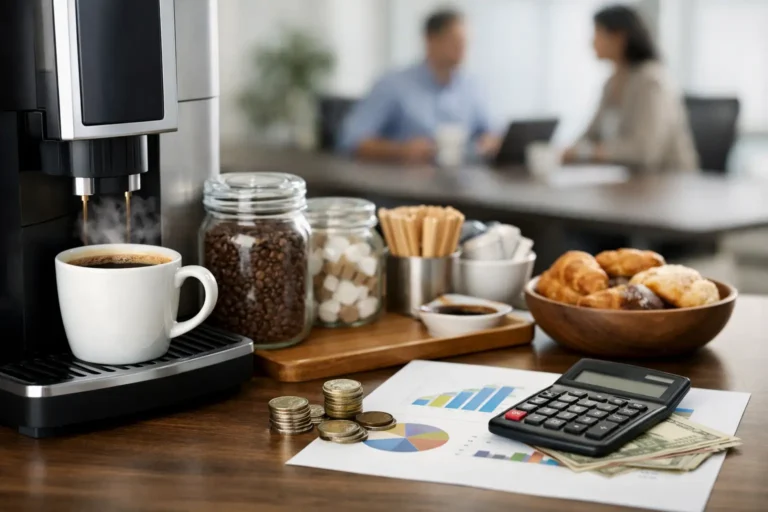
The lowest-cost coffee setup often creates hidden costs. Someone has to compare products, place orders, carry supplies into the office, wipe down equipment, deal with a machine issue, and make an emergency store run when coffee runs out. When that person is an office manager or administrator, those small interruptions add up.
A practical corporate beverage planning budget looks at the full picture: equipment, ingredients, cleaning, service, restocking, and the staff time required to keep everything running. Some businesses prefer buying equipment, but ownership also means accepting repairs, replacement decisions, and inconsistent maintenance. For organizations that want predictable support, a managed workplace coffee service can be the simpler choice.
Premium does not have to mean excessive. The strongest programs usually focus on fresh roasted beans, reliable equipment, good ingredients, and a service schedule that keeps the station ready. That approach gives employees and clients a noticeably better experience without requiring the company to operate its own coffee program.
Choose Equipment That Fits the Office, Not a Catalog
Commercial beverage equipment should match your volume, space, and desired menu. A small office may need a compact solution with several popular drink selections. A larger team or a high-traffic client area may need a machine built to keep pace through meetings, shift changes, and busy mornings.
Speed is one consideration, but ease of use is just as important. If a machine is confusing, staff will avoid it or use it incorrectly. If it requires constant attention, the program becomes a chore instead of a benefit. The best equipment makes quality drinks simple for the user while giving the provider clear access for maintenance and service.
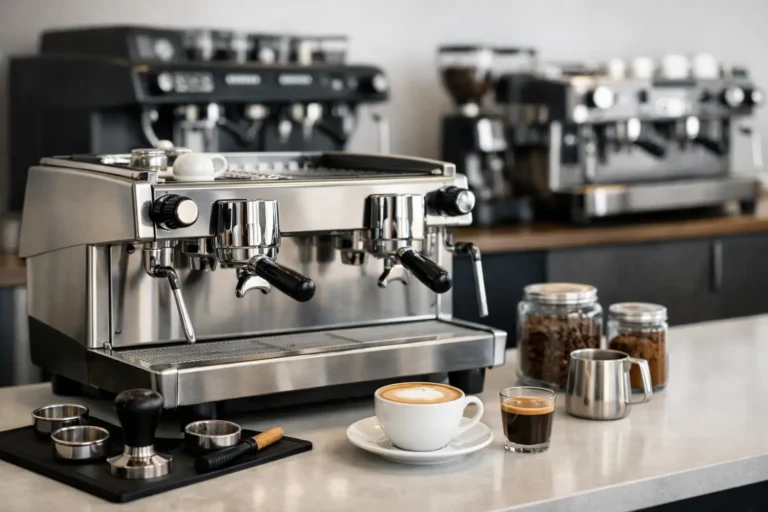
Italian-made barista machines are a strong fit for offices that want espresso-based drinks without the labor and training of a traditional coffee bar. Employees can select a cappuccino, café latte, espresso, mocha, or Americano at the touch of a button. That variety feels elevated, especially when compared with a standard breakroom pot, but it remains easy to manage.
Space and utilities matter, too. Before selecting equipment, look at counter space, electrical access, water availability, and traffic flow. A beverage station should be easy to reach without blocking the breakroom or reception area. A good provider will help assess the location before installation rather than leaving your team to solve those details later.
Build Service Into the Plan From Day One
A great machine is only great when it is clean, stocked, and working. This is where many do-it-yourself office coffee programs lose momentum. The initial setup may look simple, but the ongoing responsibility is where frustration starts.
Weekly maintenance, cleaning, restocking, and repair support protect the experience you are trying to create. Fresh beans do not help if the machine is out of milk powder or a service light has been ignored for weeks. Regular attention also keeps drinks tasting the way they should and helps prevent small issues from becoming disruptive failures.
For a business decision-maker, this is the difference between purchasing a product and receiving a service. With Sip and Smile Gourmet Coffee, the equipment, beverage supplies, and ongoing care are organized as one workplace solution. Your team gets the benefit of better drinks, while someone else handles the operational work behind them.
Plan for Reliability During Important Moments
Think through the days when your beverage station matters most. A leadership meeting, a client presentation, an open house, or a hiring event is not the time to discover that the coffee machine needs cleaning or has run out of ingredients.
A dependable service schedule creates confidence because supplies are monitored and the equipment receives regular care. It also gives your office a clear point of contact when something needs attention. That is particularly valuable for small and midsized businesses that do not have facilities staff on site.
Make the Beverage Area Part of Your Workplace Experience
A coffee station is a small detail with an outsized effect. It gives employees a reason to step away from their desks, talk with coworkers, and return to work feeling refreshed. For visitors, it shows that your company pays attention to hospitality.
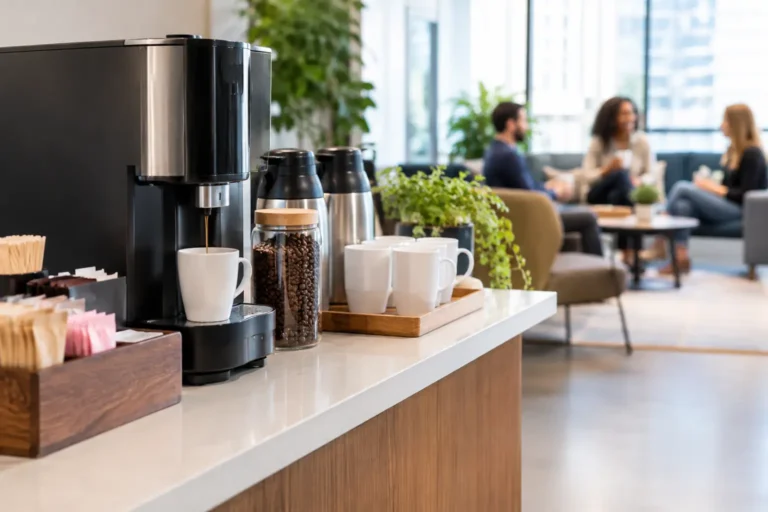
The area does not need elaborate décor to work well. Keep it clean, organized, and easy to use. Place cups, lids, stirrers, sweeteners, and napkins where people naturally reach for them. If sustainability is important to your organization, choose environmentally friendly product options that support that value without sacrificing convenience.
Communication helps adoption, especially when you introduce a new machine. Let employees know what drinks are available and how to use the equipment. A short, friendly introduction can turn a new office amenity into a favorite daily routine.
Review the Program and Adjust With Purpose
Corporate beverage planning is not a one-time decision. After the first several weeks, pay attention to what people use. If decaf sits untouched while cappuccinos disappear, adjust the supply mix. If the breakroom gets crowded at certain times, consider whether equipment capacity or station layout needs to change.
Employee feedback is useful, but usage is often the clearest signal. The goal is not to accommodate every individual request. It is to create a beverage program that serves the majority well, stays within budget, and remains easy for the office to maintain.
When a workplace beverage program is planned around real habits, dependable service, and quality people can taste, it becomes more than a breakroom expense. It becomes a simple way to help staff feel appreciated and help every guest feel welcome from the moment they arrive.