Managed Coffee vs Self Service for Ohio Offices
Compare managed coffee vs self service for your Canton office. See which option saves time, supports quality, and gives staff café-style drinks daily, too.
A coffee machine that sits empty at 10:30 a.m. because the milk ran out is not much of an employee perk. When comparing managed coffee vs self service, that everyday detail matters as much as the machine itself. For Canton-area businesses, the better choice comes down to who will keep the program stocked, clean, working, and worth using.
Self-service coffee can look simple on paper: buy a machine, order supplies, and let employees help themselves. Managed coffee takes those ongoing responsibilities off your team’s plate. Both can serve a purpose, but they create very different experiences for employees, guests, and the person who gets the call when the brewer stops working.
What Self-Service Coffee Really Requires
A self-service office coffee program puts your business in charge of the entire operation. You select and purchase or lease equipment, choose coffee and ingredients, track inventory, arrange repairs, and decide who handles cleaning. This model can work well for a very small office with straightforward expectations and someone willing to own those tasks.
The cost of the machine is only the starting point. Coffee beans, cups, stirrers, sweeteners, milk options, cleaning products, water filters, and replacement parts all need attention. Someone also has to notice when supplies are running low before the breakroom does.
For an office offering only standard drip coffee, that may be manageable. But the workload grows quickly when your team wants café favorites such as espresso, cappuccinos, café lattes, Americanos, mochaccinos, hot chocolate, or French vanilla drinks. Higher-quality machines need regular care to perform well, and skipping maintenance can affect flavor, reliability, and the life of the equipment.
There is also a hidden people cost. Office managers and administrators are often asked to handle coffee service alongside their actual responsibilities. A quick supply order can turn into comparing vendors, receiving deliveries, finding storage space, troubleshooting an error message, and coordinating a repair. The program may be technically self-service for employees, but it is rarely self-service for the person managing the office.
Managed Coffee vs Self Service: The Day-to-Day Difference
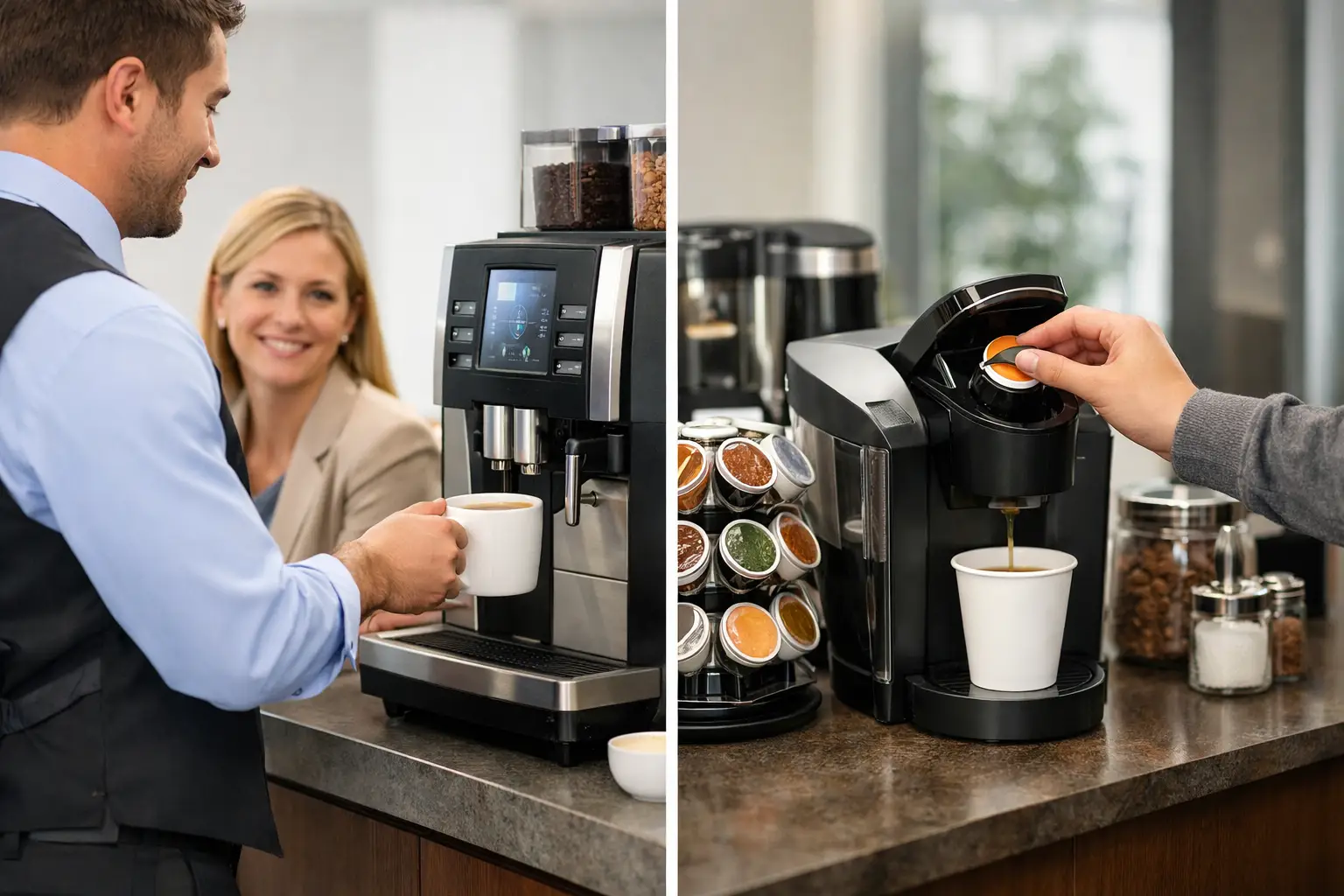
With managed coffee service, the provider handles the moving parts that can make office coffee frustrating. The equipment is installed, beverage choices are planned around your workplace, and a service team keeps the program operating. Your staff gets the benefit of a premium coffee station without your internal team becoming coffee equipment experts.
That difference shows up in small but meaningful moments. Fresh roasted beans are available. Specialty ingredients are replenished. The machine is cleaned and checked on a regular schedule. If something needs repair, there is a clear path to getting it handled rather than a scramble to find a technician.
For a business with more than 10 employees, consistency is often the deciding factor. A coffee station is part of the workday. When it works well, it creates a comfortable place for employees to take a break, connect with coworkers, and reset between tasks. When it is poorly stocked or out of order, it becomes another avoidable office complaint.
A managed program also helps client-facing organizations make a stronger first impression. Offering a guest a fresh espresso drink or café latte feels more polished than pointing toward a pot of coffee that has been on the warmer since early morning. It communicates hospitality without requiring a receptionist or office manager to prepare drinks by hand.
Comparing Cost Beyond the Monthly Price
It is fair to ask whether managed coffee costs more than buying equipment and supplies yourself. In some cases, self-service may have a lower visible monthly expense, especially when the office uses basic equipment and limits beverage choices. But the most useful comparison includes total ownership cost, not just the invoice for beans or the machine.
With self-service, your business may absorb equipment purchase costs, installation, service calls, replacement parts, cleaning labor, emergency supply runs, and the downtime caused by a machine failure. You may also pay for more supplies than you need because ordering in bulk is convenient, then find that products expire or sit unused in a storage closet.
Managed coffee turns many of those unpredictable costs into a planned service arrangement. Rather than owning every operational issue, you are paying for an experience that includes equipment support and ongoing attention. For many office leaders, the value is not only in the coffee. It is in fewer interruptions, fewer surprise expenses, and less time spent managing a breakroom category that is not central to the business.
The right choice depends on your priorities. If your office has modest needs, a reliable person to manage supplies, and no interest in specialty drinks, self-service can be practical. If you want a higher-end offering that reflects well on your company while keeping your team focused on their real work, managed service is usually the stronger fit.
Quality Is More Than the Coffee Bean
Even excellent coffee beans cannot overcome equipment that is dirty, miscalibrated, or overdue for maintenance. In a workplace setting, quality depends on the full system: the machine, the water, the ingredients, the cleaning routine, and the person responsible for keeping it all on track.
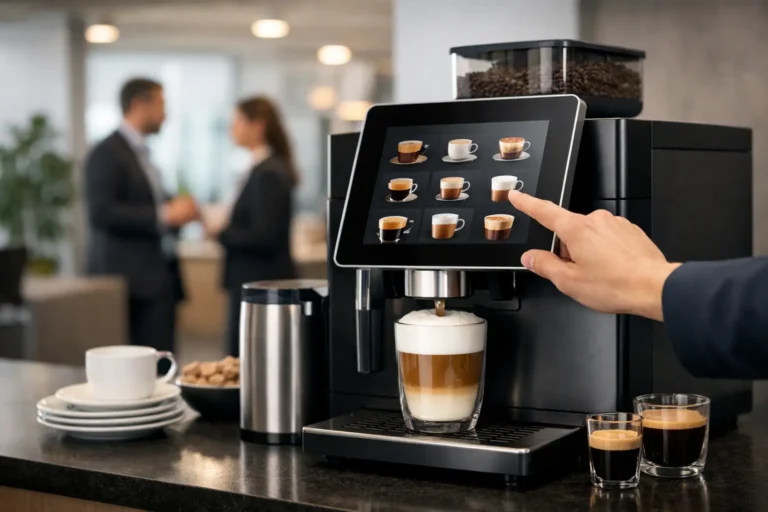
Managed programs are designed around that full picture. A professional-grade Italian barista machine can deliver drink-after-drink consistency at the touch of a button, but it needs proper setup and service. Regular cleaning protects flavor and helps prevent the buildup that can cause performance issues. Scheduled restocking keeps popular choices available rather than leaving employees with whatever happens to be left.
Customization matters, too. Some teams want bold coffee and espresso options. Others appreciate decaf, hot chocolate, seasonal drinks, or dairy-free choices. A managed provider can help shape an offering around actual preferences instead of leaving the office to guess what will be used. That can reduce waste and make the coffee station feel like a thoughtful workplace benefit rather than a generic amenity.
Reliability Matters Most When You Are Busy
No office manager plans their week around a coffee machine repair. Yet with a self-managed program, that is often what happens when equipment goes down. You must identify the issue, contact a service company, wait for an appointment, approve a repair, and find an alternative while the machine is unavailable.
Managed service changes the responsibility. Your provider has a reason to keep the equipment in working order because the coffee experience is the service. Weekly maintenance, cleaning, repairs, and restocking provide continuity that is difficult to recreate through occasional internal attention.
This is especially valuable during busy seasons, client meetings, hiring events, and days when the office is full. Those are the moments when a reliable beverage station earns its place. Employees can grab their usual drink without leaving the building, and guests receive a welcome that feels intentional.
How to Decide What Fits Your Office
Start with the experience you want to provide, then work backward. Ask whether your current team has the time and interest to manage coffee inventory, equipment cleaning, vendor ordering, and repairs. Consider how often employees use the station, what drinks they actually want, and whether visitors regularly pass through your office.
Also consider the standard you want to maintain. A basic self-service setup may be enough for a low-traffic space. A growing office, professional practice, showroom, or organization competing for talent may benefit more from a café-style option that stays clean, stocked, and ready without internal effort.
Sip and Smile Gourmet Coffee helps Canton businesses provide that kind of hands-off experience, pairing premium beverage choices with ongoing local service. The goal is simple: your team and guests get a better cup, while your office avoids taking on another job.
A workplace coffee program should make the day easier, not create a list of chores for someone already juggling ten things. Choose the approach that gives your people a dependable reason to smile when they walk into the breakroom.