Guide to Office Beverage Supply Management
Use this guide to office beverage supply management to control costs, prevent stockouts, and give employees and guests café-quality choices every day.
At 2:30 p.m., an empty coffee hopper or missing cups can turn a much-needed break into an avoidable frustration. A thoughtful guide to office beverage supply management helps your workplace avoid those small disruptions while delivering the kind of café-style experience employees and clients remember.
For Canton-area businesses, beverage management is not just about keeping coffee in the breakroom. It is about choosing the right equipment, matching supplies to real demand, controlling waste, and making sure someone is accountable when a machine needs attention. Done well, your coffee program becomes one less operational detail on your desk – and one more way to WOW your staff and guests.
Start With the Experience You Want to Provide
Before ordering beans, creamers, or paper goods, decide what your beverage station should accomplish. A small office with 12 employees may need a dependable bean-to-cup machine and a focused menu. A client-facing law office, medical practice, dealership, or corporate headquarters may benefit from a broader selection that gives every visitor a polished welcome.
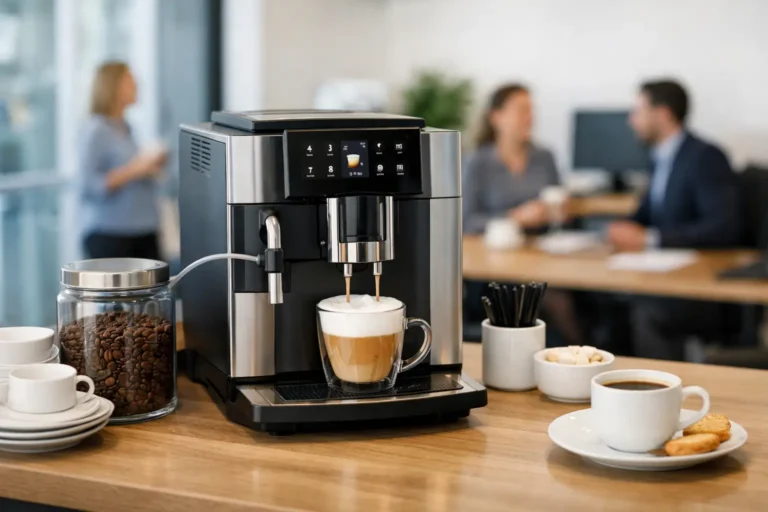
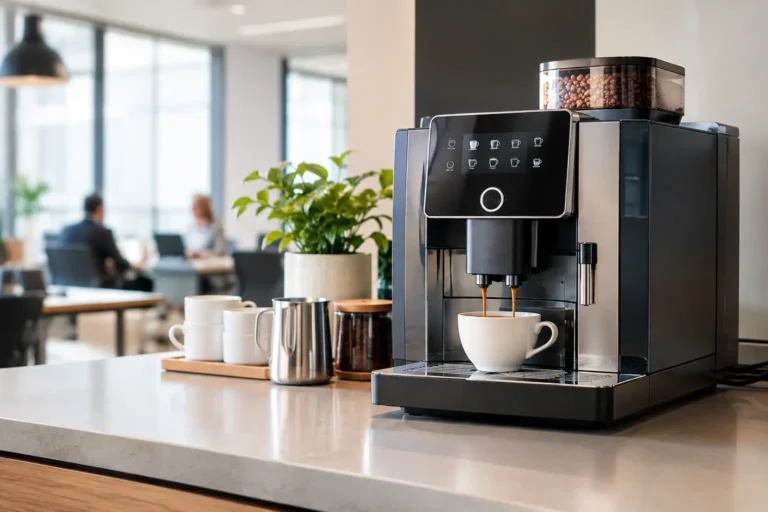
Basic drip coffee can cover a need, but it does not create much choice. A commercial barista machine can offer espresso, cappuccinos, café lattes, café Americanos, mochaccinos, hot chocolate, French vanilla drinks, and seasonal options at the touch of a button. The right choice depends on your staff size, the pace of your office, available space, and how often clients visit.
Ask a few practical questions: How many people use the beverage station each day? Do employees want regular coffee only, or do they regularly buy specialty drinks elsewhere? Is the station part of your client experience? Answers to these questions keep you from paying for a program that is too limited or more complicated than your workplace needs.
Know What You Are Managing
An office beverage program has more moving parts than it first appears. Coffee beans are only one piece. Successful supply management accounts for ingredients, disposables, cleaning products, water needs, equipment performance, and seasonal demand.
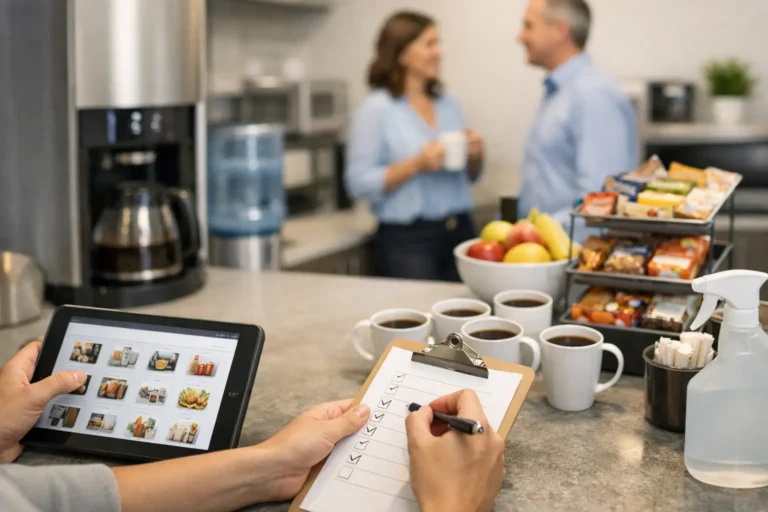
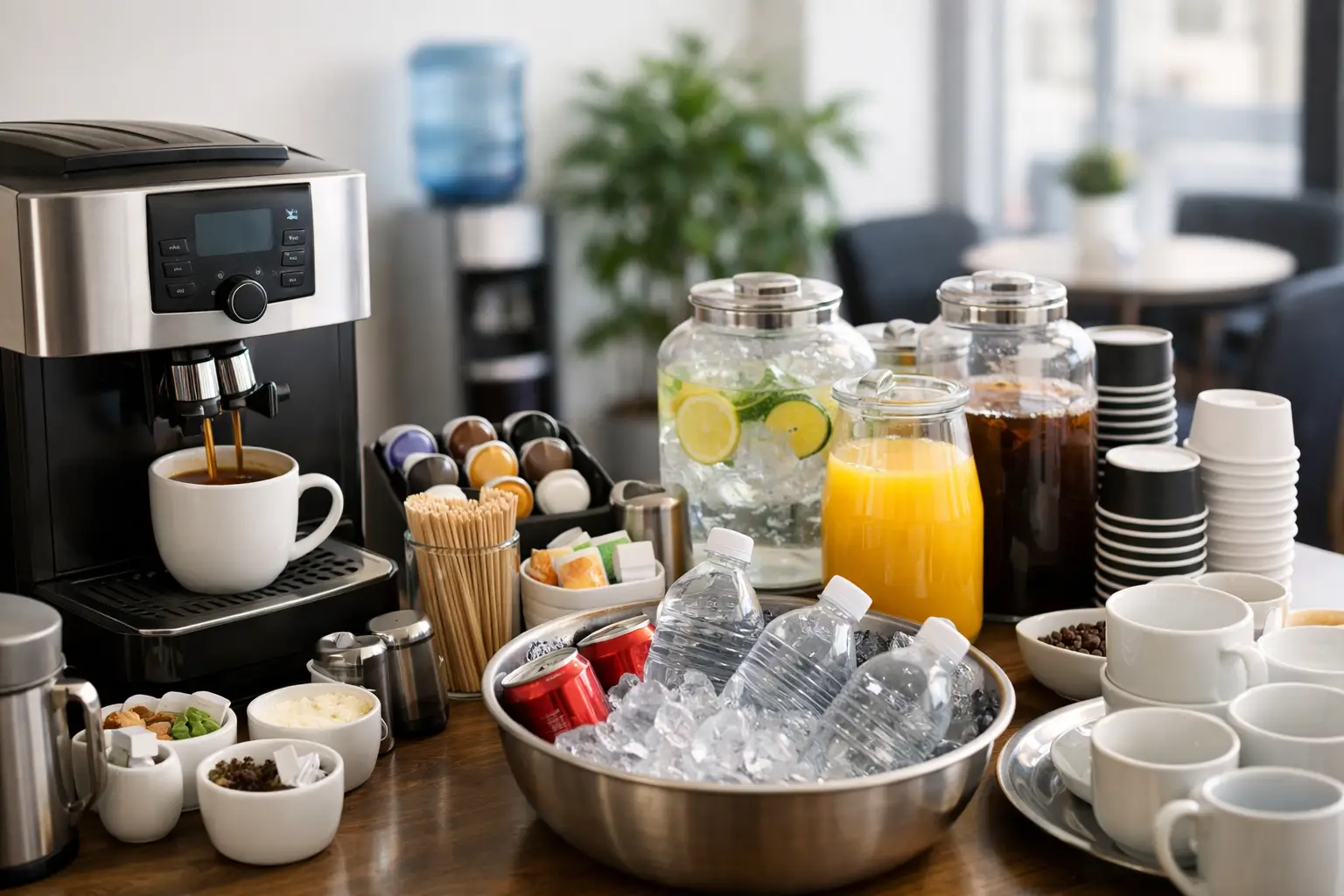
For a typical café-style office program, your inventory may include coffee beans, powdered milk or dairy alternatives, chocolate ingredients, flavor selections, sweeteners, tea, cups, lids, stirrers, napkins, and cleaning supplies. Each item has a different usage pattern and shelf life. Beans may be consumed quickly in a busy office, while seasonal flavors can sit longer if they are ordered without a clear plan.
It also helps to separate essential supplies from optional extras. Essential supplies are the items that stop service when they run out, such as beans, cups, milk ingredients, and machine cleaning materials. Optional items, such as a limited-time flavor or a specialty tea, can enhance the experience but should not complicate ordering or crowd storage.
Set Par Levels Instead of Guessing
The easiest way to prevent stockouts is to establish par levels – the minimum amount of each essential item that should be available before a reorder is triggered. Rather than waiting until the last bag of beans is open, you build a practical buffer based on consumption and delivery timing.
Start by reviewing two to four weeks of usage. A 30-person office with frequent coffee drinkers will have very different needs than a 30-person team that spends most of the day in the field. Account for meeting days, shift changes, client events, and busy seasons, because those periods can increase beverage use quickly.
Your par level should cover normal demand between service visits plus a small safety margin. Too little inventory risks an empty station. Too much inventory ties up storage space and can leave you with ingredients that are no longer at their best. Fresh roasted coffee, in particular, deserves attention. Quality is part of the reason employees appreciate a premium coffee program, so supplies should be replenished with freshness in mind.
Build a Supply Plan Around Your Machine
Not every commercial coffee machine uses the same ingredients or requires the same care. A machine designed for bean-to-cup espresso drinks needs compatible beans, milk ingredients, flavor supplies, and regular cleaning. A traditional brewer has a simpler supply list, but it may not deliver the same variety or client-facing impact.
This is where buying a machine without a service plan can create unexpected work. Your team may be responsible for tracking inventory, training employees, scheduling maintenance, cleaning internal components, troubleshooting error messages, and arranging repairs. The machine can be excellent, but the program only works if someone owns those details.
A full-service workplace beverage provider simplifies the process by aligning the machine, ingredients, cleaning routine, and restocking schedule from the beginning. Sip and Smile Gourmet Coffee provides commercial equipment, fresh supplies, weekly service, and ongoing machine support, so businesses can offer a premium beverage station without creating another internal task list.
Assign Ownership, Even When Service Is Outsourced
Outsourcing the operational work does not mean ignoring the beverage station altogether. It means assigning one employee, often an office manager or administrator, to be the point of contact for feedback and simple decisions.
That person does not need to count every cup or repair equipment. Their role is to notice patterns: a favorite drink running low, an ingredient employees do not use, a meeting that will require additional supplies, or a machine issue that needs prompt attention. A clear contact prevents small concerns from becoming recurring frustrations.
The best programs also invite employee input without turning every request into a new product line. A short check-in once or twice a year can reveal whether staff prefer dark roast, decaf, hot chocolate, dairy-free options, or a seasonal beverage. Make changes when there is consistent demand, not simply because one person asked once.
Control Costs Without Making the Breakroom Feel Cheap
Office beverage supply management should protect your budget, but cutting costs in the wrong place can undercut the value of the program. Low-quality coffee, unreliable equipment, and frequent shortages send a message that the perk is an afterthought.
Instead, focus on the costs that are actually controllable. Right-size your product selection. Track which options are used. Avoid over-ordering slow-moving extras. Use durable commercial equipment that is properly maintained. Most importantly, compare the total cost of managing the program yourself with the value of a service model that includes equipment, supplies, cleaning, maintenance, and repairs.
There is also a hospitality return that does not always appear on a supply invoice. A well-kept beverage station gives employees a reason to take a real break, makes interviews and client meetings more welcoming, and can reduce the number of off-site coffee runs during the workday. For many workplaces, that consistency is worth more than the lowest possible cost per cup.
Keep the Station Clean, Safe, and Easy to Use
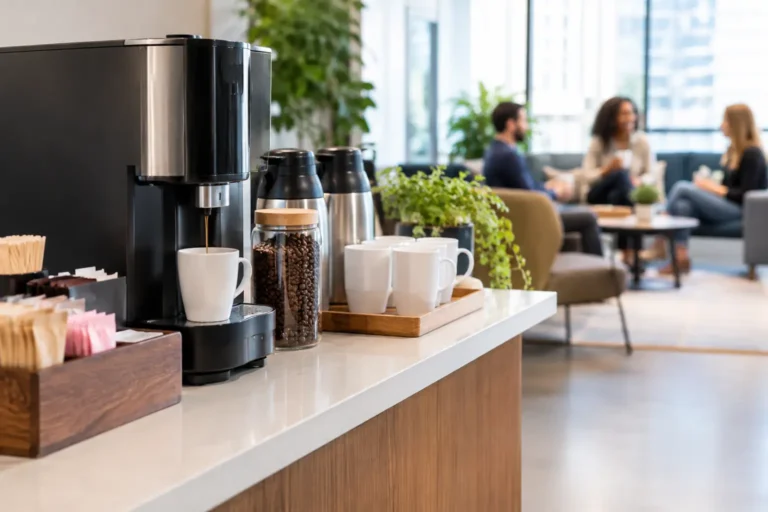
A premium drink loses its appeal if the counter is messy, the machine is neglected, or guests cannot tell how to use it. Keep cups, lids, sweeteners, and napkins organized and within easy reach. Store backup supplies nearby, but avoid cluttering the station with bulk boxes and half-open packages.
Cleaning deserves the same attention as restocking. Coffee oils, milk residue, and powder buildup can affect flavor and machine performance. Follow the equipment’s cleaning requirements, and do not assume occasional wiping is enough. Regular professional maintenance protects the equipment, helps drinks taste consistent, and identifies small problems before they interrupt service.
Clear, simple instructions also help. If a visitor can walk up and select a latte or hot chocolate without asking for help, the station is doing its job. Keep directions brief and refresh them if the menu or equipment changes.
Review the Program as Your Workplace Changes
Your beverage needs will change as your team grows, schedules shift, or your office begins hosting more clients. Review your program at least twice a year and after major changes such as an office move, expansion, or a return-to-office initiative.
Look at usage, employee feedback, supply waste, service issues, and the overall impression the station creates. If the current setup is working, keep it simple. If demand has outgrown the machine or the drink selection, adjust before the experience starts to feel strained.
A great office beverage station should feel effortless to the people using it and manageable to the people responsible for it. When the right supplies, equipment, and service are working together, every cup becomes a small but meaningful sign that your workplace pays attention to the details.