Office Coffee Cost Per Employee Explained
Learn how office coffee cost per employee is calculated, what affects pricing, and how to choose a coffee program that fits your team and budget.
If you are trying to price out a workplace coffee program, the question usually is not, “What does coffee cost?” It is, “What is the office coffee cost per employee, and is it worth it?” That is the number office managers, HR teams, and business owners need when they are comparing breakroom options, building budgets, and deciding whether a better beverage experience makes sense.
The good news is that this cost is usually lower than people expect. The tricky part is that it changes fast depending on what kind of coffee you serve, how many people actually drink it, and whether you are managing the program yourself or handing it off to a service partner.
What office coffee cost per employee really includes
A lot of businesses underestimate coffee because they look only at beans or pods. In practice, the full cost includes equipment, supplies, cleaning, service time, maintenance, and waste. If your team wants café-style drinks instead of basic drip coffee, the ingredients and machine support matter even more.
That is why a true per-employee number should account for more than the beverage itself. It should reflect the total monthly cost of keeping coffee available, reliable, and presentable in your office.
For most workplaces, that means looking at five moving parts: beverage consumption, machine access, ingredient quality, service needs, and the amount of internal time your staff spends managing the setup. A cheap coffee plan on paper can become expensive if someone in your office is constantly reordering supplies, troubleshooting equipment, or cleaning up after a system that was never designed for business use.
A simple way to calculate cost per employee
The easiest formula is straightforward: take your total monthly coffee program cost and divide it by your total number of employees. If your office spends $300 per month and you have 25 employees, your office coffee cost per employee is $12 per month.
That gives you a clean budgeting number, but it does not always tell the whole story. Some teams have 25 employees and only 12 daily coffee drinkers. Others have a strong coffee culture where nearly everyone uses the machine, often more than once a day. So it helps to look at two figures: cost per employee and cost per active coffee drinker.
For example, if the same 25-person office spends $300 a month but only 15 employees regularly use the coffee station, the cost per active user is $20 per month. Both numbers matter. One helps with budgeting. The other helps you understand usage value.
Typical price ranges for different office setups
A basic self-managed drip coffee setup often lands at the low end. In many offices, that might work out to around $5 to $15 per employee per month, depending on volume and coffee quality. This is usually the least expensive route, but it also tends to offer the least impressive experience for staff and guests.
Single-serve pod systems often look convenient at first, but the cost can climb quickly. A pod-based setup may run closer to $15 to $35 per employee per month if employees drink multiple cups a day. Pods also create more packaging waste and can become surprisingly expensive in larger offices.
Bean-to-cup and espresso-based workplace systems usually sit higher, often around $20 to $50 per employee per month depending on drink variety, machine type, and service support. That sounds like a jump until you compare it to what employees spend at coffee shops. A single specialty drink outside the office can cost more than an employee’s weekly share of a premium in-office program.
This is where context matters. If your office wants plain coffee in the breakroom, one price range applies. If you want cappuccinos, lattes, Americanos, hot chocolate, and seasonal drinks from a professional machine that is stocked and maintained for you, the value equation changes.
What affects office coffee cost per employee most
Headcount matters, but usage matters more. In a 10-person office, one heavy coffee drinker changes the math much more than in a 100-person office. Larger teams often benefit from economies of scale because equipment and service costs are spread across more people.
Drink type also has a direct impact. Regular brewed coffee is less expensive than espresso-based drinks with milk powders, chocolate, flavoring, and specialty ingredients. That does not mean specialty drinks are a bad investment. It means you should compare them against the experience you want to create.
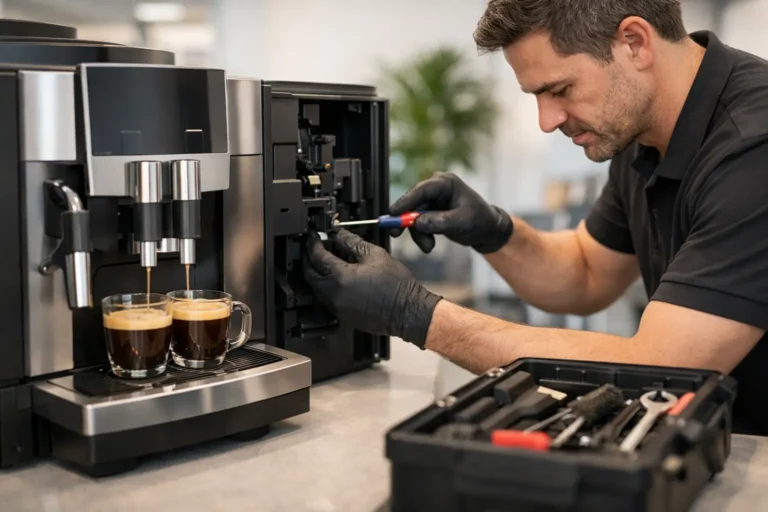
Equipment ownership is another big factor. Buying a machine outright can look appealing, but ownership means repair risk, cleaning responsibility, maintenance scheduling, and replacement planning all stay with you. A full-service model shifts those tasks off your team, which often reduces hidden labor costs.
Service frequency plays a role too. Offices with higher traffic need more regular restocking and support. That adds cost, but it also prevents downtime, empty hoppers, stale products, and the all-too-common problem of a machine that nobody wants to touch because it keeps acting up.
The hidden costs many businesses miss
When business leaders compare options, they often focus on monthly invoices and miss the internal cost of managing coffee. If your office administrator is spending time ordering supplies, tracking inventory, cleaning equipment, calling for repairs, and fielding complaints when the machine is down, that time has a value.
There is also the cost of inconsistency. If coffee runs out, tastes stale, or the machine is unreliable, employees stop using it. Then you are paying for a benefit that does not feel like a benefit.
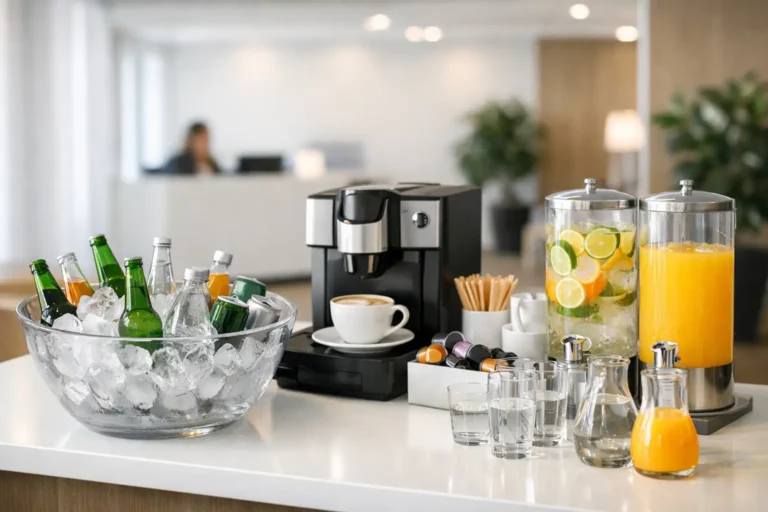
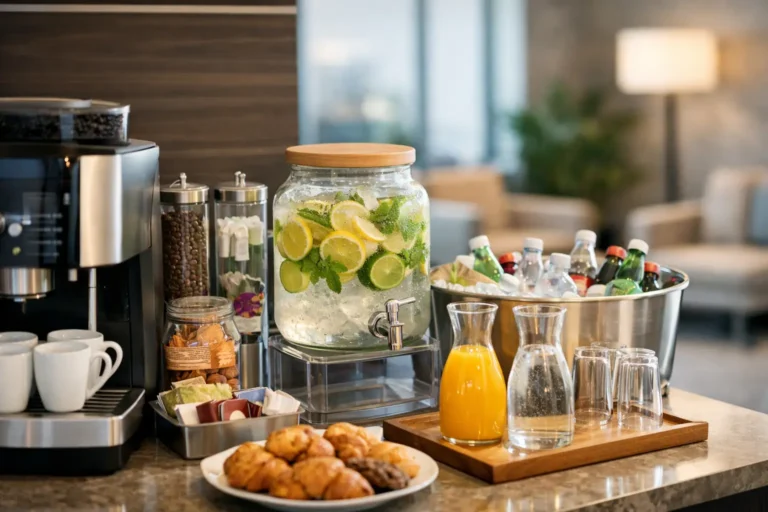
Client perception matters as well. For offices that host visitors, applicants, or customers, the beverage setup says something about your business. A polished coffee station can make your workplace feel more welcoming and more professional. A cluttered corner with a half-working machine tends to do the opposite.
When a higher per-employee cost makes sense
Not every office needs a premium program. But many businesses benefit from one more than they expect.
If you are trying to improve employee experience, support retention, or give clients a better in-office impression, coffee becomes more than a line item. It turns into a practical hospitality tool. People notice when they can get a quality latte or cappuccino without leaving the building. They also notice when the company makes daily work life a little easier.
That is why a higher office coffee cost per employee can still be a smart business move. The monthly increase may be modest compared to the value of convenience, morale, and time saved. It is not just about caffeine. It is about providing a workplace perk people actually use.
How to choose the right coffee budget for your office
Start with your employee count, but do not stop there. Look at how many people are likely to use the service, what types of drinks they expect, and whether your office has the time to manage supplies and equipment internally.
Then think honestly about the experience you want. If your goal is to simply offer something basic, a low-cost setup may be fine. If your goal is to wow staff and clients, reduce coffee runs, and create a more polished breakroom, a full-service café-style program is often the better fit.
It also helps to ask one simple question: what problems are you trying to avoid? If the answer includes machine breakdowns, supply shortages, cleaning headaches, and one more task landing on your office manager’s desk, then the cheapest option may not be the most cost-effective one.
For many Canton-area businesses, the best answer is not buying equipment and building the system yourself. It is working with a local provider that installs the machine, stocks the ingredients, handles maintenance, and keeps the whole program running without adding work to your team. That is where a company like Sip and Smile Gourmet Coffee fits naturally.
A better way to think about coffee costs
The strongest coffee programs are not judged only by what they cost. They are judged by how well they work, how often employees use them, and whether they make the office feel more inviting.
If your per-employee number is low but the setup is unreliable, hard to manage, or underwhelming, you are not really saving money. If the monthly cost is a bit higher but the program is dependable, impressive, and easy to maintain, the return is often much better than the spreadsheet suggests.
A good office coffee program should feel simple on your side and premium on theirs. When that balance is right, the cost per employee stops looking like an expense to justify and starts looking like a workplace upgrade your team will notice every day.
Before you settle on the lowest number, look at the full picture. The best coffee setup is the one your employees enjoy, your clients notice, and your staff does not have to babysit.