How to Prevent Espresso Machine Downtime
Learn how to prevent espresso machine downtime with practical office care, dependable service, and a supply plan that keeps drinks ready every workday.
A broken espresso machine at 8:15 a.m. changes the feel of an office fast. Employees lose a favorite workplace perk, visitors see an empty beverage station, and the person responsible for the breakroom suddenly has one more issue to solve. The best way to prevent espresso machine downtime is to treat the machine, ingredients, water, and service schedule as one connected program.
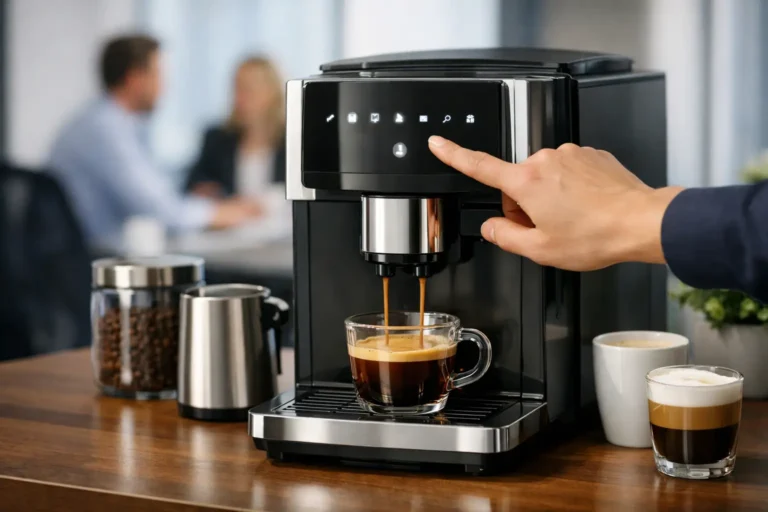
For Canton-area businesses, a café-style coffee station should feel easy. Employees should be able to make an espresso, cappuccino, latte, Americano, hot chocolate, or seasonal drink at the touch of a button without worrying whether the machine is clean, stocked, or working properly. That reliability does not happen by accident. It comes from regular care and responsive professional support.
Why Commercial Espresso Machines Go Offline
Most espresso machine problems do not begin with a dramatic failure. They start as small issues that are easy to overlook: a drip tray that is not emptied, milk residue near a dispensing area, a full grounds bin, low water flow, or a supply hopper that runs empty during a busy morning.
Commercial machines work hard. In an office with 10, 30, or 100 employees, the equipment may prepare dozens of drinks each day. Coffee oils, mineral deposits, spent grounds, and ingredient buildup can affect flavor first, then performance. If those issues are left alone, the machine may display an error message, dispense an incomplete drink, or stop operating until it is cleaned or serviced.
Water quality also matters. Hard water can create scale inside the machine, affecting heating components and water flow. The right filtration and maintenance plan depends on the machine, local water conditions, drink volume, and the ingredients being used. There is no one-size-fits-all schedule, which is why office coffee programs benefit from a provider that understands the equipment it installs.
Prevent Espresso Machine Downtime With Routine Care
The most practical approach is simple: handle the easy daily tasks consistently and leave machine-specific maintenance to trained service professionals. A good workplace coffee program should not turn an office manager into a barista technician.
Employees can help protect the machine by following the on-screen prompts and using the machine as intended. That means selecting drinks through the proper menu, avoiding unapproved ingredients, and reporting warning messages early instead of repeatedly trying to run another beverage cycle.
A quick daily look at the station can catch common interruptions before they become a service call. Check that the machine has beans or ingredients available, the water supply is functioning, the grounds container and drip tray are not full, and the exterior dispensing area is clean. These are small details, but they make a meaningful difference during a busy workday.
For a staffed office, it helps to assign one point person to report concerns. This person does not need to repair anything. They simply need to know who to contact when a message appears, a drink tastes unusual, or the machine begins running differently than normal. Early reporting gives a service team the best chance to correct a minor issue before it affects the whole office.
Cleaning Is About Performance, Not Just Appearance
A clean espresso machine makes a better impression, but cleaning also protects drink quality and equipment performance. Coffee oils can become stale and affect taste. Powdered beverage ingredients can collect around dispensers. Milk-based systems require especially careful cleaning because residue can create sanitation concerns and interfere with proper operation.
The right cleaning routine depends on the type of commercial machine. Some fully automatic machines run guided rinse cycles and alert users when attention is needed. Others require more hands-on care. In either case, the safest plan is to follow the manufacturer-approved process and use the appropriate cleaning products. Improvised cleaners, skipped cycles, or aggressive scrubbing can create more problems than they solve.
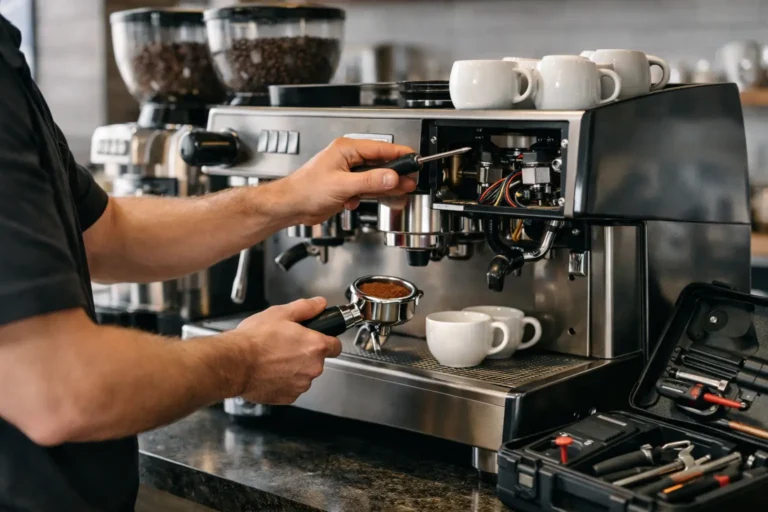
Weekly service is especially valuable in a workplace setting. A trained technician can clean areas employees should not need to access, inspect moving parts, check for early signs of wear, and confirm that beverages are dispensing correctly. This is preventative work. It reduces the odds that your first notice of a problem will be an out-of-service machine on a Monday morning.
Keep Ingredients and Supplies From Becoming the Problem
A machine can be mechanically sound and still disappoint employees if it cannot make the drinks they expect. Running out of beans, milk powder, chocolate, cups, or cleaning supplies creates a different kind of downtime: the station is technically on, but it is not delivering the experience your team relies on.
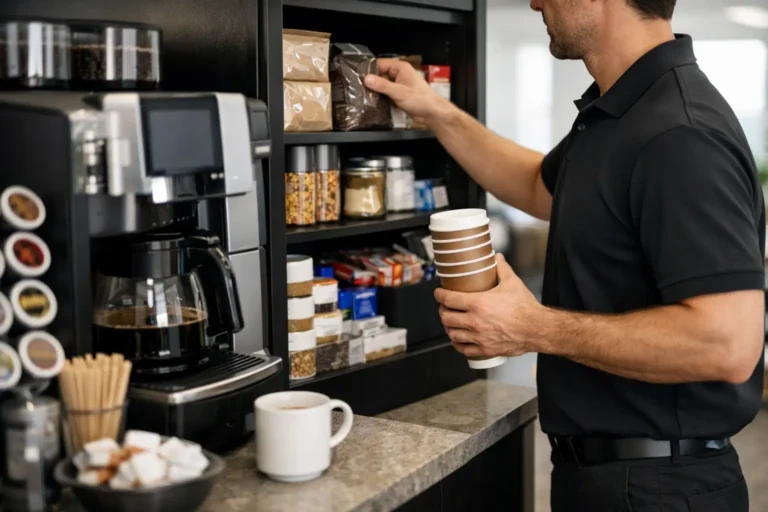
Supply planning should reflect your office’s actual habits. A customer-facing office may use more cups and specialty drinks. A manufacturing or operations team with early shifts may go through coffee faster in the morning. Seasonal beverages can change demand, too. The goal is not to overstock a closet with ingredients. It is to maintain enough of the right supplies so the coffee station stays ready without creating waste.
Freshness matters as much as quantity. Coffee beans and beverage ingredients should be stored properly and replenished on a schedule that supports consistent flavor. When a latte tastes great one week and flat the next, employees notice. Consistent quality encourages people to use and appreciate the benefit your business is providing.
Choose Service That Responds Before Small Issues Grow
Buying a commercial espresso machine is one option. Managing it is another. Businesses that own equipment outright may be responsible for selecting cleaners, ordering ingredients, tracking filters, arranging repairs, and figuring out which service company to call when something goes wrong. That approach can work for an organization with in-house facilities expertise and time to manage the details. For many offices, it creates unnecessary friction.
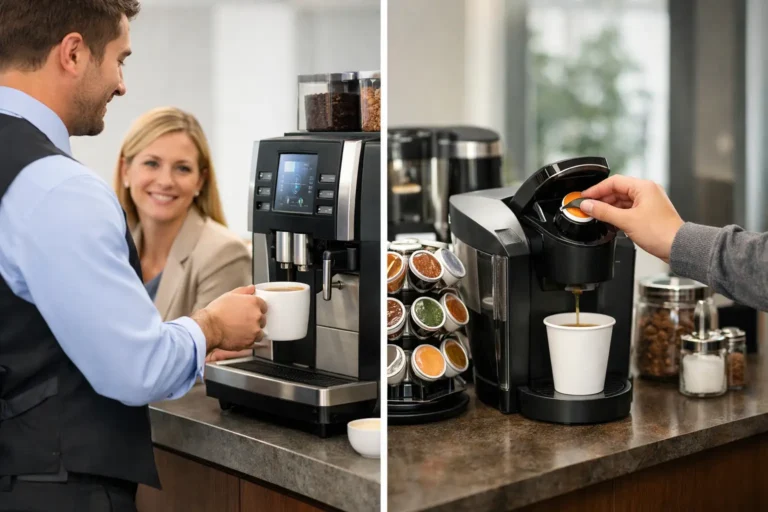
A full-service coffee provider changes the equation. Instead of coordinating multiple vendors, your business has a clear path for maintenance, restocking, cleaning, and repairs. The provider can also recommend a machine that fits your team size and beverage preferences rather than placing a residential-style machine under commercial demand.
At Sip and Smile Gourmet Coffee, the goal is to make premium workplace beverages feel simple. The equipment, fresh roasted beans, gourmet drink ingredients, routine care, and ongoing support are handled as part of one program. Your team gets café-style choices, while your office avoids the burden of managing the coffee station behind the scenes.
Know When to Call for Help
Not every message means the machine is broken. A prompt may simply indicate that the grounds bin needs emptying, an ingredient needs refilling, or a cleaning cycle is due. Still, certain signs deserve prompt attention: repeated error messages, slow or inconsistent dispensing, unusual noises, leaking, poor drink temperature, or a noticeable change in flavor.
Do not ask employees to take apart a commercial machine or attempt a repair with online advice. That can create safety issues, damage components, or complicate warranty and service coverage. A better response is to pause use if needed, document the message or symptom, and contact the service team. Clear information helps the technician arrive prepared and reduces the time needed to get the station back in service.
Build Reliability Into the Workplace Experience
The strongest coffee programs are designed around the employee and guest experience, not just the machine. Consider where the unit is placed, how many people use it, which drinks are most popular, and whether the area stays clean and welcoming throughout the day. A machine tucked into a cramped corner with no room for supplies is more likely to be neglected than a well-planned beverage station.
It also helps to set reasonable expectations. A high-volume office may need a larger-capacity machine or more frequent service than a small professional office. A business that wants specialty drinks and hot chocolate will need a different supply plan than one focused mainly on espresso and Americanos. Matching the program to real demand is one of the most effective ways to avoid interruptions.
A dependable coffee station is a small detail with an outsized effect. When employees and clients can count on a great drink without a scramble behind the scenes, your workplace feels more thoughtful, more polished, and easier to enjoy.