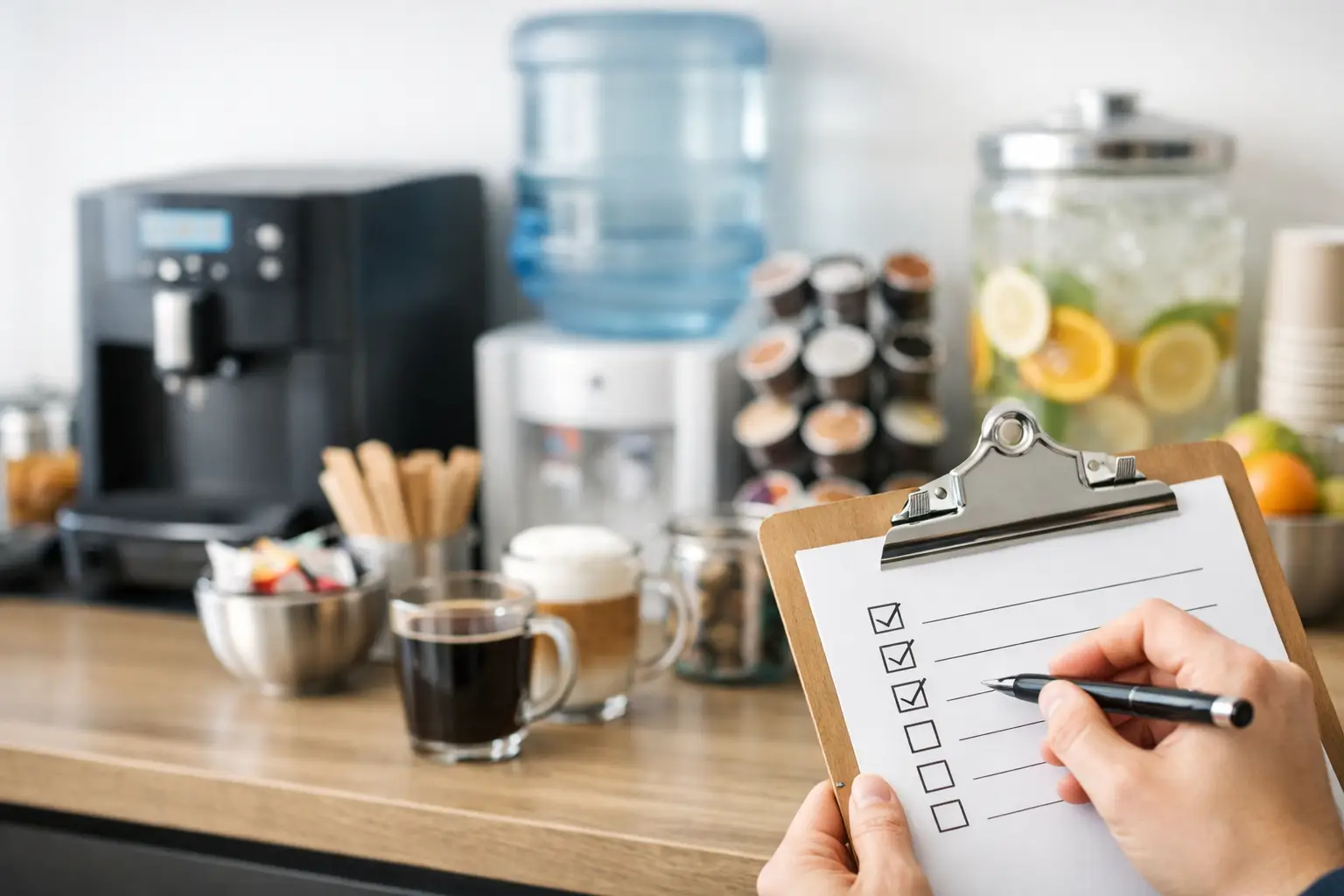
Office Beverage Service Checklist for Workplaces
Use this office beverage service checklist to choose the right setup, supplies, and support for a better employee and client experience.
That sad pot of burnt coffee in the break room says more about a workplace than most leaders realize. Employees notice it. Clients notice it. And the person stuck managing supplies, cleaning, and service definitely notices it. A smart office beverage service checklist helps you avoid that daily friction and build a drink program that feels polished, easy to manage, and worth the investment.
For most offices, the goal is not simply to offer coffee. It is to create a better workplace experience without handing one more job to an already busy office manager or operations lead. That changes how you should evaluate beverage service from the start.
Why an office beverage service checklist matters
A beverage program can look simple on paper and still become a headache in practice. The machine may be fine, but the restocking is inconsistent. The drink options may sound good, but employees only use two of them. The equipment may be affordable up front, but repairs and downtime start adding up. That is why a checklist matters. It keeps your decision focused on the day-to-day reality, not just the sales pitch.
A strong setup should do three things well. It should make employees happy, present well to guests, and stay off your to-do list as much as possible. If one of those pieces is missing, the program usually starts to feel like more trouble than it is worth.
Start with who the beverage service is for
Before you compare machines or drink menus, get clear on the people using the service. An office with 12 employees has different needs than a company with 75 staff members, regular client traffic, and multiple departments taking breaks at the same time.
Think about volume first. How many drinks are likely to be made in a typical day, and when will the busiest periods happen? A smaller office may do well with a simpler setup, while a larger workplace often needs a commercial-grade machine that can keep up during morning rushes and afternoon slumps.
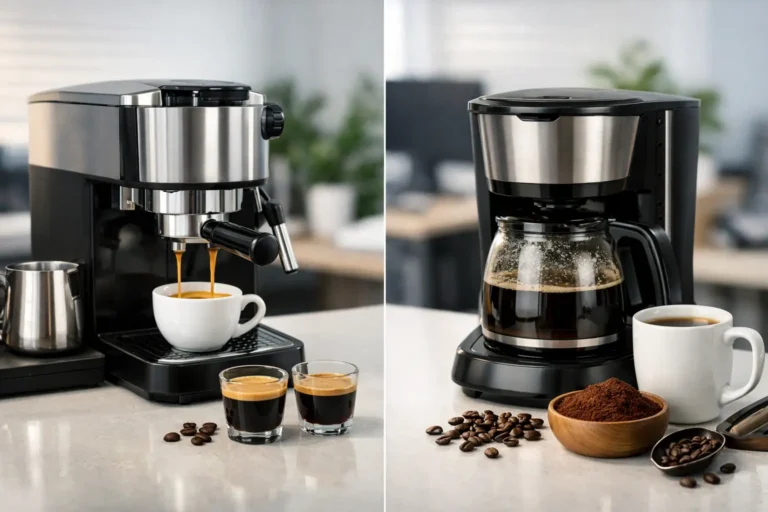
Then consider expectations. If your team wants basic coffee and hot chocolate, that points to one kind of program. If they are used to café-style drinks like cappuccinos, lattes, Americanos, and seasonal options, your service should reflect that. There is no reason to install premium equipment if no one cares about the menu. On the other hand, if your workplace is trying to improve employee experience or impress clients, basic drip coffee may miss the mark.
The equipment questions that belong on your checklist
The machine is the centerpiece, but it should not be the only thing you evaluate. What matters is how the equipment performs in your environment.
Ask whether the machine is designed for office use, not just occasional convenience. Commercial machines are built for repeated daily use and a better drink experience. That matters if you want consistency from cup to cup and fewer service issues over time.
You also want to look at drink variety. Touch-button espresso drinks can give employees more choice without adding complexity for your team. That is a major advantage over setups that require separate tools, manual prep, or constant attention.
Size and placement matter too. A large machine can be a great fit in a busy office, but not if it overwhelms the break room or creates awkward traffic flow. Water access, electrical needs, and nearby counter space should all be part of the conversation before installation day.
Noise is another factor people forget until the machine is in place. In an open office, that can matter more than expected. A good provider should help match the equipment to your layout instead of assuming one model works for everyone.
Your office beverage service checklist should cover more than coffee
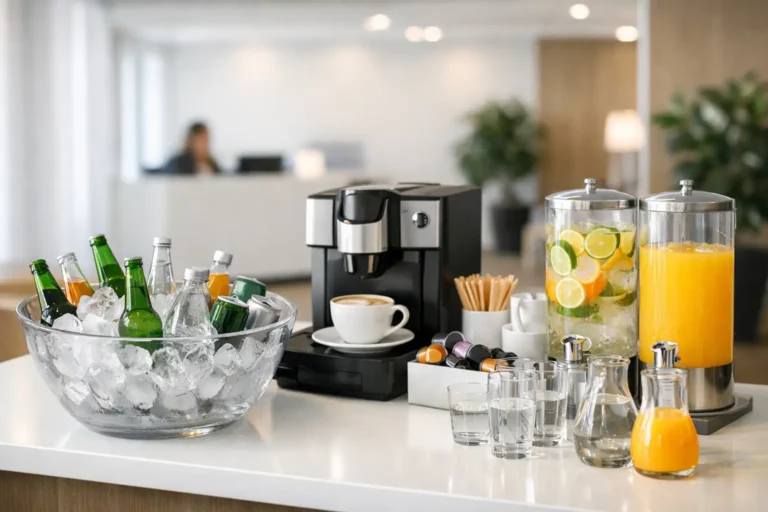
Coffee is usually the anchor, but a better beverage program gives people options. Not everyone drinks coffee, and not every guest wants the same thing.
This is where ingredient selection makes a difference. If your workplace wants broader appeal, your checklist should include hot chocolate, French vanilla, espresso-based drinks, and seasonal beverages. A wider menu helps the service feel more inclusive and more premium.
There is a trade-off here. More variety can increase usage and satisfaction, but it also requires the right supply plan. If you offer multiple beverages without a dependable restocking system, the most popular choices will run out first and frustrate everyone. Choice only works when it is supported consistently.
Supplies and inventory are where many offices get stuck
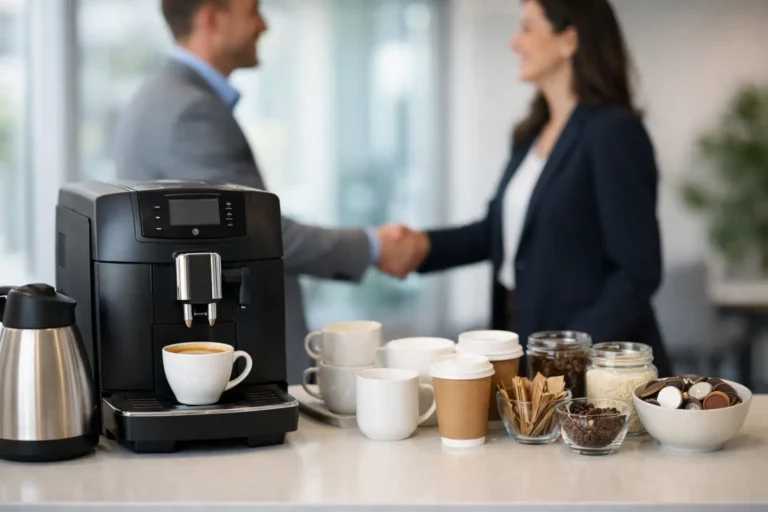
This is the part companies often underestimate. It is easy to get excited about a great machine. It is less exciting to track beans, powders, cups, stirrers, sweeteners, creamers, and cleaning products week after week.
A practical checklist should ask who is responsible for monitoring inventory, how often supplies are restocked, and what happens if usage suddenly increases. Offices with growth, guest events, or seasonal traffic swings need a plan that can adjust.
If your current setup depends on someone internally making emergency supply runs, you do not really have a beverage program. You have a recurring task disguised as a perk. The best service model removes that burden and keeps the station ready without your team babysitting it.
Maintenance and repairs should never be an afterthought
This is where the difference between a product vendor and a full-service partner becomes very clear. Machines need regular cleaning, routine maintenance, and occasional repairs. The real question is who handles it and how quickly.
Your checklist should include weekly cleaning expectations, preventive maintenance, response times for service calls, and whether support is included or billed separately. If a machine goes down, what is the process? Do you call a local team, or are you waiting on a remote support line and a vague arrival window?
For Canton-area businesses, local service has real value. Faster response, familiar contacts, and consistent follow-through are hard to replace. A beverage station is supposed to make the workplace feel more inviting. If it is regularly out of order, it does the opposite.
Cost matters, but the cheapest option usually costs more later
It is reasonable to compare pricing. Every business does. But with beverage service, a lower monthly number does not always mean better value.
Look at the full picture. Are you purchasing equipment outright, leasing it, or getting it included through a service program? Are maintenance, repairs, and restocking built in? Is the ingredient quality high enough to make the drinks worth serving? A cheap setup that produces disappointing drinks or creates extra work for your team can be expensive in all the ways that matter most.
There is also the employee experience side. When a company invests in better workplace amenities, it sends a message. It says the business cares about the day-to-day environment, not just output. That may not fit neatly into a spreadsheet, but it absolutely affects culture, hospitality, and how your office is perceived.
What to look for in a provider
A good provider should make your life easier from the first conversation. That means asking about your office size, beverage preferences, traffic patterns, and service expectations before recommending a setup.
They should also be clear about what they handle. Installation, training, supply delivery, cleaning, maintenance, and repair support should not be vague. If you have to guess who owns each piece of the process, the arrangement is probably not as hands-off as it sounds.
Customization is another strong sign. The right program should fit your office instead of forcing your office to fit a standard package. Some businesses need a client-facing beverage station with upscale drink choices. Others want a reliable employee perk that can serve a larger staff efficiently. Both are valid, but they are not identical.
That is one reason many companies prefer a full-service model like Sip and Smile Gourmet Coffee. It combines premium equipment, café-style drink options, local support, and ongoing restocking in a way that keeps the experience high while the workload stays low.
A simple office beverage service checklist to guide your decision
If you are reviewing options, make sure your office beverage service checklist covers the basics that actually affect daily success. You need the right capacity for your team, a drink menu people will use, dependable restocking, regular cleaning, fast repair support, and pricing that reflects the full service picture.
You should also ask one final question: will this setup save time for your team, or create another thing to manage? That answer tends to reveal the right choice quickly.
A beverage station should make your workplace feel more welcoming, more professional, and easier to run. If it does not do all three, keep looking until it does. Your staff and your guests will notice the difference every single day.