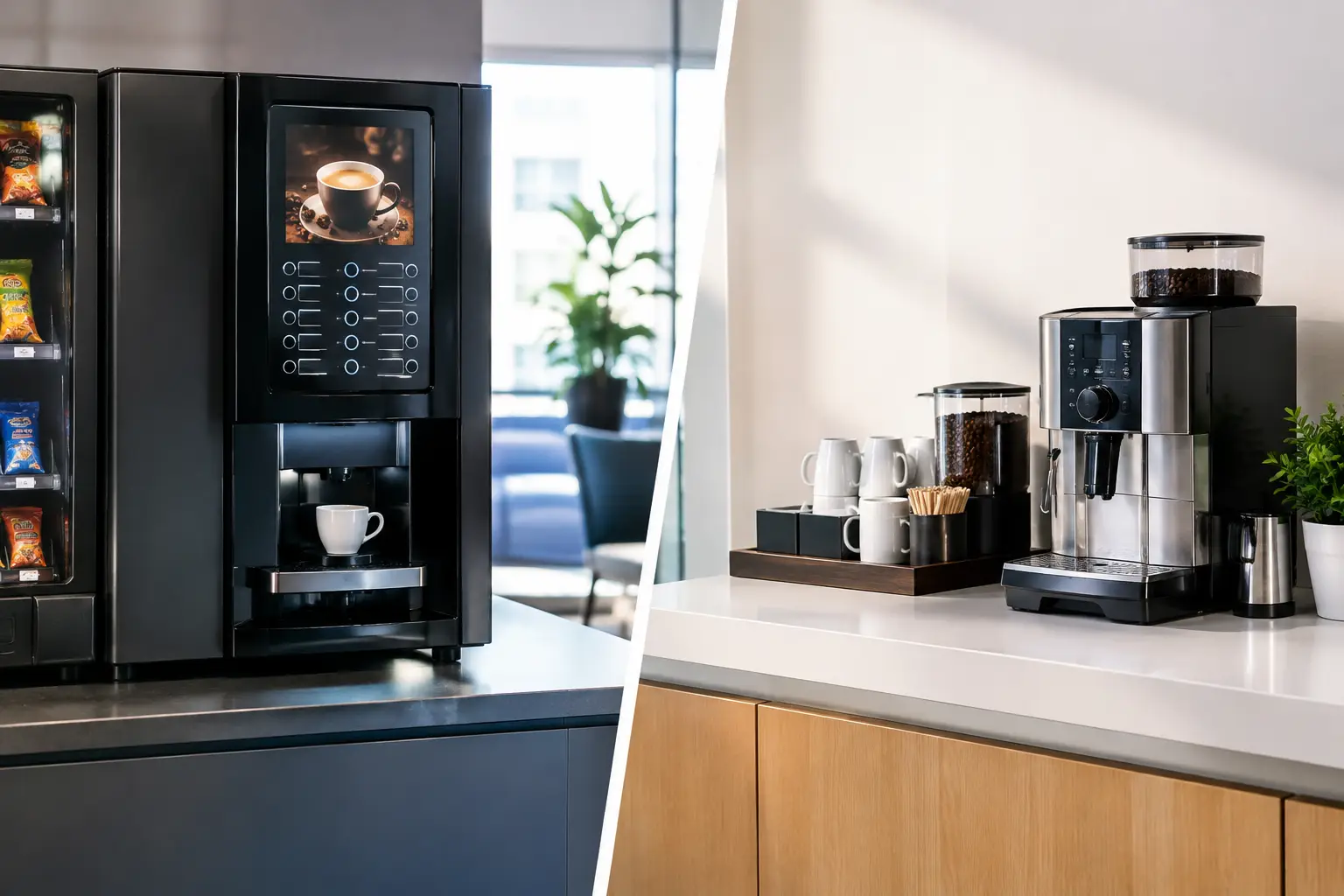
Vended vs Non Vended Coffee Systems for Offices
Compare vended vs non vended coffee systems for your office and choose a premium, low-hassle beverage program your staff and guests will value every day.
A great workplace coffee program should feel easy for everyone using it – and for the person responsible for it. When comparing vended vs non vended coffee systems, the biggest question is simple: should employees and visitors pay per drink, or should the business provide beverages as a company-paid amenity? The right answer depends on your budget, culture, traffic, and the experience you want people to have when they walk into your Canton office.
For many employers, coffee is no longer just a pot in the breakroom. It is a daily employee perk, a reason people gather between meetings, and a small but meaningful part of client hospitality. A café-style machine can serve espresso, cappuccinos, lattes, Americanos, hot chocolate, and more at the touch of a button. How you choose to pay for those drinks determines whether a vended or non-vended system makes the most sense.
What Is a Vended Coffee System?
A vended coffee system charges the person selecting the drink. Employees, guests, or visitors pay at the machine, usually with cashless payment, a card, mobile wallet, token, or another approved method. The machine tracks each purchase and dispenses the beverage after payment is accepted.
This model is common in locations with a high volume of changing users, such as manufacturing facilities, public waiting areas, hospitals, car dealerships, and larger workplaces with multiple shifts. It can make premium coffee available without requiring the employer to cover every beverage served.
A vended setup is not necessarily a low-quality option. Modern commercial machines can still produce specialty drinks with fresh roasted beans, milk-based beverage options, flavored selections, and consistent portion control. The difference is the payment model, not the quality of the cup.
When vending makes sense
Vended coffee often works well when a company wants to offer a better alternative to gas station coffee or basic vending options while maintaining a predictable amenity budget. Because users pay for their own drinks, the company can limit or eliminate the cost of beverage consumption.
It may also be a practical fit when visitor traffic is significant. A showroom, service department, community space, or busy lobby may want a convenient beverage station without making unlimited complimentary drinks available to every person who enters.
There is a trade-off, though. Even a modest price can change how people use the machine. Employees may bring coffee from home, choose a less expensive option elsewhere, or view the system more as a convenience purchase than a workplace benefit.
What Is a Non-Vended Coffee System?
A non-vended coffee system does not collect payment at the machine. The employer provides the drinks, and employees or guests can choose what they want without paying each time. The business covers the equipment, beans, ingredients, service, and other program costs through its workplace coffee service agreement.
For offices focused on employee experience and hospitality, this is often the preferred model. A non-vended machine makes it easy to offer a cappuccino before a morning meeting, a latte during an afternoon break, or a hot chocolate for a visiting client. Nobody has to search for a card, count change, or decide whether the drink is worth the out-of-pocket cost.
This approach creates a more generous, polished atmosphere. It tells employees that the company has considered the details of their workday and tells clients that they are welcome. For businesses competing for talent or building a stronger office culture, that message can matter.
The budget question
Non-vended systems require the employer to plan for beverage usage. That does not mean the cost has to be unpredictable. A professional coffee service can help estimate consumption based on employee count, office schedule, drink preferences, and visitor volume.
A company with 20 employees who are in the office three days a week will use coffee differently than a 100-person operation running around the clock. The best setup accounts for real-world habits rather than guessing. It should also give employees enough variety that the machine becomes a valued perk rather than another underused breakroom appliance.
Vended vs Non Vended Coffee Systems: Key Differences
The choice between vended and non-vended systems comes down to who pays, how people use the machine, and what role coffee plays in your workplace.
With a vended system, users pay per beverage. This can reduce the employer’s ongoing expense and is useful for facilities with heavy foot traffic or a broad mix of employees, visitors, and shifts. It also gives each person a clear choice about whether to purchase a drink.
With a non-vended system, the company pays and drinks are available as part of the workplace experience. This generally encourages use, supports employee morale, and makes client hospitality feel more natural. It is particularly well suited to offices, professional services firms, medical offices, financial institutions, and businesses that want their breakroom to feel more like a café than a vending area.
Neither option is automatically better. A vended model can be financially responsible for a high-traffic facility. A non-vended model can deliver stronger culture and retention value for an office where people spend much of their day together. The right choice should support the purpose of your coffee program, not just its monthly line item.
Consider the Experience You Want to Create
Before selecting a machine or payment setup, consider what happens around coffee in your workplace. Do employees gather in the breakroom? Do you host clients frequently? Are you trying to make office days more appealing for hybrid staff? Do shift employees need a convenient drink option when nearby cafés are closed?
If you want coffee to be a visible employee benefit, non-vended service is usually the clearer choice. It removes friction and makes premium drinks part of the everyday environment. A bean-to-cup barista machine also gives people more choices than a traditional drip pot – from café Americanos and French vanilla drinks to mochaccinos and seasonal selections.
If the main goal is convenient access without a fully company-funded program, vending may be more appropriate. Employees can still enjoy better-quality coffee, and the business can provide the space and equipment without taking on the full cost of each drink.
Do Not Overlook Service and Machine Support
Payment method is only one part of the decision. A workplace coffee system succeeds when the machine is clean, stocked, reliable, and easy to use. An impressive machine that runs out of beans, needs constant cleaning, or sits waiting for repairs will not deliver the experience you intended.
That is why many Canton-area employers choose a full-service approach. Sip and Smile Gourmet Coffee installs commercial equipment, supplies fresh roasted beans and beverage ingredients, and handles regular cleaning, restocking, maintenance, and repairs. Your team gets café-style drinks, while your office avoids becoming responsible for equipment troubleshooting and supply management.
This matters whether your machine is vended or non-vended. In both cases, dependable service protects the investment and keeps the program enjoyable. For a non-vended office, it helps maintain a perk employees use every day. For a vended location, it helps keep the system available and ready for paying customers.
How to Choose the Right Model for Your Office
Start with your audience. If most users are employees and your goal is to improve workplace culture, a non-vended system is likely the stronger fit. If your users include a high number of visitors, hourly workers, or the general public, a vended system may provide better cost control.
Next, think about volume and timing. A small professional office may have steady, predictable demand and benefit from employer-paid drinks. A large facility with multiple shifts may need a system that accommodates more users while keeping spending manageable.
Finally, decide how hands-on you want to be. Purchasing and managing a machine internally can appear less expensive at first, but it puts cleaning, ingredient ordering, repairs, and replacement decisions on your staff. A managed coffee service keeps the experience simple: choose the program that fits your workplace, and let the service team keep it running.
The best coffee system is the one your people are happy to use and your organization is happy to support. Whether that means a vended option with sensible cost control or a non-vended café experience that helps you WOW staff and clients, the goal is the same: make every cup feel like a thoughtful part of the workday.