What Size Office Needs Espresso Service?
Learn what size office needs espresso service, when it pays off, and how Canton teams can offer café-quality drinks without extra work each busy workday.
A 12-person office can feel the difference between a basic coffee pot and a café-style drink program before the first week is over. The real question is not simply headcount. It is what size office needs espresso service to create a better employee experience, make clients feel welcome, and avoid turning someone on the team into the unofficial coffee manager.
For many Canton-area workplaces, espresso service makes sense sooner than expected. Once a business has roughly 10 regular employees, hosts visitors, or wants to offer a meaningful workplace perk, a professionally supported machine can deliver more value than a shelf of single-serve pods and a crowded supply cabinet.
What Size Office Needs Espresso Service?
There is no hard employee number that automatically calls for espresso service. Usage patterns, company culture, client traffic, and expectations matter just as much as the number on the payroll. Still, offices generally fall into a few practical ranges.
Small offices: 10 to 20 employees
A small office is often an excellent fit for a compact commercial espresso solution, especially when employees already buy coffee on the way to work or regularly leave the building for afternoon drinks. At this size, coffee is personal. A better breakroom offering is noticed, discussed, and used.
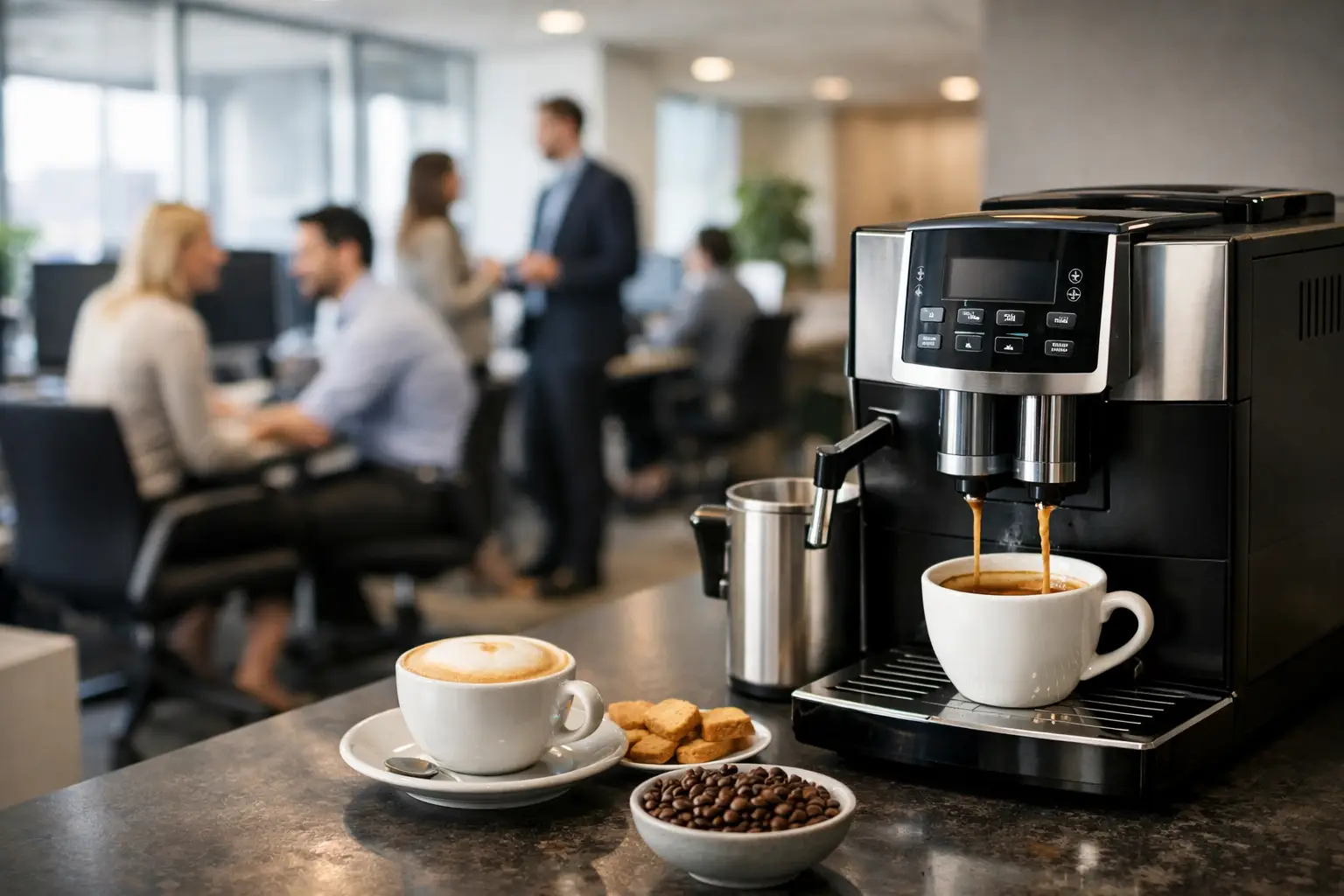
An espresso machine that makes cappuccinos, lattes, Americanos, hot chocolate, and French vanilla drinks at the touch of a button gives a small team real variety without adding a complicated task to anyone’s day. It also keeps the breakroom polished when a customer, candidate, vendor, or visiting leader stops in.
The trade-off is volume. If only two or three people drink coffee and the office rarely receives guests, a full espresso program may be more than the team will use. But if 10 to 20 people share the space daily and coffee runs are common, the service can quickly become a practical benefit rather than a luxury.
Mid-sized offices: 20 to 75 employees
This is often the sweet spot for espresso service. At 20 or more employees, traditional coffee setups tend to create small but persistent problems: empty pots, stale coffee, supply shortages, arguments over flavors, and equipment that needs cleaning when everyone is busy.
A commercial barista machine brings consistency. Employees can choose the drink they actually want, whether that is a bold espresso, a café latte, a mochaccino, or a seasonal beverage. Rather than maintaining several appliances and managing an ever-growing pile of pods, the office has one dependable beverage station supported by a service provider.
For HR leaders and office managers, this size also makes the culture benefit easier to see. Employees have a natural place to take a quick break, welcome a coworker, or recharge before a meeting. It is a simple amenity, but it signals that the company pays attention to the everyday details of work.
Larger offices: 75 or more employees
Larger offices typically need espresso service designed around traffic flow and capacity. A single machine may be enough for a quiet office with staggered schedules, but a busy workplace with coordinated breaks or multiple departments may need a higher-capacity unit, more than one beverage station, or a customized restocking plan.
This is where ongoing service matters most. High use means beans, milk products, cups, cleaning supplies, and flavor options disappear quickly. A machine that is out of service on a Monday morning is more than an inconvenience when dozens of employees rely on it.
With regular cleaning, maintenance, repairs, and restocking handled for you, the office can offer premium drinks without asking facilities staff or administrators to troubleshoot equipment. The result is a better experience for employees and less operational friction for the people responsible for the workplace.
Headcount Is Only One Part of the Decision
An office with 15 highly social employees and frequent client appointments may get more from espresso service than a 40-person operation where most people work remotely. Before choosing a program, look at how your workplace actually uses coffee.
Coffee-buying habits are a useful clue. When several employees arrive with café cups, take midafternoon coffee trips, or request better breakroom options, demand is already there. A workplace espresso station gives them a convenient alternative while helping them stay close to the office.
Client-facing businesses should also consider hospitality. If customers, interview candidates, patients’ families, or partners spend time in your reception area or conference room, offering a genuine latte or espresso makes a stronger impression than a packet of instant coffee. It says your business is prepared, welcoming, and thoughtful without making the interaction feel overly formal.
Hybrid schedules change the calculation as well. You do not need a large daily headcount if your busiest in-office days are packed with team meetings and collaboration. A good provider can help match machine capacity and supply deliveries to the days your office is truly active.
When Basic Breakroom Coffee Stops Being Enough
Basic coffee is perfectly fine for some workplaces. If your team is small, has limited interest in coffee, or primarily works off-site, a simple setup may be the sensible choice. Espresso service is a better fit when the current setup is causing inconvenience or failing to reflect the experience you want to provide.
You may be ready for an upgrade if your office deals with four recurring issues: employees leave frequently for coffee, the person ordering supplies is tired of guessing what to buy, machines need attention that no one has time to give, and visitors are offered beverages that feel like an afterthought.
The cost conversation should include more than the price of coffee. Consider the time spent purchasing supplies, cleaning equipment, responding to problems, and replacing machines. Add in the employee experience of inconsistent or low-quality drinks. An outsourced service model can be easier to budget because equipment, ingredients, maintenance, and support are organized as one program instead of a series of surprise tasks.
Choose Service Level, Not Just a Machine
The wrong way to shop for office espresso is to focus only on the machine. A beautiful machine does not help much if it runs out of beans, needs cleaning, or sits idle while someone waits for a repair.
The better question is how much help your office wants. Some businesses prefer to own equipment and handle the daily details themselves. Others want a hands-off program where the machine is installed, beverage choices are customized, fresh roasted beans are delivered, and ongoing care is handled by people who know the equipment.
That second option is particularly valuable for offices without dedicated hospitality or facilities staff. Sip and Smile Gourmet Coffee provides Canton businesses with Italian-made barista machines and the ongoing support needed to keep the beverage station ready for the next cup. Your team gets the café-style selection. Your office manager does not get another maintenance project.
Customization matters, too. A finance office may want straightforward espresso, regular coffee, and hot chocolate. A creative agency or client-heavy professional office may prefer lattes, mochas, French vanilla, seasonal selections, and a broader mix of ingredients. The right service should fit your workplace rather than force every team into the same menu.
A Simple Way to Decide
Start by observing one ordinary workweek. Count how many employees are in the office, how often people buy drinks away from the building, how many visitors you host, and how much time goes into keeping the current coffee area running. Those answers are more useful than an arbitrary employee threshold.
For most businesses with 10 or more regular employees, a professional espresso program is worth exploring. For offices above 20 employees, it often becomes an easy way to improve daily convenience and show appreciation at the same time. For larger teams, dependable service and the right capacity are essential.
The best office coffee program is not the one with the most buttons or the longest drink list. It is the one employees enjoy, clients remember, and your team never has to chase down when the morning gets busy.