Guide to Workplace Espresso Menu Planning
Use this guide to workplace espresso menu planning to build a café-quality drink lineup your team and clients will enjoy, without adding daily work, too.
A workplace espresso menu has a job to do long before the first drink is poured. At 8:30 a.m., it can help employees settle in, give a visiting client a warmer welcome, and make your office feel like a place people are glad to return to. This guide to workplace espresso menu planning will help you choose a beverage lineup that feels premium, serves real preferences, and does not create another task for your office manager.
The goal is not to recreate a coffee shop with dozens of complicated choices. The best office menu gives people familiar café-style drinks, keeps choices clear, and is supported by reliable equipment and regular service.
Start With the People Using the Menu
Before choosing drinks, consider who will use them and when. An office of 15 people with steady weekday routines needs something different from a busy Canton reception area where clients, vendors, and candidates come through the door.
Think about your typical traffic. Are most drinks made in the morning, or do employees take afternoon breaks? Do you have frequent visitors? Is your team mostly traditional coffee drinkers, or are lattes and flavored drinks already popular? You do not need a formal survey to get useful answers. A few conversations with staff and a look at what disappears fastest from the breakroom can reveal a lot.
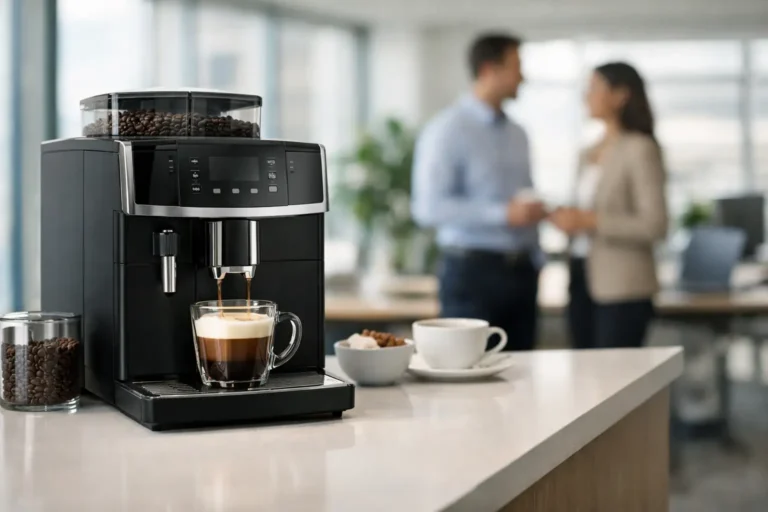
Also consider the impression you want to make. A basic coffee pot may cover the minimum, but a barista-style machine signals care and hospitality. For many employers, that matters when they are recruiting, hosting meetings, or building a workplace people do not want to leave at 3 p.m. for a better cup of coffee.
Build the Menu Around Proven Favorites
A strong workplace espresso menu starts with a dependable core. These are drinks employees recognize, visitors can order confidently, and most people will enjoy without a long explanation.
For most offices, the menu should include espresso, café Americano, cappuccino, café latte, and hot chocolate. Espresso serves people who want a concentrated coffee drink, while Americanos offer a fuller cup with a clean coffee profile. Lattes and cappuccinos bring the café experience many employees are looking for, with different milk-to-espresso balances for different preferences.
From there, add a few flavor-driven choices that make the menu feel special. Mochaccinos, French vanilla drinks, and one or two seasonal beverages can create variety without overcomplicating the program. These options are especially useful for employees who do not usually choose black coffee or straight espresso.
A practical menu often includes these five groups:
- Espresso and café Americanos for classic coffee drinkers
- Cappuccinos and café lattes for milk-based espresso favorites
- Mochaccinos for a chocolate-coffee option
- French vanilla or another familiar flavored beverage for a sweeter choice
- Hot chocolate for non-coffee drinkers and visiting guests
This approach covers a wide range of tastes while keeping the menu easy to understand at the machine.
Keep Choice Generous, Not Confusing
More choices do not always create a better employee experience. If a menu requires people to think too hard, restock many separate ingredients, or wait in line while someone figures out a drink setting, it can lose its appeal quickly.
For a workplace of 10 to 30 employees, a focused selection of six to nine beverages is usually plenty. Larger offices may benefit from more seasonal rotation or additional flavor options, especially if the machine is located in a common area with high daily use. The right number depends on traffic, not just headcount.
A useful rule is to keep your everyday menu stable and use seasonal options to introduce variety. Employees like knowing their favorite latte is always available. At the same time, a pumpkin-inspired fall drink, peppermint mocha during winter, or a lighter spring flavor can keep the breakroom from feeling routine.
Seasonal planning also prevents waste. Rather than stocking every flavor all year, rotate a limited selection based on what people are likely to enjoy. This gives the office something new to talk about without filling cabinets with rarely used supplies.
Match the Machine to the Menu
Your menu is only as good as the equipment delivering it. A commercial espresso machine built for an office should make consistent drinks quickly, with controls simple enough for any employee or guest to use. If the machine is difficult to operate, needs constant attention, or cannot keep up during the morning rush, even a great menu will become a source of frustration.
Italian-made barista machines are a strong fit for workplaces because they can produce espresso-based favorites at the touch of a button. Consistency matters here. The latte served on Monday should be just as satisfying as the one made during a busy Thursday meeting.
When selecting equipment, ask practical questions. How many drinks can it handle in a day? Does it offer the beverages your team actually wants? How does it manage milk-based drinks and cleaning cycles? Where will it sit, and what water or power access does it need?
The last question is often overlooked. The ideal location is visible and convenient, but it should not create a bottleneck near a crowded entrance or shared printer. A breakroom, employee lounge, or client waiting area may all work well depending on how you plan to use the program.
Plan for More Than the Morning Cup
Office espresso programs perform best when they support several moments throughout the day. Morning drinks are the obvious priority, but an afternoon cappuccino can encourage a quick reset, and hot chocolate gives a non-coffee drinker a reason to enjoy the same breakroom experience.
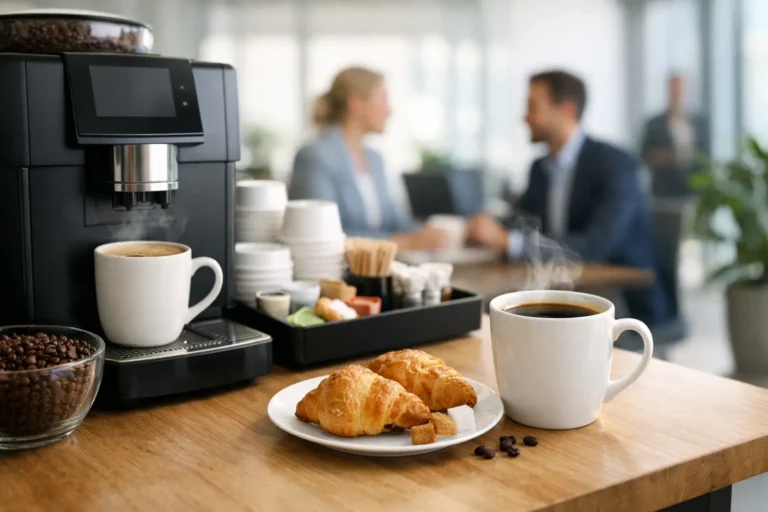
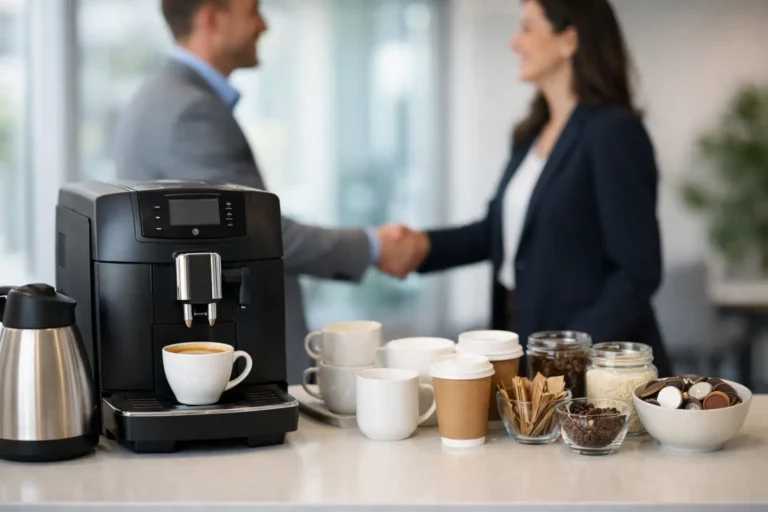
Client-facing businesses should plan for hospitality, too. A café latte or hot chocolate is a simple but memorable offer in a waiting area or conference room. It says your business has thought about the details, without requiring an employee to leave a meeting and run out for drinks.
This is where a premium machine can do more than replace a coffee pot. It can become part of how your workplace welcomes people. That benefit is hard to measure on a spreadsheet, but it is easy to recognize when an employee mentions the coffee to a new hire or a client is offered a quality drink before a meeting begins.
Do Not Underestimate Service and Restocking
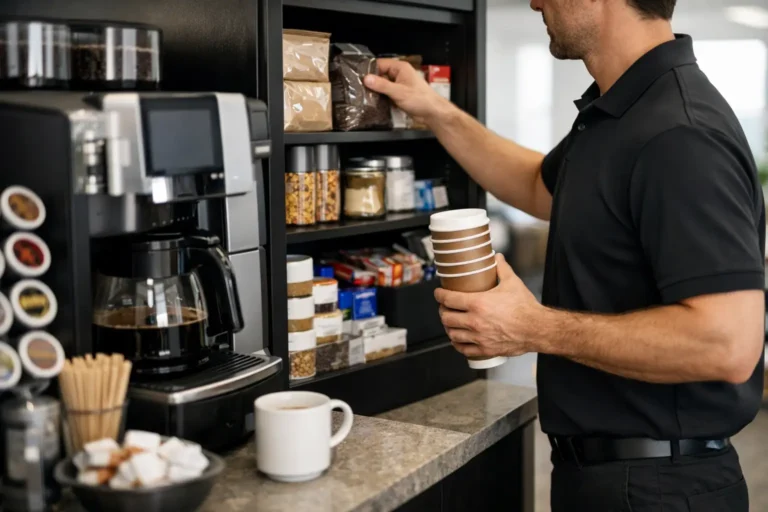
Menu planning should include the work behind the menu. Fresh roasted beans, milk or beverage ingredients, flavor supplies, cleaning products, and regular maintenance all affect whether the program stays enjoyable. If those details fall on an already busy administrator, a good idea can turn into another recurring headache.
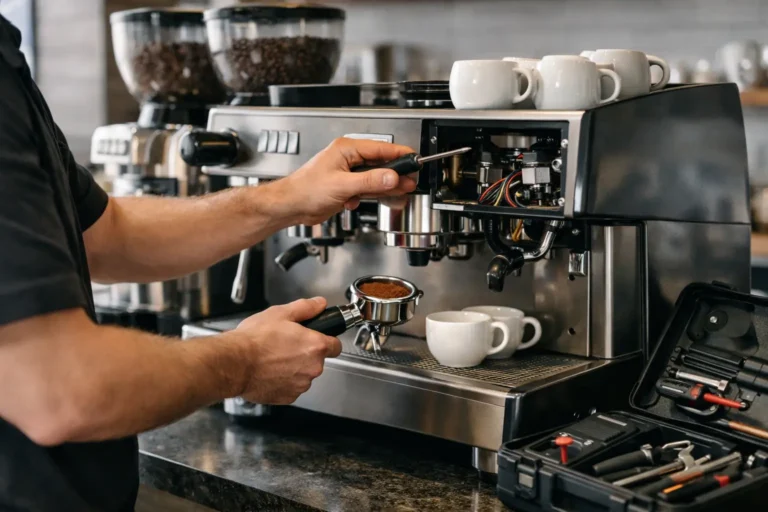
That is why a full-service approach makes sense for many workplaces. Instead of buying a machine, guessing at supply levels, troubleshooting an error message, and arranging repairs, employers can have the equipment installed, ingredients replenished, and maintenance handled on a routine schedule.
For Canton-area businesses, Sip and Smile Gourmet Coffee can make that process straightforward with commercial machines, gourmet beverage supplies, weekly cleaning and restocking, and ongoing repair support. Your team gets café-style drinks; your office does not inherit a new appliance-management project.
Review What People Actually Drink
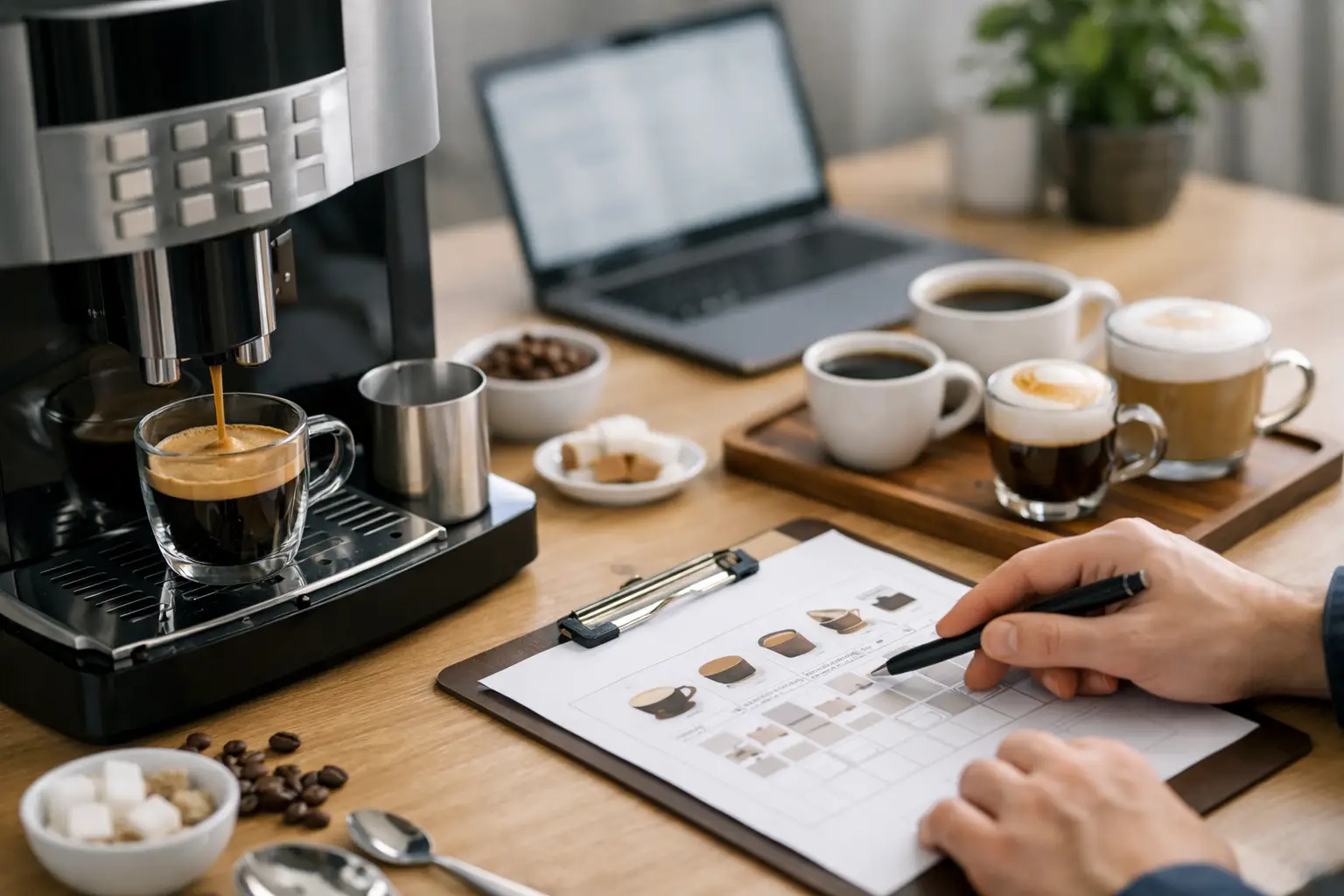
The first version of your menu is not permanent. Give it time, then watch what employees choose. If French vanilla is consistently popular and a seasonal flavor barely moves, adjust the next order. If your office is growing or hosting more visitors, you may need more capacity or a more prominent beverage station.
Feedback does not need to be complicated. Ask employees what they use most, what they would like to see, and whether the machine is convenient during peak times. Small adjustments can make the program feel personal without turning it into a constantly changing project.
A well-planned espresso menu should make the workday a little better from the first cup to the last meeting. Choose familiar favorites, add thoughtful variety, and put dependable service behind the machine. Then your staff and clients can enjoy the kind of welcome that does not require extra work from your team.