Commercial Barista Machine Selection Guide
Use this commercial barista machine selection guide to choose the right office coffee setup for drink demand, space, service, and budget.
That moment when a client asks for a latte and the breakroom can only offer burnt drip coffee says more than most companies realize. A strong commercial barista machine selection guide helps you choose a setup that matches your workplace, supports your team, and delivers a better experience without creating more work for your staff.
For most offices, the real question is not just which machine makes the best espresso. It is which machine fits your drink volume, your space, your employee expectations, and the level of day-to-day involvement your team can realistically handle. The right choice should feel like an upgrade for everyone, not another piece of equipment someone has to babysit.
What a commercial barista machine selection guide should focus on
A lot of machine decisions go sideways because buyers start with features instead of outcomes. Touchscreens, drink menus, bean hoppers, and milk systems all matter, but they matter in context. Before you compare machine models, step back and look at how coffee actually functions in your workplace.
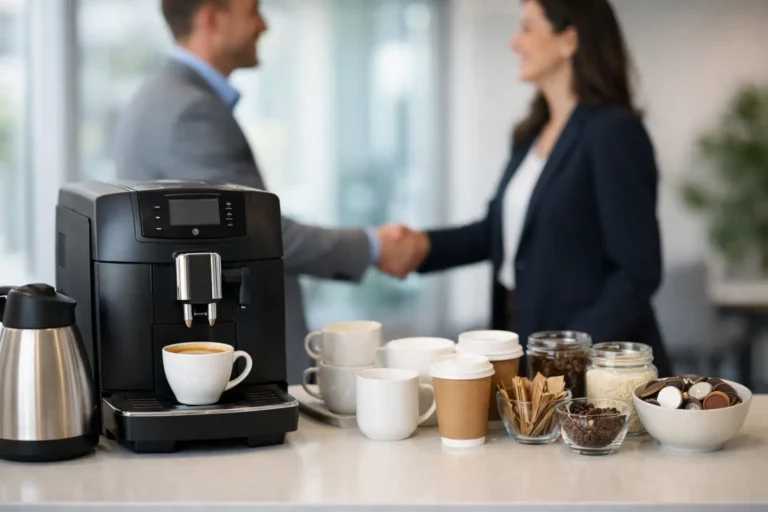
If you manage an office with 15 employees, your needs will be different from a medical practice with steady guest traffic or a dealership that wants to impress customers in the waiting area. Some businesses need quick, one-touch drinks all day long. Others need a dependable machine for morning rushes and occasional client service. The best machine is the one that handles your real pattern of use without slowing people down or demanding constant attention.
That is why any practical commercial barista machine selection guide should start with four questions. How many drinks will be made each day? What kinds of beverages do people expect? How much room do you have? And who is going to keep the machine filled, cleaned, and working properly?
Start with drink demand, not brand names
Volume is the first filter. It affects speed, size, durability, and the kind of support you will need over time.
A smaller office may only need a machine that comfortably produces a moderate number of espresso-based drinks each day. In that setting, oversized equipment can be unnecessary and expensive. On the other hand, if your team has 50 or more employees or you welcome customers throughout the day, an underpowered machine will quickly become frustrating. Long wait times, empty ingredient canisters, and more frequent service issues usually follow.
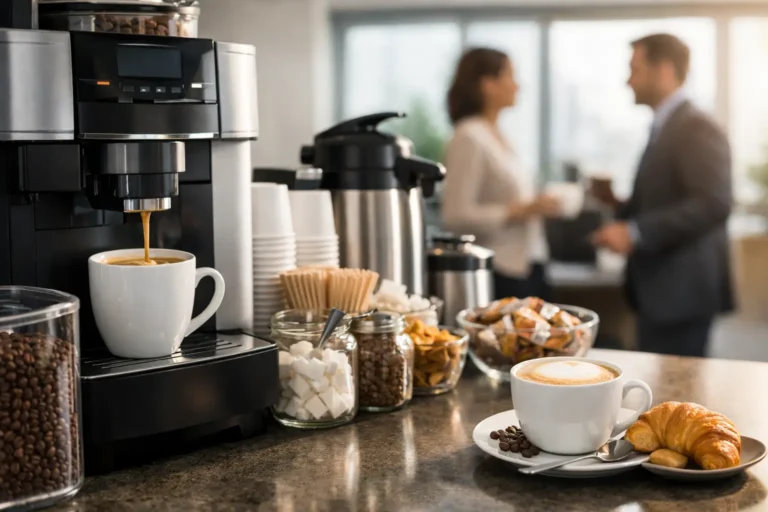
Drink variety matters just as much. If your team wants basic coffee and the occasional cappuccino, your machine choice may be fairly straightforward. If employees expect café lattes, Americanos, mochaccinos, hot chocolate, French vanilla drinks, and seasonal options at the touch of a button, you need equipment built for consistent beverage variety. Convenience changes the value equation. A machine that makes one great drink is not always better than one that makes several popular drinks quickly and reliably.
Think about user experience in the breakroom
In an office setting, ease of use is not a bonus feature. It is part of the product.
Most workplaces do not have an in-house barista. That means the machine needs to be intuitive for everyone, from new hires to visiting clients. Clear drink selections, fast dispensing, and dependable quality matter more than a long list of settings most people will never touch.
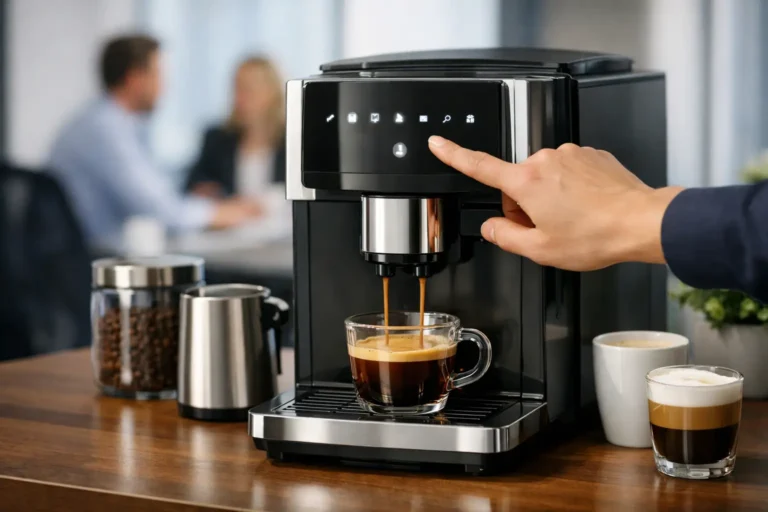
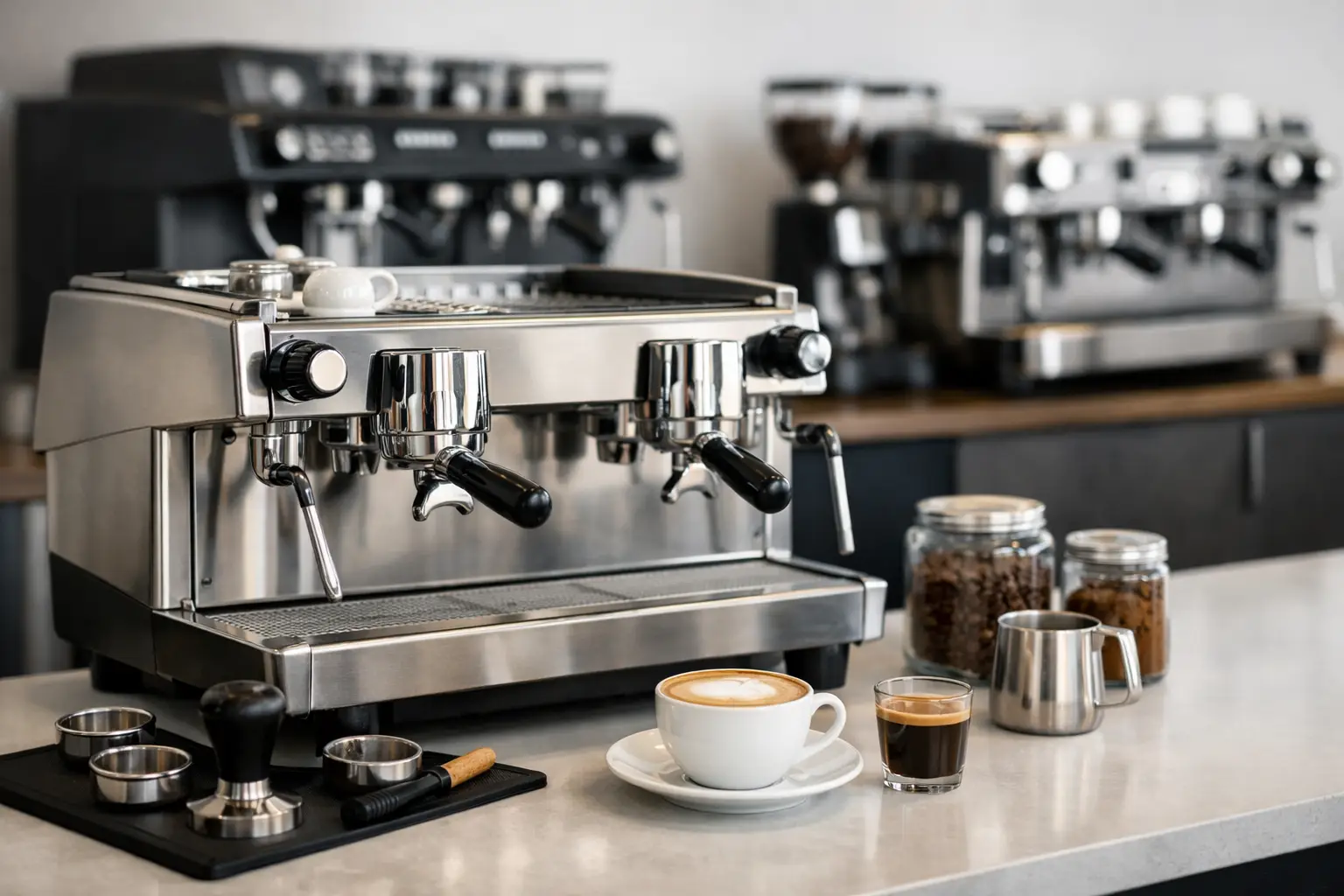
This is one area where business buyers sometimes overestimate how much control they want. Manual machines can look impressive, but they often make less sense in workplaces that need speed and consistency. A one-touch commercial barista machine is usually the better fit for offices because it gives employees premium drinks without training, guesswork, or wasted time.
The result is simple. People actually use it. And when they use it, they notice the difference between a coffee perk that feels thrown together and one that feels intentional.
Space, power, and plumbing can narrow your options fast
A machine may look perfect on paper and still be wrong for your location.
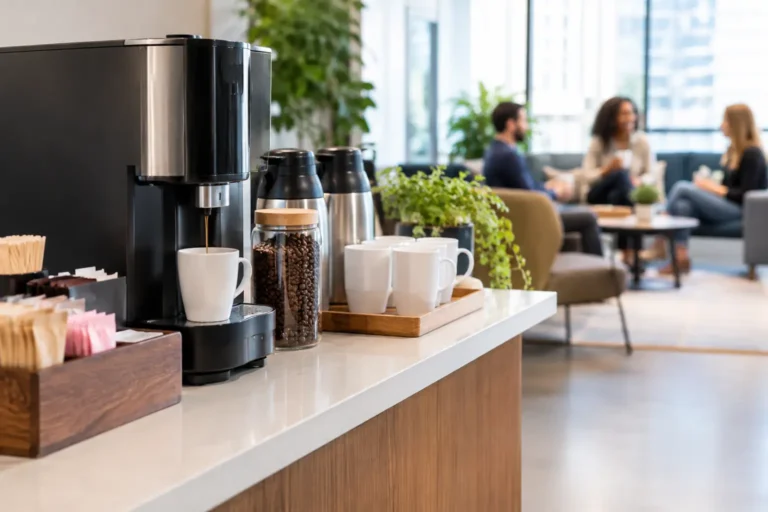
Before choosing equipment, look at the physical setup of your breakroom, kitchen, reception area, or client lounge. Counter depth, ventilation, outlet access, water supply, and nearby storage all play a part. A machine with a larger footprint might deliver more capacity, but if it crowds the room or forces awkward refilling and cleaning access, it becomes a daily nuisance.
Water access is especially important. Some machines are best with direct plumbing, while others can work in setups where flexibility matters more. Neither option is automatically better. It depends on how permanent your layout is and how much volume the machine will handle.
This is also where local support becomes valuable. An experienced provider can look at the space and help you avoid picking a machine that technically fits but does not function well in the real environment.
Ownership sounds simple until maintenance becomes your problem
Here is where many office coffee plans lose momentum. The machine gets installed, people love it for a few weeks, and then somebody has to clean milk systems, refill supplies, troubleshoot drink quality, and schedule repairs.
That somebody is usually not eager to add coffee machine management to an already full job.
A smart commercial barista machine selection guide should account for service from the start. If you purchase equipment outright, you also take on maintenance responsibility, repair coordination, part replacement, and cleaning oversight. For some businesses, that is acceptable. For many, it becomes a burden quickly.
A full-service model often makes more sense because it removes the operational drag. Installation, beans, powders, cleaning, maintenance, repairs, and restocking are handled for you. That means the machine keeps performing the way it should, and your team gets the benefit without owning the hassle.
Cost should be measured against workload and value
It is easy to compare machines by sticker price. It is more useful to compare them by total impact.
A lower-cost machine may look attractive at first, but if it offers limited drink choices, requires frequent upkeep, or breaks down under real use, the savings disappear fast. On the other hand, premium commercial barista equipment can justify itself when it improves employee satisfaction, supports client hospitality, and reduces the need for staff to leave the office for coffee runs.
There is also a hidden cost in underdelivering. If you advertise a premium workplace experience but the beverage station feels unreliable or basic, the perk loses its effect. Coffee is not everything, but it is one of the few office benefits employees and visitors interact with almost every day.
That is why the right investment is usually the one that balances beverage quality, convenience, and service support. Not the cheapest machine, and not always the most elaborate one either.
How to narrow your options without overcomplicating it
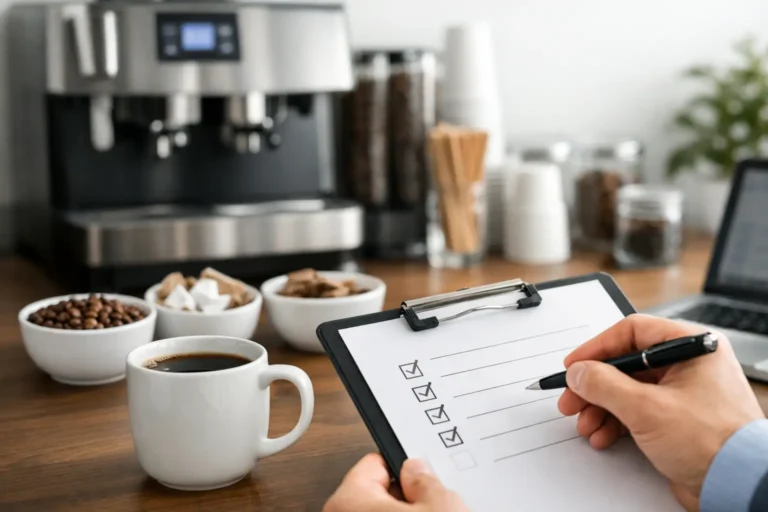
If you want a practical way to decide, start by grouping your needs into three categories: demand, experience, and support.
Demand covers how many people will use the machine and what they will want to drink. Experience covers ease of use, speed, and whether the machine feels like a premium amenity or a backup appliance. Support covers who handles installation, supply delivery, maintenance, weekly cleaning needs, and repairs.
When one of those categories is ignored, problems show up fast. A machine can be high quality and still be wrong if it is too slow for your office. It can be feature-rich and still be a poor choice if no one wants to maintain it. It can even make excellent drinks and still disappoint if it does not fit the pace and expectations of your workplace.
For many Canton-area businesses, the best answer is not simply buying a machine. It is choosing a coffee service partner that aligns the machine to your workplace and keeps it running without extra demands on your staff. That is where Sip and Smile Gourmet Coffee tends to stand out. The goal is not just to place equipment. It is to make premium workplace beverages easy to offer and easy to sustain.
The best machine is the one people can count on
When businesses shop for office coffee equipment, they sometimes focus too much on what looks impressive during a demo. What matters more is what still works well on a busy Tuesday at 9:15 a.m. when several employees want drinks, a client is waiting, and nobody has time for a machine issue.
Reliability is part of hospitality. So is consistency. If your coffee setup is going to represent your business, it should deliver quality drinks quickly, look professional in the space, and stay maintained without constant follow-up from your team.
That is the real value behind a thoughtful commercial barista machine selection guide. You are not just choosing a machine. You are choosing the kind of daily experience you want your employees and guests to have. Pick the setup that makes that experience easy, and the coffee program starts working for your business instead of adding one more thing to manage.