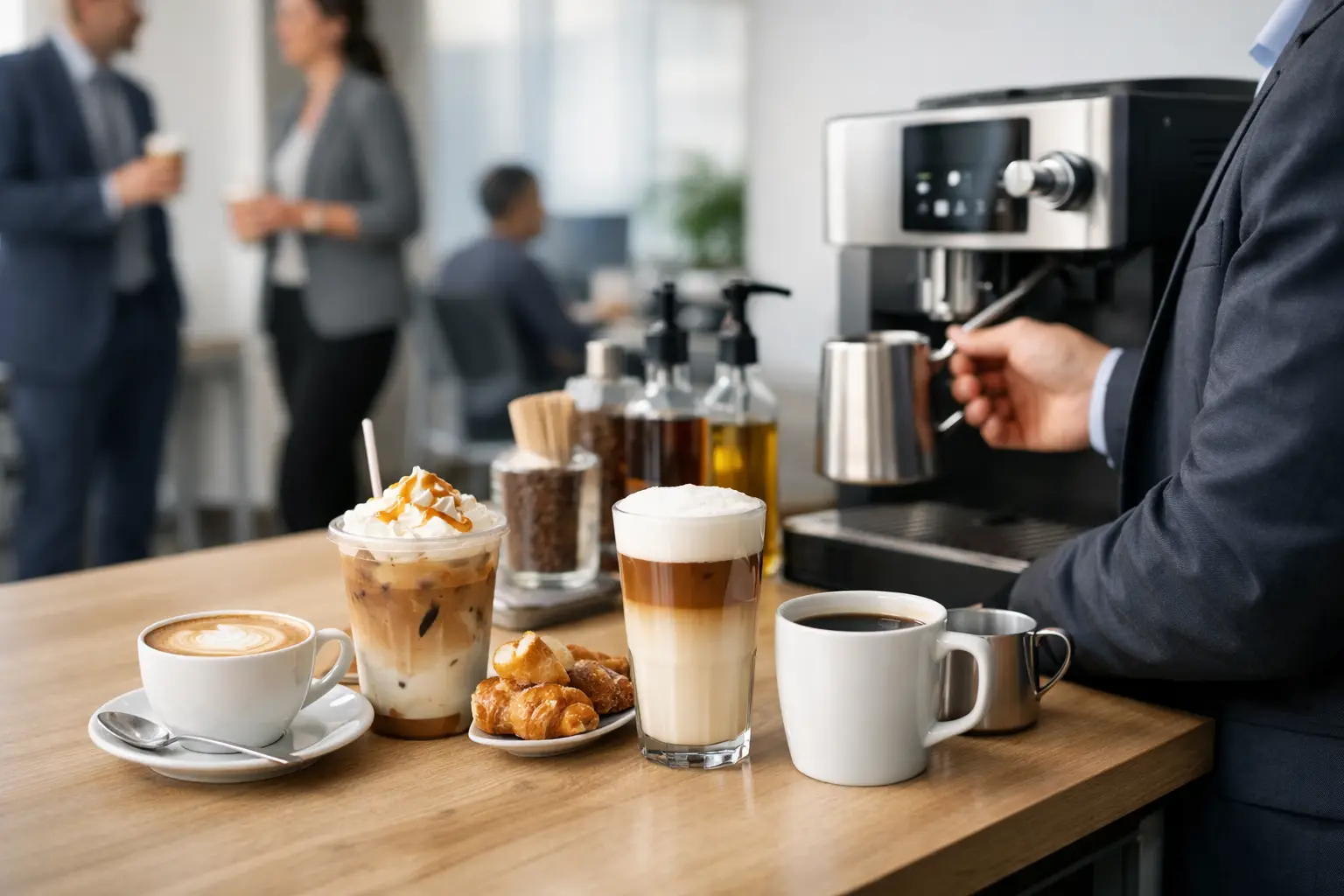
How to Offer Cafe Drinks at Work
Learn how to offer cafe drinks at work with the right setup, menu, and service model so your team and clients enjoy premium beverages daily.
That sad pot of breakroom coffee says more about your workplace than most companies realize. If you want to improve the employee experience, make a stronger impression on visitors, and stop managing coffee as a side job, the real question is how to offer cafe drinks at work without creating extra work for your team.
The good news is that you do not need to build a mini coffee shop in your office. You need the right setup, the right drink selection, and a service model that fits your staff size, traffic, and expectations. When those pieces line up, cafe-style beverages become a practical workplace perk instead of an operational headache.
Why businesses are upgrading from basic coffee
Standard drip coffee still has its place. It is familiar, inexpensive, and easy to understand. But for many offices, it no longer matches what employees and clients expect. People are used to better coffee at home, in cafes, and on the go. When they walk into the office and see stale coffee on a burner, it feels dated.
Cafe drinks raise the perceived quality of the workplace quickly. A cappuccino, latte, Americano, or hot chocolate from a professional machine feels more thoughtful than a generic pot on a counter. For employees, that can make the office feel more welcoming. For clients, it adds a level of hospitality that reflects well on your business.
There is also a practical side. A better beverage program can support in-office attendance, improve breakroom use, and reduce those repeated coffee runs that pull people away from work. It will not solve every culture issue, of course. But it is one of the simpler upgrades that people notice right away.
How to offer cafe drinks at work without making it complicated
Most business decision-makers do not hesitate because they doubt people want better drinks. They hesitate because they assume the program will be expensive, messy, or time-consuming to manage. That concern is fair. It depends on how you set it up.
If your office tries to piece together machines, ingredients, cleaning schedules, and repair plans on its own, the program can become one more thing your staff has to babysit. Someone ends up ordering supplies late. Someone else is wiping down equipment. Then the machine stops working and everybody is back to basic coffee.
A much better approach is to think about cafe drinks as a service, not just equipment. The machine matters, but support matters just as much. Installation, restocking, maintenance, cleaning, and repair support are what keep a premium beverage station actually usable week after week.
That is why the simplest path is often an outsourced workplace coffee program. You get the cafe experience without asking your office manager, HR team, or operations staff to run a coffee bar behind the scenes.
Start with the kind of experience you want to create
Before choosing a machine or menu, decide what the beverage station needs to do for your workplace. A law office greeting clients all day may need something polished and easy for guests to use. A manufacturing office might care more about speed and consistency during busy breaks. A growing professional office may want a perk that helps with retention and recruiting.
This is where companies sometimes overbuild or underbuild. If you have 12 employees and occasional visitors, you may not need a highly customized drink station with endless syrups and manual prep. If you have 75 employees and frequent client traffic, a basic pod system will probably feel underwhelming.
The right answer usually comes down to three things: how many people will use it, how often they will use it, and how premium you want the experience to feel. Once those are clear, the setup becomes much easier to match to your space.
Choose a menu people will actually use
A strong workplace drink menu does not need to be huge. It needs to be appealing, easy to understand, and broad enough to suit different preferences.
For most offices, espresso-based drinks are the sweet spot. That usually means offering options like espresso, cappuccinos, cafe lattes, cafe Americanos, and mochaccinos. Adding hot chocolate and French vanilla drinks gives non-coffee drinkers something they will enjoy too. Seasonal beverages can be a nice extra if you want the program to feel fresh throughout the year.
The mistake some companies make is assuming more choices always mean more value. In practice, a cluttered menu can confuse users and slow things down. A concise, high-quality selection often works better than trying to imitate a giant retail cafe menu.
It also helps to think about who visits your office. If clients are a regular part of your day, the drink options should feel polished and easy to serve. A touch-button machine that produces consistent cafe drinks quickly is often a better business fit than something that requires training, measuring, or manual frothing.
The equipment decision matters more than most offices expect
If you are serious about cafe drinks, consumer-grade machines are rarely the right long-term answer. They may look affordable upfront, but they usually are not built for repeated workplace use. Performance drops, maintenance becomes inconsistent, and employees lose confidence in the machine fast.
Commercial equipment is designed for a different level of demand. It delivers better consistency, handles office traffic more reliably, and creates a more professional experience. That matters because people will judge the whole program by what happens at the machine. If drinks are weak, confusing to make, or unavailable half the time, the perk loses value quickly.
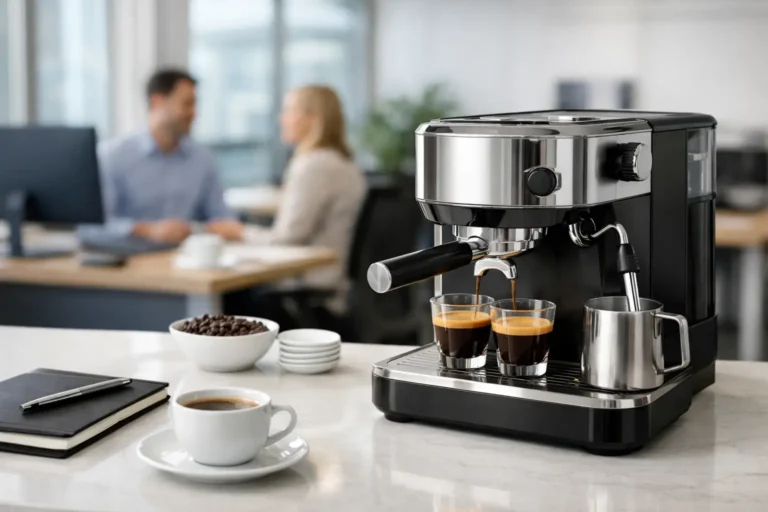
Italian-made barista machines are especially appealing for workplaces that want espresso-based drinks without the labor of a staffed cafe. With the right machine, employees and guests can make quality drinks at the touch of a button. That keeps the experience premium while removing the complexity that usually scares businesses away.
Support is what makes the program sustainable
This is the part many offices overlook. Getting a machine installed is the easy part. Keeping the station stocked, clean, and working is what determines whether the program succeeds after the first month.
If your internal team is responsible for beans, powders, cleaning, and service calls, the program can slowly slide into inconsistency. Supplies run low. Maintenance gets delayed. Nobody is quite sure who owns the task. Before long, the beverage station looks neglected.
That is why service continuity matters so much. A full-service model keeps the experience dependable. Fresh roasted beans and beverage ingredients show up on schedule. Weekly maintenance and cleaning prevent small issues from turning into bigger ones. Repairs get handled without your team scrambling for answers.
For busy offices, that hands-off model is often the difference between wanting cafe drinks in theory and being able to offer them in real life.
How to offer cafe drinks at work on a sensible budget
Cost matters, but it helps to look at total effort, not just equipment price. Buying a cheaper machine may seem like the budget-friendly choice until you add repairs, supply management, downtime, and staff time spent dealing with problems.
A serviced workplace coffee program can be easier to budget because it rolls the important pieces together. Instead of making separate decisions about equipment, ingredients, maintenance, and replacement, you are evaluating a complete solution.
There is also a value side that should not be ignored. A premium beverage station supports employee satisfaction and creates a better client-facing environment. That value is not always shown on a spreadsheet, but it still matters. The goal is not simply to serve coffee more cheaply. It is to create a workplace amenity that feels worth having.
If you are comparing options, ask a simple question: will this save my staff time while giving people a better experience? If the answer is no, it may not be the right setup.
What a smooth rollout looks like
The easiest rollouts are the ones that do not ask your team to become coffee experts. You choose a setup that fits your office, the equipment gets installed, the beverage supplies are provided, and employees can start using it right away.
That simplicity is a big part of the appeal. Office managers and administrators already have enough on their plate. They should not have to train staff on machine care, chase down ingredients, or coordinate service appointments every time something goes wrong.
For Canton-area businesses that want a polished, no-fuss option, Sip and Smile Gourmet Coffee fits that model well by combining commercial machines, gourmet drink options, and ongoing support under one service relationship. That means your office gets the benefit of a cafe-style beverage program without taking on the daily work of managing one.
Make it easy for people to enjoy it
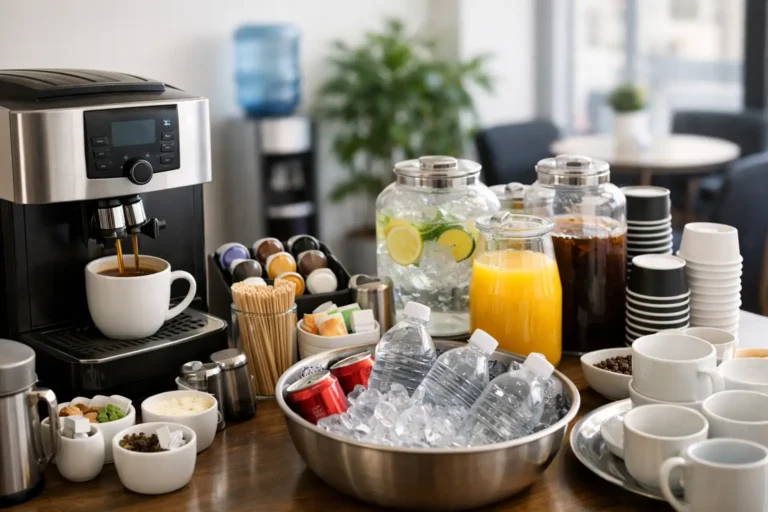
Once the station is in place, a few small decisions help people use it more often. Put it in a visible, convenient location. Keep the area clean and well supplied. Choose a machine with clear drink buttons and consistent output. If your office has guests, place cups and condiments so the station feels welcoming rather than improvised.
It is also worth setting realistic expectations. Not every employee will become a latte drinker overnight, and not every office needs the same level of variety. What matters is creating an experience that feels easy, reliable, and noticeably better than basic breakroom coffee.
When you get that right, the beverage station does more than serve drinks. It sends a message that your workplace pays attention to quality, hospitality, and the details people remember long after the cup is empty.