Coffee Service vs Buying Equipment at Work
Coffee service vs buying equipment – compare costs, upkeep, quality, and convenience to choose the right office coffee setup for your team.
That breakroom coffee decision usually looks simple at first. Buy a machine, stock some beans, and call it done. But when you really compare coffee service vs buying equipment, the real question is not just what the machine costs. It is who will manage the drinks, the supplies, the cleaning, the repairs, and the employee expectations once the machine is in place.
For many Canton-area businesses, this choice affects more than the coffee budget. It shapes employee experience, client impressions, and how much time your team spends handling one more operational task that was never part of anyone’s actual job.
Coffee service vs buying equipment: what are you really paying for?
When a business buys coffee equipment outright, the purchase price gets most of the attention. That makes sense. A commercial brewer, bean-to-cup machine, or espresso system can be a noticeable capital expense, and owning the equipment can feel like the more direct route.
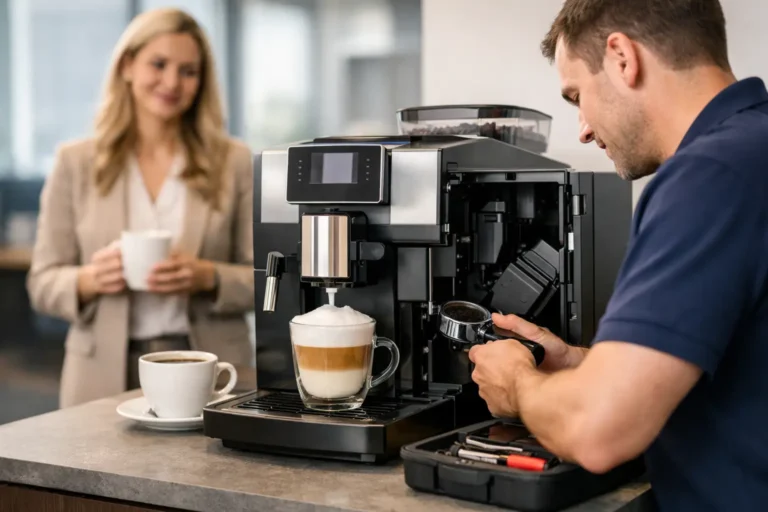
What often gets missed is everything that comes after the machine arrives. Someone has to choose products, order supplies, track inventory, clean components, schedule service, troubleshoot issues, and decide what to do when the machine goes down on a Monday morning. If your office wants more than basic drip coffee, the demands usually increase.
A workplace coffee service shifts that responsibility away from your internal team. Instead of purchasing a machine and building your own mini coffee operation, you are paying for continuity. Equipment, product selection, restocking, maintenance, and support are handled for you. That difference matters most in offices where time is already stretched thin and no one wants to become the unofficial coffee manager.
Buying equipment can work – if your business wants control
There are situations where buying equipment makes sense. If your company has a very small team, limited beverage needs, and someone in-house who does not mind managing supplies and upkeep, ownership can be a reasonable option.
It can also appeal to businesses that want complete control over every product decision. You pick the machine, the coffee, the syrups, the cups, the cleaning schedule, and the service provider when something breaks. For organizations that prefer to own assets and handle vendors separately, that model may feel familiar.
But ownership tends to look better on paper than it does in a busy office. A machine is not a finished coffee program. It is one part of a system. If your employees want cappuccinos, lattes, hot chocolate, seasonal drinks, and reliable day-to-day availability, then buying equipment is only the beginning.
Service is often the better fit for growing offices
Most businesses are not trying to become beverage operators. They want a premium coffee experience that works every day without adding more work to the office manager, HR team, or operations staff.
That is where service usually wins.
With a full-service model, the machine is installed for your workplace, the beverage products are supplied, and ongoing cleaning, maintenance, and repairs are part of the arrangement. Instead of reacting when the coffee runs out or the equipment starts acting up, you have a system built to keep things running.
For offices with more than 10 employees, this can be the difference between a perk that impresses people and a machine that becomes a source of complaints. A coffee station only feels premium when it is consistently stocked, clean, and easy to use.
The hidden costs of buying your own machine
The biggest mistake companies make when comparing coffee service vs buying equipment is treating equipment ownership as a one-time cost. In practice, the ongoing costs are what change the equation.
Repairs are the obvious example. Commercial machines are reliable until they are not, and when they fail, the inconvenience is immediate. Downtime means frustrated employees, awkward client moments, and a scramble to get a technician out.
Cleaning is another cost, even if it does not show up clearly on a budget line. Someone in your office is spending time on daily and weekly upkeep. If the machine supports milk-based or espresso-style beverages, cleaning matters even more. Skipping it can hurt drink quality and shorten equipment life.
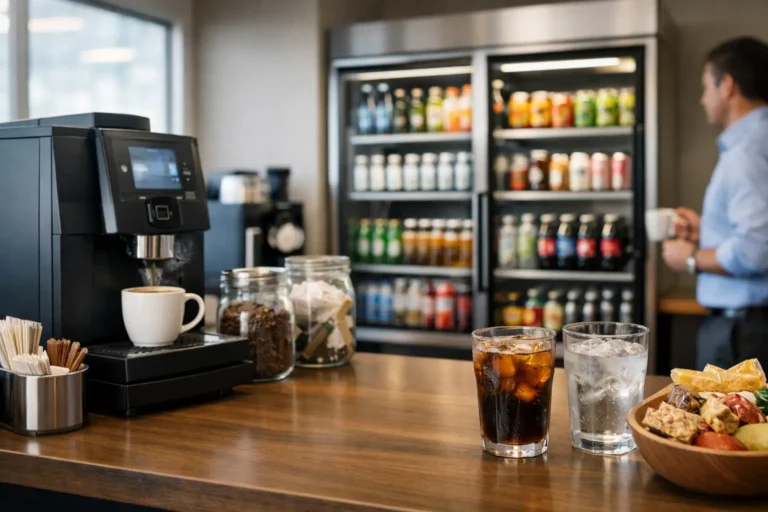
Then there is inventory. Beans, powders, syrups, cups, lids, stirrers, sweeteners, and cleaning products need to be monitored and reordered. Running out of one item can make the whole setup feel poorly managed. That may seem minor, but employees notice when the office promotes a coffee perk that is only halfway functional.
Quality matters more than most offices expect
A basic coffee machine can technically check the box. But if your goal is to create a better workplace experience, basic usually is not enough.
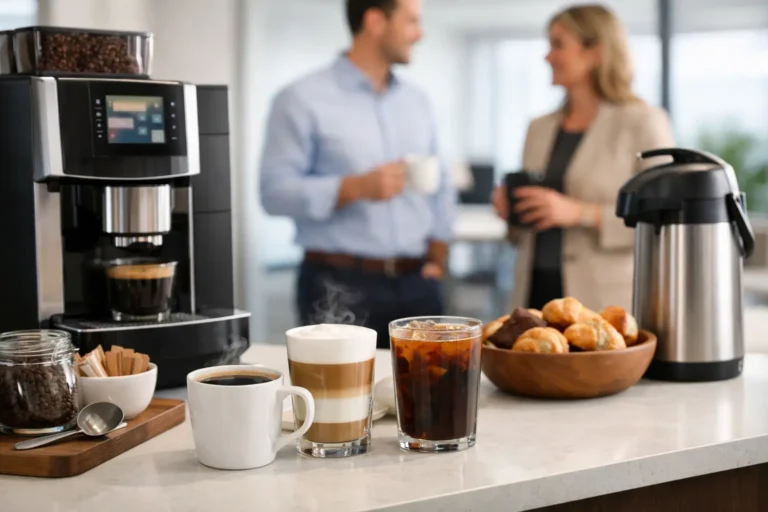
Employees know the difference between standard breakroom coffee and café-style beverages. Clients notice too. A premium machine that can produce espresso-based drinks at the touch of a button gives your office a more polished, welcoming feel. It suggests that your business pays attention to details.
That does not mean every company needs the most advanced machine available. It means the beverage program should match the image you want to present. If your office hosts visitors, recruits talent, or wants to improve employee satisfaction in a practical way, drink quality becomes part of the experience.
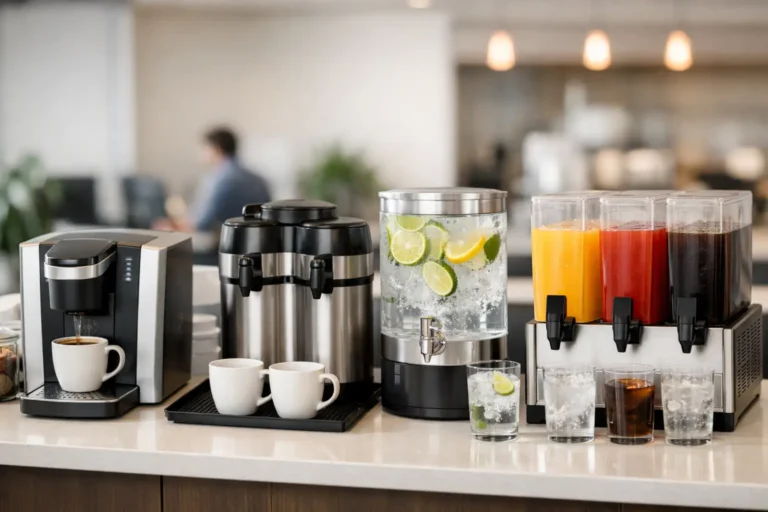
This is where a service partner can offer an advantage. Instead of guessing what your team will use, you can build a beverage program around actual preferences, whether that means coffee, espresso drinks, cappuccinos, café lattes, hot chocolate, or flavored options that appeal to a wider group.
Convenience is not a small benefit
For workplace decision-makers, convenience is often the deciding factor.
Buying equipment may appear less expensive at first, but it creates one more internal process to manage. Someone has to own it. If that person leaves, gets busy, or simply has other priorities, the coffee setup starts to slip. The machine still exists, but the experience around it gets inconsistent.
A managed coffee service is designed to remove that friction. That is especially valuable in offices where administrative staff already juggle vendors, supplies, scheduling, and employee support. A coffee program should make the office better, not add another headache.
Businesses often underestimate how much they value not having to think about the coffee machine. Until something breaks, they assume it is a small task. Once they have dealt with missed deliveries, empty hoppers, service calls, and unhappy employees, the appeal of a hands-off solution becomes much clearer.
Which option is better for employee and client experience?
If the only goal is to provide caffeine at the lowest possible upfront cost, buying equipment can do the job. But most employers are looking for more than that.
They want a workplace that feels cared for. They want to offer a perk employees actually use and appreciate. They want clients to walk in and see a professional, welcoming setup rather than a neglected coffee corner with stale supplies.
That is why service tends to perform better in offices that care about culture and presentation. A well-supported coffee station does not just provide drinks. It supports hospitality. It gives people a reason to gather, recharge, and feel valued.
For many local businesses, that matters. The breakroom is not just a utility space anymore. It is part of the employee experience, and sometimes part of the brand experience too.
How to decide between coffee service and equipment ownership
The best choice comes down to how your business operates.
If you have a small team, simple coffee needs, and someone who can reliably manage the setup, buying equipment may be enough. If your office wants premium drinks, minimal internal effort, dependable maintenance, and a consistently stocked station, service is usually the better fit.
A good rule is to ask one practical question: do you want to own a machine, or do you want a coffee program that takes care of itself?
Those are not the same thing.
For businesses that want café-quality beverages without the burden of equipment management, a full-service approach usually delivers more value over time. That is especially true when the goal is to impress staff and clients while keeping daily operations simple. Sip and Smile Gourmet Coffee is built around exactly that kind of hands-off workplace solution.
Before you choose, look beyond the machine itself. Think about who will keep it running, who will restock it, and what experience you want people to have when they walk up for a drink. The right coffee setup should make your office feel easier to run, not harder.