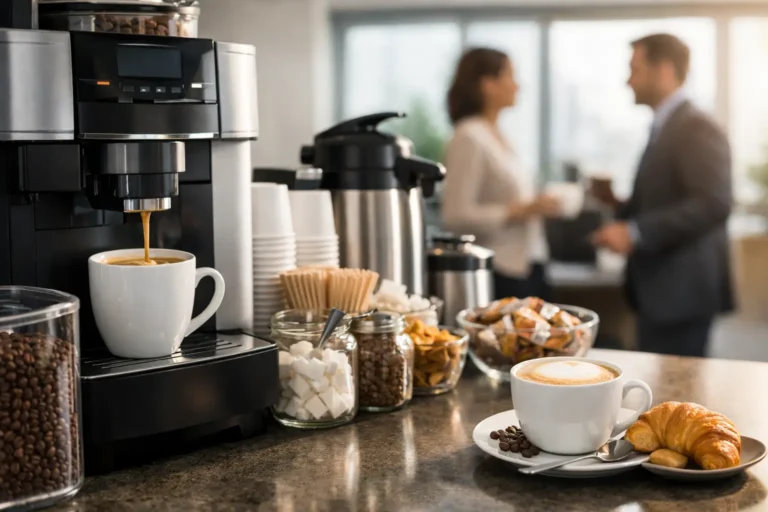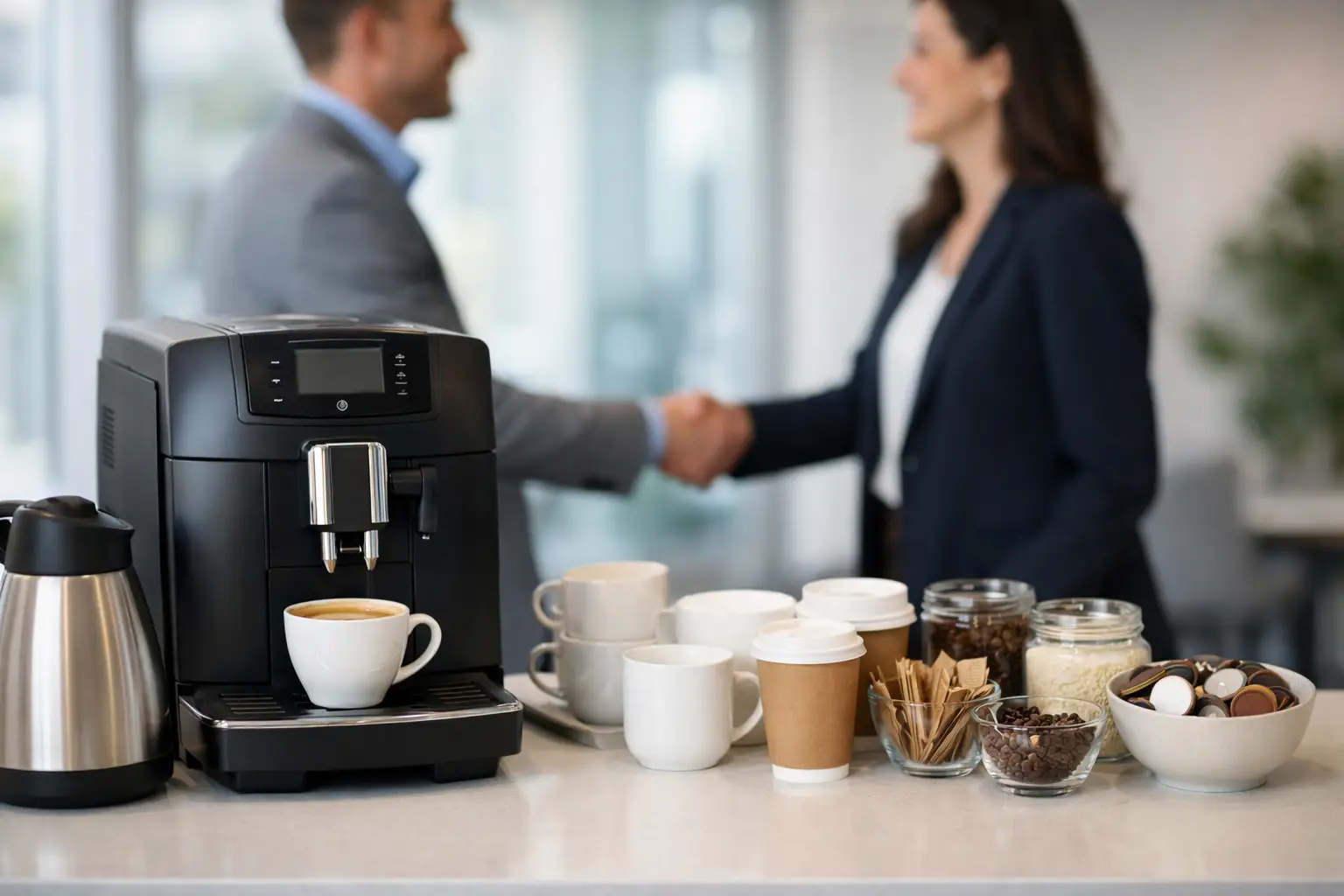
How to Outsource Office Coffee Setup
Learn how to outsource office coffee setup with the right vendor, equipment, and service plan so your team gets premium drinks without hassle.
A sad breakroom coffee pot sends a message, whether you mean it to or not. Employees notice it. Clients notice it. And if your office has grown past a basic drip machine and a warehouse-sized tub of powdered creamer, it may be time to rethink the whole setup. If you’re wondering how to outsource office coffee setup, the good news is that the right partner can turn a daily hassle into a fully managed workplace perk.
For most businesses, the real issue is not coffee itself. It is everything wrapped around it – choosing equipment, ordering supplies, cleaning machines, fixing breakdowns, and making sure the station still looks presentable on a Wednesday afternoon. Outsourcing works when you want café-style drinks and dependable service without assigning one more task to an already busy office manager.
Why businesses outsource office coffee in the first place
Most offices do not set out to build a beverage program. It usually happens in pieces. Someone brings in a machine. Someone else starts ordering pods. Then the team grows, expectations rise, and the breakroom becomes one more thing that needs active management.
That is where outsourcing starts to make sense. Instead of owning the equipment and handling every small operational detail in-house, you work with a provider that installs the machine, supplies the products, and keeps everything running. Your team gets a better experience, and your staff does not have to become part-time coffee technicians.
There are practical reasons for this shift. Outsourcing can reduce surprise repair costs, improve beverage quality, and create a more polished experience for guests. It can also help with consistency. A premium machine is only useful if it is stocked, cleaned, and maintained properly.
That said, outsourcing is not identical for every workplace. A law office with regular client traffic may want a more elevated setup than a warehouse office with mostly early-shift employees. A team of 15 has different needs than a company with 150. The best results come from matching the service model to the way your office actually operates.
How to outsource office coffee setup without creating more work
The easiest way to approach this is to think in terms of outcomes, not equipment. Before you compare machines or drink menus, decide what you want the coffee station to do for your business.
Do you want to improve employee satisfaction? Make a stronger impression on visitors? Replace a messy, inconsistent breakroom routine? Offer more drink variety without increasing internal workload? Those goals matter because they shape the kind of service you need.
Once you know the goal, the next step is to look at usage. Consider how many people will use the station each day, what kinds of drinks they expect, and whether demand spikes at certain times. An office with mostly black coffee drinkers may be well served by a simpler setup. If your team wants espresso drinks, cappuccinos, café lattes, hot chocolate, and seasonal options, you need a provider that can support a more premium beverage station on an ongoing basis.
That is a key distinction. Plenty of companies can drop off a machine. Fewer can truly manage the full program after installation.
What a fully outsourced coffee setup should include
A strong outsourced solution should cover more than the machine itself. If you are evaluating providers, look at the full service picture.
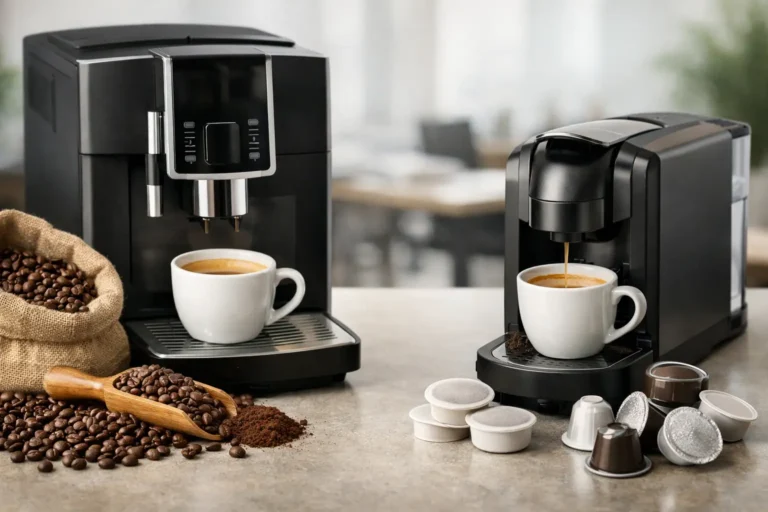
First, there is equipment selection and installation. You want a machine that fits your headcount, beverage preferences, and available space. Commercial-grade equipment matters here. A residential-style machine placed in a busy office often looks like a money saver at first, then turns into a repair problem.
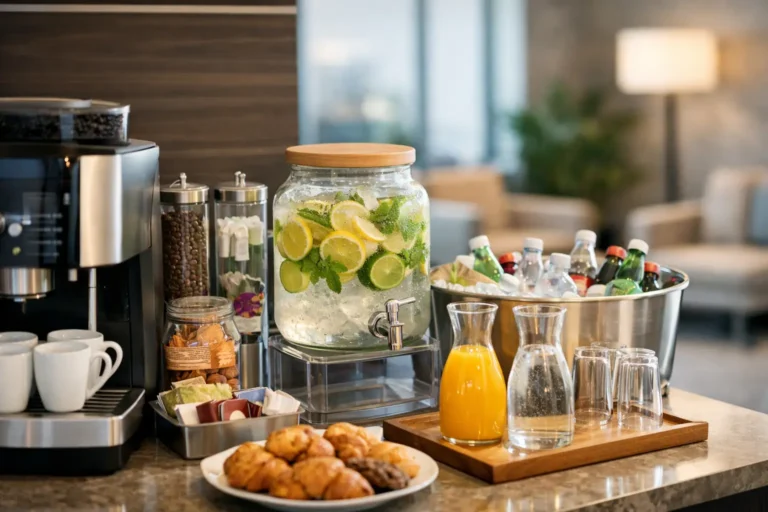
Second, there is product supply. Coffee beans, specialty drink ingredients, cups, sweeteners, stirrers, and cleaning materials all need to stay stocked. If your office runs out every few weeks and someone has to make an emergency store run, that is not really outsourced.
Third, there is maintenance and service. Machines need cleaning. Parts wear out. Performance slips over time if nobody is checking it. A provider should have a clear plan for regular upkeep and responsive repair support.
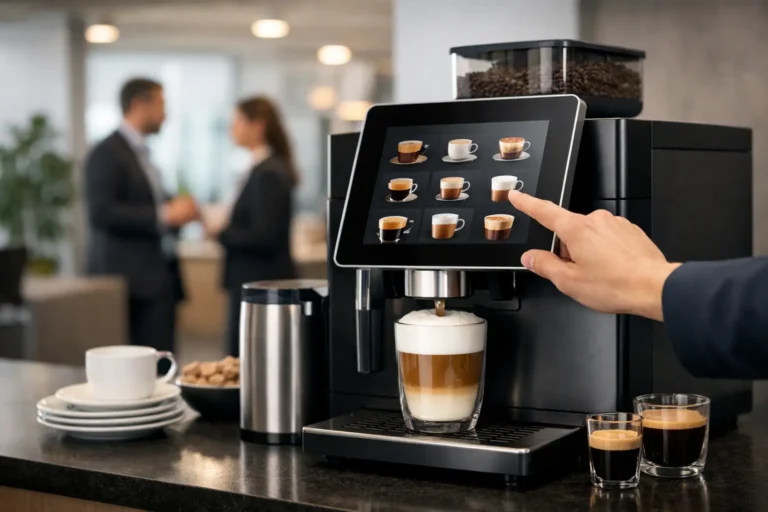
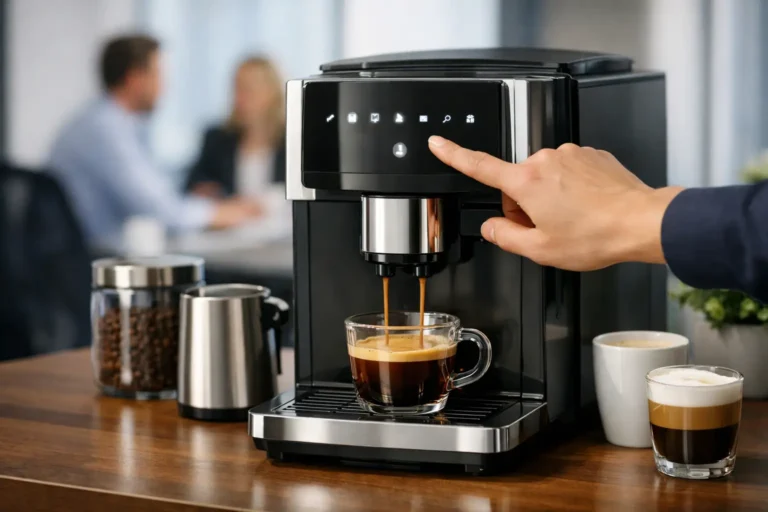
Finally, there is customization. Not every office wants the same experience. Some want a simple but elevated coffee station. Others want a touch-of-a-button barista machine that can serve espresso-based drinks to staff and visitors throughout the day. The setup should reflect your workplace, not a one-size-fits-all package.
Questions to ask before you sign with a provider
If you want to know how to outsource office coffee setup wisely, ask direct questions early. This saves time and helps you compare vendors on service, not just price.
Ask who owns the equipment and what happens if it needs repairs. Ask how often the machine will be cleaned and restocked. Ask whether the provider offers regular preventative maintenance or only responds when something breaks. Ask how beverage supplies are monitored and replenished.
You should also ask about drink variety and machine capabilities. A lot of offices say they want premium coffee when what they really want is café-style choice. There is a big difference between a pot of coffee and a machine that can produce espresso, cappuccinos, lattes, Americanos, and specialty drinks with consistent quality.
It is also smart to ask how flexible the program is. Your office may grow, your team may develop preferences, or your guest-facing needs may change. The right vendor should be able to adjust with you rather than forcing you into a setup that no longer fits.
For Canton-area businesses, local service can make a noticeable difference. When your coffee machine is part of the everyday employee experience, fast support and familiar service matter.
Common mistakes businesses make when outsourcing
One common mistake is shopping for the cheapest machine instead of the best service model. That usually leads to gaps somewhere else – poor drink quality, inconsistent supply levels, limited support, or unreliable maintenance.
Another mistake is underestimating volume. A machine that seems adequate for 10 occasional users may struggle in a 25-person office where everyone wants a drink between 8:00 and 9:00 a.m. If the equipment is too small for demand, people stop using it, and the investment loses value.
Some businesses also forget the appearance factor. If your coffee station is visible to clients, candidates, or vendors, it becomes part of your hospitality. A cluttered counter with mismatched supplies does not create the same impression as a clean, professionally managed beverage station.
Then there is the ownership issue. Buying equipment outright can sound appealing, but it often shifts more responsibility back to your team. You may save on a monthly fee only to take on maintenance, repairs, cleaning, and replacement risk. For many offices, that trade-off is not worth it.
What the right outsourced setup feels like day to day
When a coffee program is set up correctly, it fades into the background in the best possible way. Employees walk up, choose what they want, and get a quality drink quickly. Visitors see a workplace that pays attention to details. Office managers are not fielding complaints about empty hoppers or broken machines.
That kind of consistency is the real value. Yes, the drinks matter. So does the convenience. But what most decision-makers are really buying is relief from one more operational task.
A full-service partner should make the process simple from the beginning. They should help you assess your office, recommend the right machine, install it professionally, and keep it supplied and serviced without constant follow-up from your team. That is the difference between having coffee in the office and having an office coffee program that actually works.
For businesses that want premium drinks without equipment headaches, a company like Sip and Smile Gourmet Coffee can be a practical fit because the model is built around installation, ongoing supply, and hands-off support rather than just equipment delivery.
The best time to make the switch
Most companies start looking at outsourcing after something goes wrong. The old machine breaks. Staff complain about quality. Supplies are always running out. A new office opens and nobody wants to rebuild the breakroom from scratch.
But you do not have to wait for a mess to act. If your current setup depends on internal patchwork, you are already spending time and attention on something that could be handled better by a service partner.
A well-run coffee station does more than caffeinate your team. It helps your office feel cared for, makes guests more comfortable, and gives your staff one less thing to work around. If you want a premium result without adding another job to someone’s desk, outsourcing is not an extra expense to justify. It is often the cleaner way to run the office.