How to Stock Office Beverages Without the Hassle
Learn how to stock office beverages with café-quality options, smart par levels, and dependable service that keeps staff and clients refreshed each day.
A breakroom runs out of coffee at 10:30 a.m., the creamer expires in the back of a cabinet, and a client is offered a bottled water because no one knows how to work the old coffee pot. That is not the impression most businesses want to make. Knowing how to stock office beverages is less about filling shelves and more about creating a dependable, welcoming experience for the people who work with you and visit your office.
For Canton-area offices, a better beverage program can be a practical employee perk, a polished client touchpoint, and one less responsibility on an office manager’s already-full list. The right approach balances variety, quality, storage, and service without turning the breakroom into another inventory project.
Start with the People Using Your Breakroom
The best beverage selection depends on your office, not a generic supply checklist. A 12-person accounting office with frequent client meetings will have different needs than a 75-person operations team working staggered shifts. Before choosing products, consider how many people are in the building on a typical day, how often visitors come through, and when beverage demand is highest.
Pay attention to existing habits. If employees regularly leave the office for specialty coffee, that is useful information. They may value espresso drinks, lattes, cappuccinos, or flavored options more than a large supply of standard drip coffee. If your team includes early starters, shift workers, or people who spend long hours in meetings, reliable access to coffee and water may matter most.
A quick employee survey can help, but it does not need to become a committee project. Ask which drinks people use most, whether decaf and tea are important, and which dietary needs should be represented. The goal is not to stock every possible option. It is to offer a thoughtful range that people will actually enjoy.
Build a Beverage Mix That Feels Generous, Not Excessive
A strong office beverage program usually has three layers: everyday essentials, café-style choices, and simple non-coffee alternatives. The essentials make sure no one is left without a familiar option. The elevated choices give your staff and guests a reason to appreciate the breakroom instead of treating it as an afterthought.
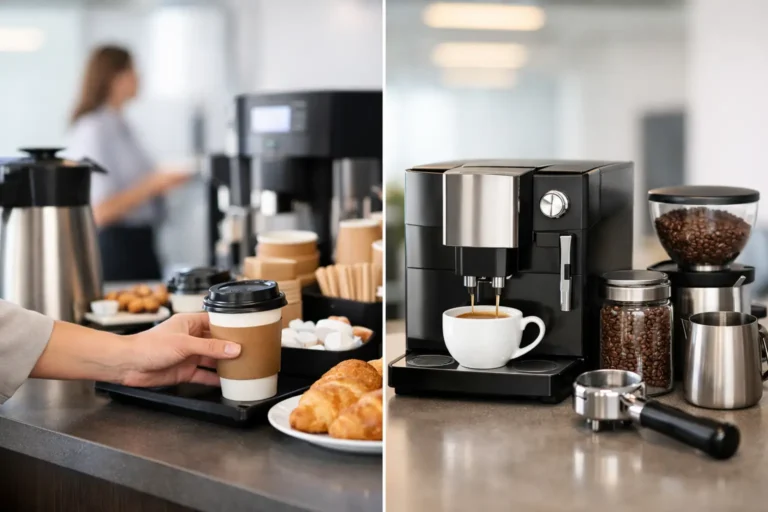
For coffee, fresh roasted beans and a commercial machine can provide much more value than a basic pot and a stack of single-serve pods. A quality bean-to-cup machine can make espresso, café Americanos, cappuccinos, café lattes, mochaccinos, hot chocolate, French vanilla drinks, and seasonal favorites at the touch of a button. That level of variety makes a meaningful difference in offices where employees have different tastes.
Keep a decaf option available, especially if your workplace hosts afternoon meetings or client appointments. Tea is also worth including, but stock the types people drink rather than an oversized assortment that goes stale. A few dependable choices – such as black tea, green tea, herbal tea, and hot water access – usually serve an office better than a crowded tea drawer.
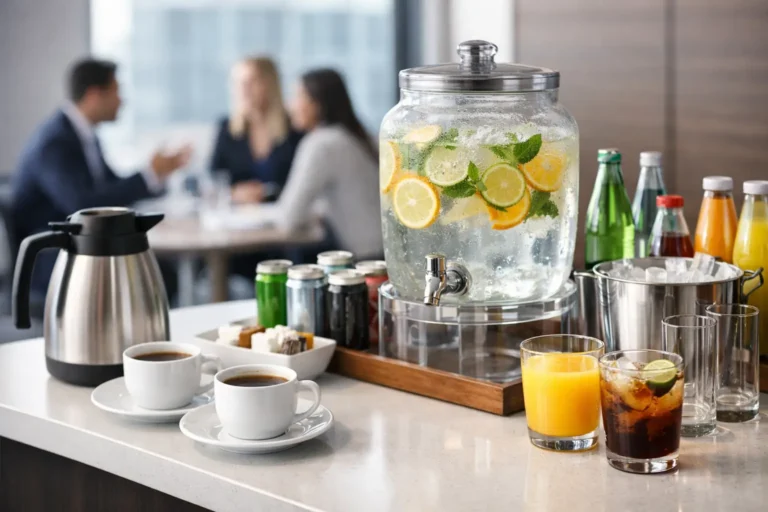
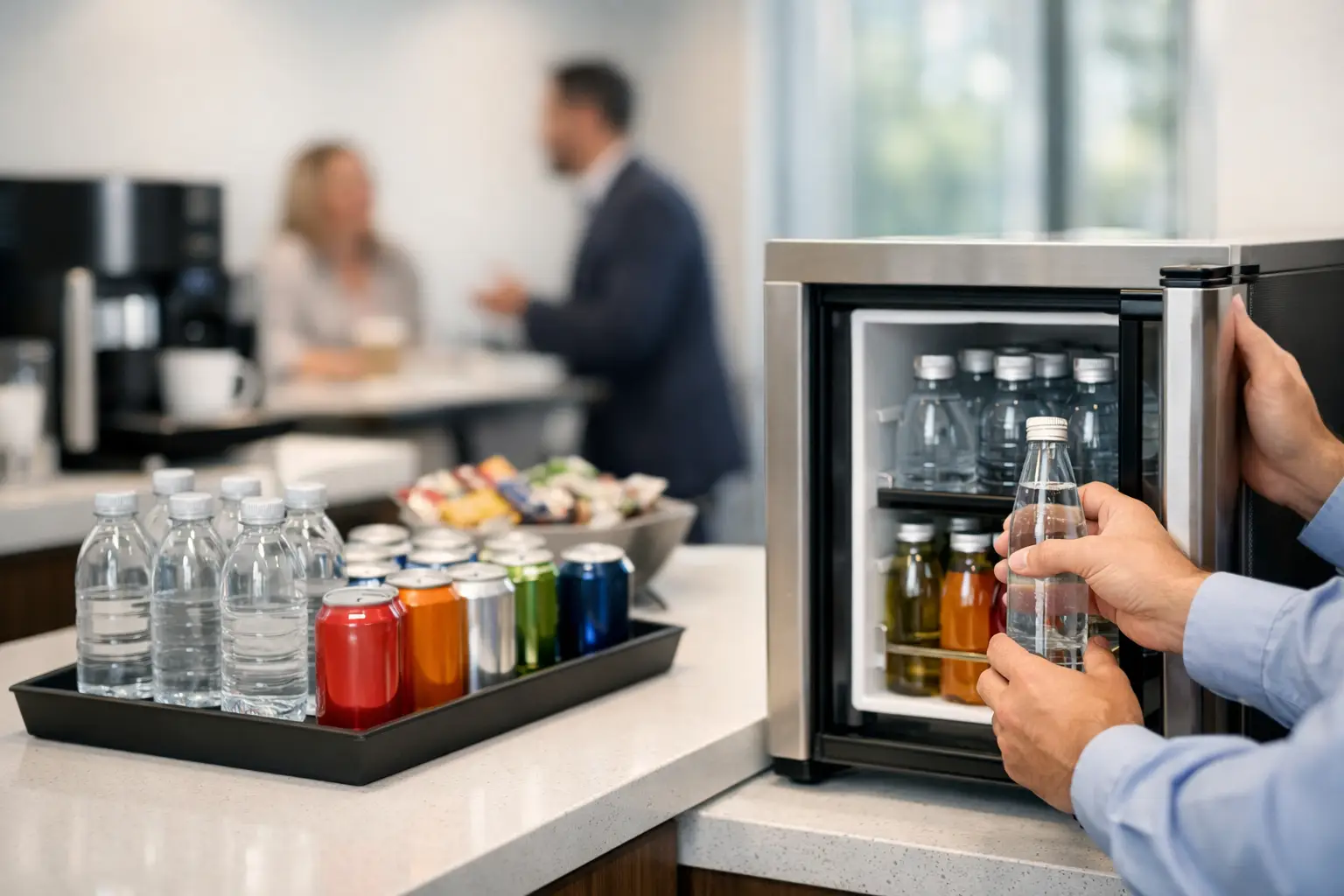
For non-coffee drinkers, offer cold water and consider whether sparkling water, juice, or occasional canned beverages fit your culture and budget. These products can be useful, but they need closer inventory control because preferences vary widely and refrigerator space disappears quickly.
How to Stock Office Beverages at the Right Levels
Buying in bulk can save money, but only when products are being used before they lose freshness or take over your storage area. The practical answer is to establish par levels: the minimum amount of each item you want on hand before reordering.
Start by tracking usage for four weeks. Count coffee bean bags, milk or powdered dairy supplies, cups, lids, sweeteners, tea, and cold beverages at the beginning and end of each week. This gives you a real picture of consumption instead of relying on guesswork.
Once you know your average weekly use, set a par level that covers normal demand plus a reasonable cushion. For example, if your office uses two bags of beans per week and deliveries happen weekly, keeping three bags available allows for a busy week without creating excessive backstock. The same thinking applies to cups, stirrers, lids, and cleaning supplies.
Seasonality matters, too. Hot beverage demand often rises during Ohio winters, while cold water and iced beverage consumption can increase in warmer months. Holidays, training sessions, new-hire orientations, and client events can also create temporary spikes. Plan ahead for those occasions instead of making a last-minute supply run.
Do Not Forget the Details Around the Drink
An office beverage station is only as good as the supporting supplies. A premium coffee machine loses some of its appeal when there are no cups, no lids for guests heading out the door, or no sweetener that employees prefer. These small details are often where in-house programs become frustrating to manage.
Your supply plan should account for drinkware, stirrers, napkins, sweeteners, creamers or milk options, and a clear place for waste and recycling. If sustainability is part of your company culture, choose environmentally friendly cups and supplies where practical. Just make sure your selected products match the equipment and the volume of your office.
Storage deserves attention as well. Keep coffee beans and dry ingredients in a cool, dry space, away from strong odors and direct sunlight. Use a first-in, first-out system so older products are used first. Refrigerated items should be labeled and checked regularly, particularly if your team uses fresh milk for specialty drinks.
A tidy beverage area encourages people to use it. It also helps clients feel cared for without making the breakroom look like a supply closet. Designate a simple home for each item and avoid leaving unopened cases or extra supplies in public view.
Decide What Your Team Should Manage Internally
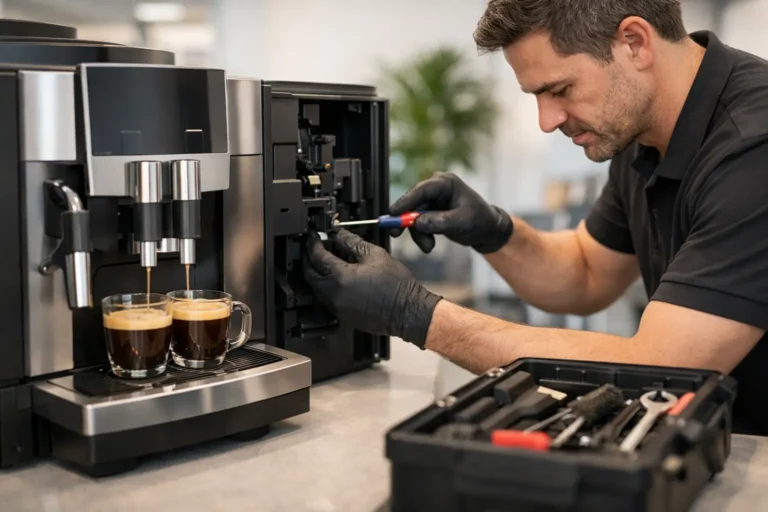
There is a trade-off between managing office beverages yourself and using a full-service provider. Buying products directly may appear less expensive at first, especially for a small office with basic needs. But the actual cost includes ordering, receiving deliveries, monitoring inventory, cleaning equipment, troubleshooting issues, and finding a replacement when the machine stops working before a meeting.
For organizations with more than 10 employees or a steady stream of guests, those tasks can add up quickly. Office managers and administrators are rarely hired to repair coffee machines or calculate how many bags of beans are needed for a busy month. When beverage service becomes inconsistent, employees notice, and the burden usually falls on the same person every time.
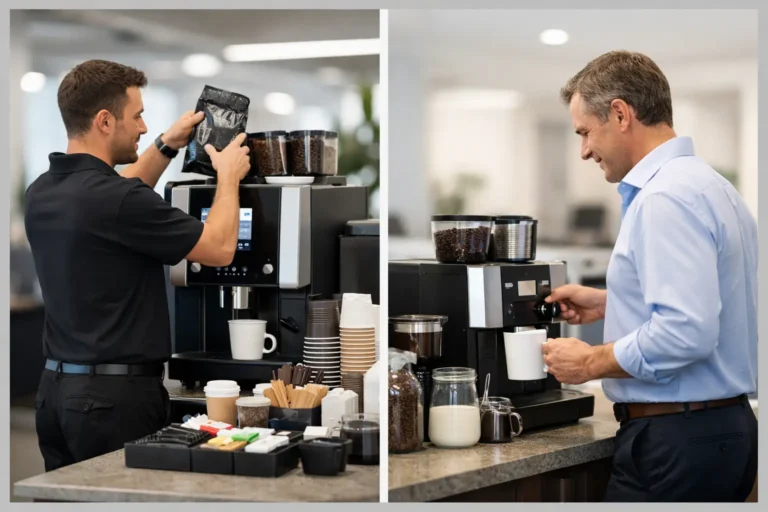
A full-service workplace coffee partner changes that equation. Rather than owning equipment and managing a collection of vendors, your business can have commercial equipment installed, beverage ingredients selected for your team, and regular service scheduled around your needs. Weekly cleaning, maintenance, repairs, and restocking protect the experience without adding work to your staff.
Sip and Smile Gourmet Coffee provides this kind of hands-off support for businesses in the Canton area, with Italian-made barista machines and customizable gourmet drink programs. The point is not simply to add another appliance to the breakroom. It is to make a premium amenity easy to maintain.
Review the Program Before Problems Become Routine
Even a well-planned beverage station should be reviewed periodically. Check consumption every few months, especially after your team grows, schedules change, or you move into a new space. Ask whether popular items are consistently available and whether less-used products should be replaced.
Look at the experience from a visitor’s perspective as well. Can a client make a drink without asking for help? Is the machine clean, stocked, and easy to use? Are cups and condiments organized? These details quietly communicate how your company operates.
Avoid measuring success only by cost per cup. A workplace beverage program also supports employee comfort, informal connection, client hospitality, and the everyday feeling that the office is a good place to spend time. The best program is one people enjoy without having to think about who keeps it running.
Give your team a beverage station that works as reliably as the rest of your workplace. When the coffee is fresh, the choices are thoughtful, and the supplies are always there, a simple daily break can leave a lasting impression.