How to Simplify Office Coffee Operations
Learn how to simplify office coffee operations with better equipment, planned restocking, and local service that keeps every cup ready for work each day.
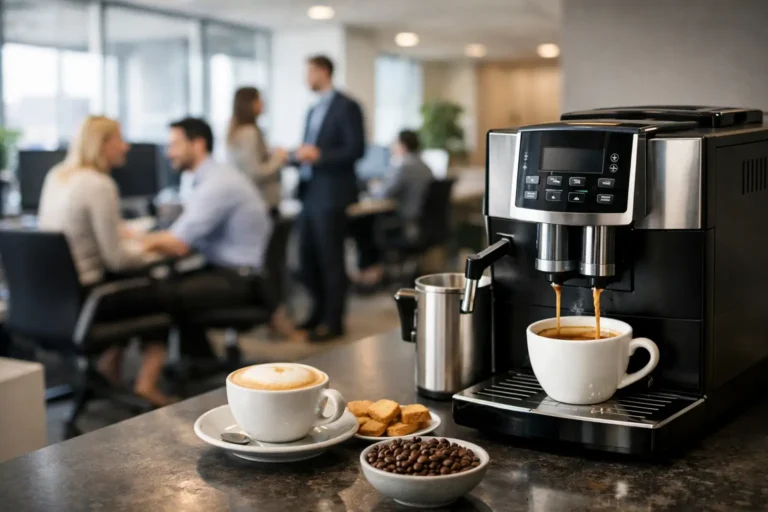
At 8:15 a.m., the coffee station should be helping people start their day, not creating a list of problems for the office manager. Empty bean hoppers, a machine that needs cleaning, a missing order of cups, and a line of employees waiting for basic coffee can turn a nice workplace perk into another task to manage. Learning how to simplify office coffee operations starts with treating coffee as a service program, not a collection of supplies.
For Canton-area businesses, a better coffee experience does not have to mean more equipment, more vendors, or more work for your team. The right setup gives employees and clients café-style choices while putting the maintenance, inventory, and troubleshooting in capable hands.
Start With the Real Cost of Managing Coffee In-House
A basic drip brewer can look inexpensive until someone has to own the daily details. Someone orders coffee, filters, creamers, sweeteners, cups, lids, stirrers, and cleaning supplies. Someone notices when the brewer is leaking or the water line has an issue. Someone answers the question of whether the office should replace the machine when it stops working.
Those duties often land on an office administrator, HR coordinator, or operations manager who already has more important work to do. Even when each task takes only a few minutes, interruptions add up. The cost is not just what the office spends on coffee. It is also the time spent reacting to shortages, cleaning equipment, and trying to keep everyone satisfied.
Before changing your program, take an honest look at what is happening now. Consider how often supplies run out, how many people use the coffee station, what drinks employees request, and who handles problems when they arise. This quick assessment helps you choose a solution that fits your office instead of simply buying a larger machine.
How to Simplify Office Coffee Operations With One Service Partner
The simplest coffee programs have a clear point of contact. Rather than coordinating a machine supplier, a coffee vendor, a repair company, and a big-box supply order, work with one workplace coffee partner that manages the full experience.
A full-service provider can install the commercial machine, supply fresh roasted beans and beverage ingredients, restock the station, clean the equipment, and handle repairs. That structure reduces handoffs and prevents the familiar problem of every vendor saying an issue belongs to someone else.
It also creates continuity. Your provider knows which machine is in your office, how many people use it, which beverages are popular, and what supplies should be on hand. If your team grows, hosts more visitors, or wants to add seasonal choices, the program can adjust without forcing your staff to start over.
For many businesses, this model is more practical than owning equipment outright. Buying a commercial machine may give you control, but it can also leave you responsible for service calls, replacement parts, cleaning schedules, and eventual replacement costs. Leasing or using a managed service may have an ongoing monthly expense, but the predictability and reduced workload are often worth it.
Choose Equipment That Matches Your Workplace
The best office coffee machine is not necessarily the biggest or most complicated one. It is the one that can serve your daily traffic reliably and offer drinks people actually want.
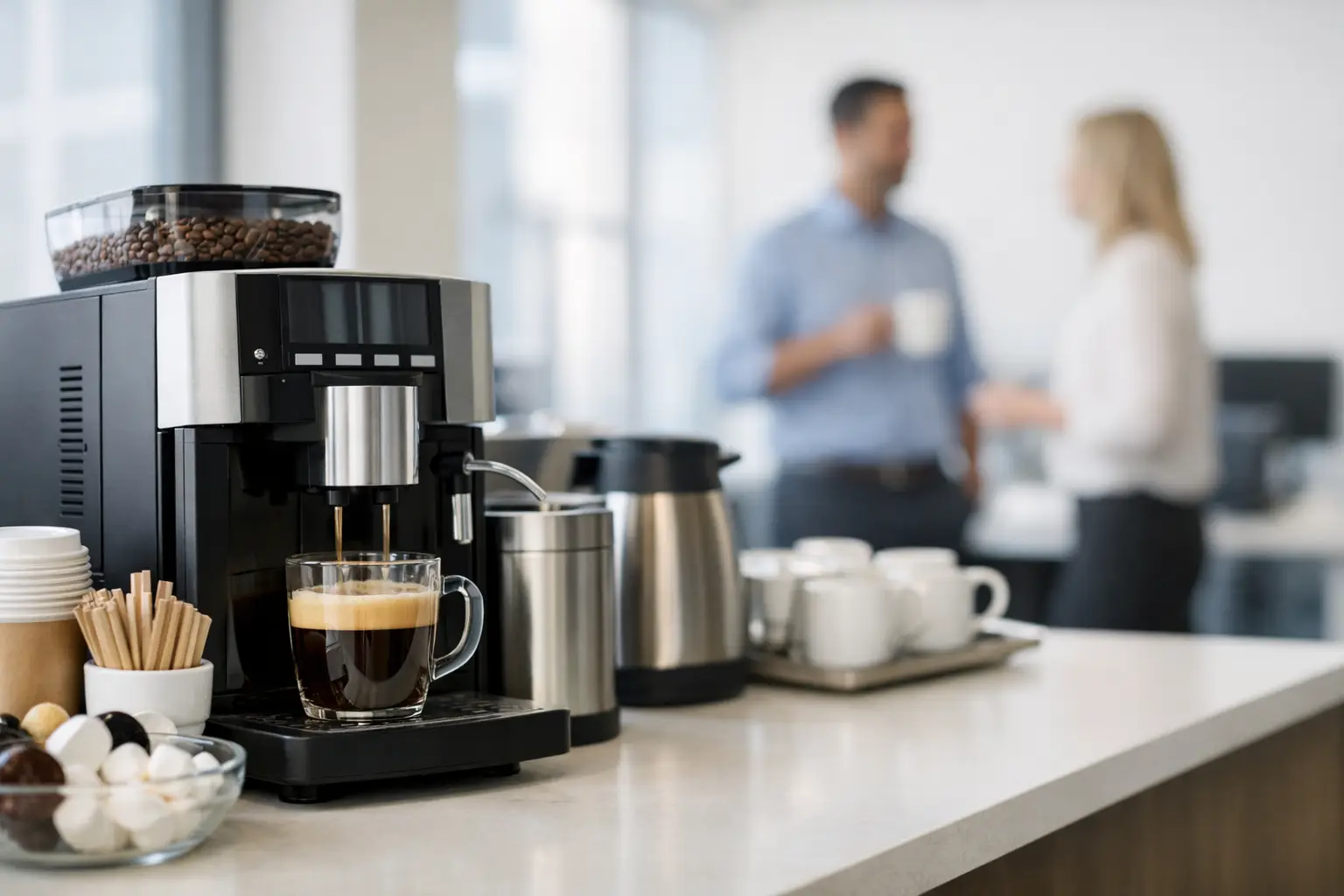
For a smaller office, a compact bean-to-cup machine may be enough to provide fresh coffee, espresso, cappuccinos, café lattes, Americanos, hot chocolate, and French vanilla beverages with a simple touch-screen selection. A larger office or client-facing location may need a higher-capacity machine that can keep up during busy morning and afternoon periods.
Ease of use matters just as much as capacity. Employees should not need barista training to make a quality drink. A professional Italian-made machine can deliver consistent espresso-based beverages at the touch of a button, helping your breakroom feel polished without assigning someone to operate it.
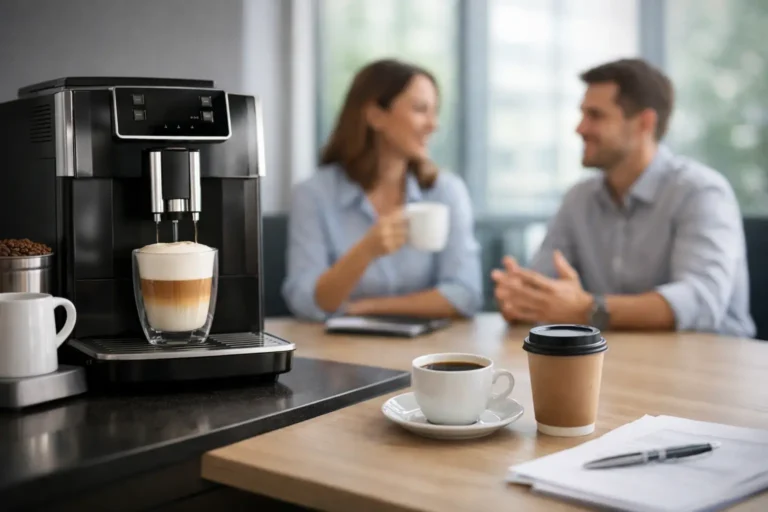
Think about your visitors, too. A client offered a fresh cappuccino or café latte receives a different impression than one offered a packet of instant coffee. The beverage station becomes a small but meaningful part of your hospitality, especially for offices that host interviews, vendor meetings, or customer appointments.
Build a Menu People Will Use
Offering too little can disappoint employees. Offering too much can create waste and make restocking harder. The goal is a focused menu with enough variety to make the program feel like a real benefit.
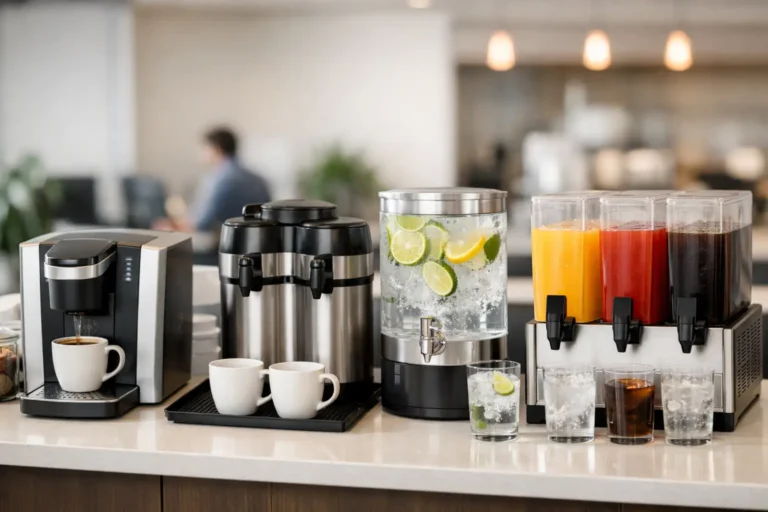
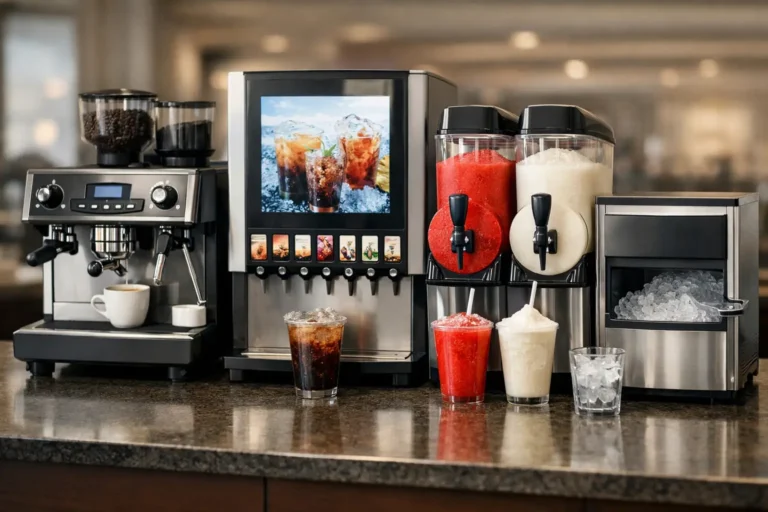
Start with the foundation: quality coffee and espresso. Then add the drinks that make the biggest difference for your team, such as cappuccinos, lattes, mochas, hot chocolate, and flavored options. Seasonal beverages can be a welcome addition when they are easy to support and align with employee preferences.
The right mix depends on your office. A team with frequent customer meetings may value premium espresso drinks. A manufacturing-adjacent office with early shifts may prioritize quick, dependable coffee. A younger team may request more flavored and specialty options. Ask a few questions before deciding, then review usage after the first month or two.
Customization should make the experience better, not create another inventory burden. A good service partner can help you narrow the choices to the beverages your people enjoy and keep the necessary ingredients stocked.
Make Restocking and Cleaning Automatic
Most office coffee frustrations are not caused by the coffee itself. They come from small operational gaps: no cups on Monday morning, no milk powder after lunch, an overflowing grounds container, or a machine that has not been properly cleaned.
A scheduled service plan removes those gaps. Weekly visits can include cleaning, checking machine performance, refilling beans and ingredients, replacing supplies, and reviewing consumption patterns. Instead of waiting for someone to report a problem, the service team prevents many issues before they affect the office.
This is especially valuable for companies with more than 10 employees. Once multiple people use a machine every day, informal restocking rarely stays reliable. A simple schedule gives your team confidence that the station will be ready when they need it.
Ask potential providers how they handle both routine visits and unexpected needs. Weekly maintenance is helpful, but responsive repair support matters when a machine goes down between visits. A premium coffee station only feels premium when it is available.
Keep One Person Informed, Not Burdened
Even with a fully managed program, someone in your office should be the designated contact. That person does not need to clean the machine or track every box of supplies. Their role is simply to share feedback, flag changes in office attendance, and communicate special needs such as a large meeting or event.
This light-touch approach is far different from assigning a coffee manager. The office contact should be able to send one message when something changes and trust that the provider will handle the next steps.
Clear communication also helps control waste. If your office is hybrid and attendance changes by day, tell your provider. If you are adding staff, moving locations, or hosting a client event, share that early. A local partner can adjust service and supply levels more easily when it understands your schedule.
Choose Service That Reflects Your Company
Coffee is a daily signal of how your workplace thinks about people. Employees notice when the breakroom is consistently stocked and when they can enjoy a drink that feels better than the standard office pot. Clients notice when hospitality is thoughtful and easy.
That does not mean every business needs an oversized coffee bar. It means choosing a dependable program that fits your culture, budget, and traffic. Environmentally friendly product options, customizable beverages, and local support can all add value, but only if they make the experience easier for your team.
Sip and Smile Gourmet Coffee helps Canton businesses create that kind of hands-off program by providing commercial barista machines, gourmet ingredients, routine service, and ongoing support. The result is less time spent managing breakroom details and more time spent running the business.
A well-run coffee station should be almost invisible operationally and highly visible experientially. When employees can make a great drink without asking where the supplies are or whether the machine works, you have created a workplace perk that does its job every day.