Coffee Contract Guide for Canton Workplaces
This coffee contract guide helps Canton employers compare workplace coffee agreements, service, costs, and support before choosing a provider confidently.
A workplace coffee agreement should make your day easier, not leave you chasing deliveries, calling for repairs, or explaining an empty bean hopper to guests. This coffee contract guide is designed for Canton-area employers who want café-quality drinks at work while keeping the program simple to manage.
The right provider can help you create a better employee perk and a more polished client experience. The wrong agreement can tie you to equipment that falls short, unclear supply costs, or support that is hard to reach when the machine is down. Before signing, look beyond the coffee machine itself and evaluate the full service behind it.
Start With What Your Workplace Needs
A coffee contract should fit the way your office actually operates. A professional office with 15 employees and occasional visitors has different needs than a busy manufacturing office, medical practice, dealership, or client-facing business with steady foot traffic.
Start by estimating daily use. Consider how many employees are in the building, how often clients visit, whether shifts overlap, and whether the coffee station is expected to serve as a gathering point. A machine that works well for a small team may create a line during a larger office’s morning rush.
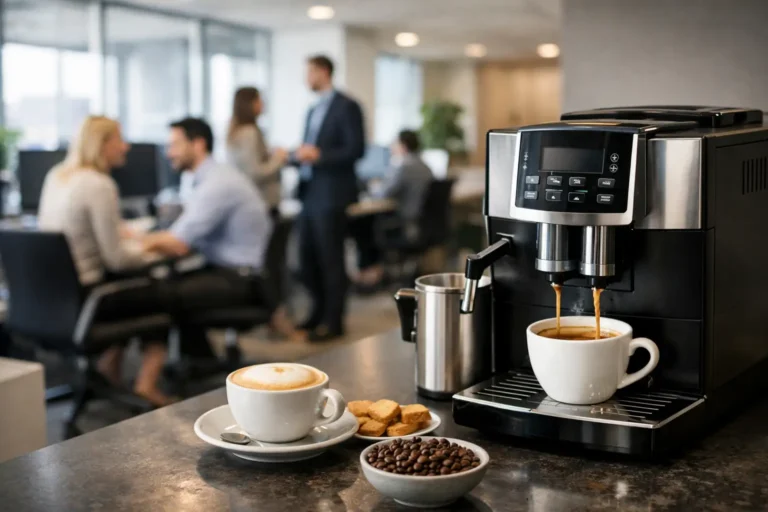
Then think about the drink experience you want to offer. Basic drip coffee may meet a budget requirement, but it does not create the same impression as espresso, cappuccino, café latte, café Americano, mocha, hot chocolate, or French vanilla drinks prepared at the touch of a button. If employee experience and hospitality are priorities, your contract should reflect that level of service.
It also helps to decide who will own the day-to-day responsibility. Many businesses do not want an office manager tracking beans, wiping down equipment, ordering powders, or troubleshooting a machine. A full-service agreement is often a better fit when your team wants the benefit without another task on its list.
What a Coffee Contract Should Clearly Cover
The best contracts are clear about responsibilities from the first day of installation. You should know what is included, what may cost extra, and what happens if needs change. Vague language is rarely helpful when a machine needs attention on a Monday morning.
Equipment and installation
Confirm the exact type of machine being provided and the drinks it can produce. Ask whether the equipment is commercial-grade, whether installation is included, and what site requirements apply. Depending on the system, your location may need suitable counter space, electrical access, water access, or nearby drainage.
Also clarify who owns the machine. In many workplace coffee service agreements, the provider retains ownership while your business receives the benefit of the equipment and service. That can prevent a large upfront purchase and reduce the risk of being stuck with repair costs for a machine you no longer need. Still, you should understand the terms for removal, replacement, and damage caused outside normal use.
Coffee, ingredients, and supply levels
Great equipment is only part of the experience. The contract should identify the coffee beans, milk or creamer options, chocolate, flavor ingredients, cups, lids, stirrers, and cleaning supplies that are included. If environmentally friendly product options matter to your organization, ask how those choices are handled and priced.
Supply terms should be practical, not overly restrictive. Your provider needs enough information to stock your location appropriately, but your business should not routinely run out of popular items before the next visit. Ask how restocking is scheduled, whether usage is monitored, and what happens when your office hosts an event or adds employees.
Cleaning, maintenance, and repairs
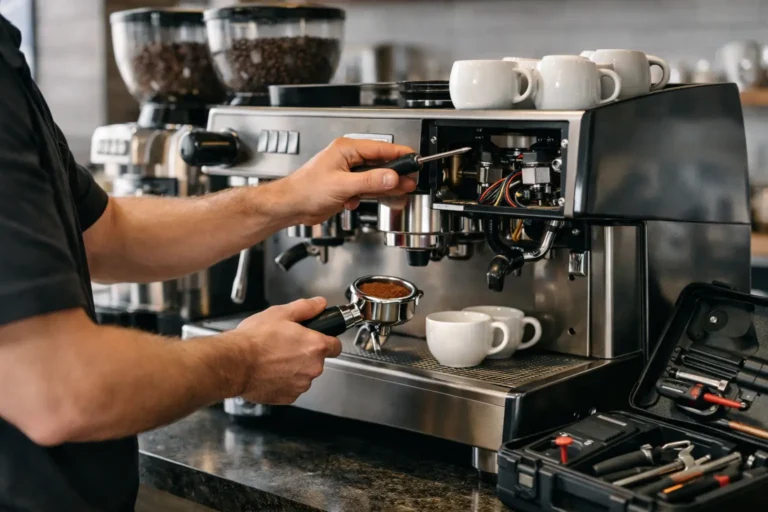
This is where a full-service program earns its value. Commercial beverage machines need regular cleaning and preventive maintenance to keep drinks tasting good and equipment performing well. Your agreement should say who handles routine cleaning, service visits, parts, labor, and repairs.
Ask what support looks like when the machine is not working. Is there a local service contact? What is the expected response time? Is a temporary replacement available if a repair takes longer than expected? No provider can guarantee that equipment will never need service, but a dependable plan limits disruption when it does.
Pricing and billing
Coffee contracts can be structured in several ways. Some providers charge for ingredients and service separately. Others build equipment, maintenance, and routine service into a recurring program. Neither model is automatically better. The right choice depends on your budget, volume, and preference for predictable monthly costs.
Request a clear explanation of recurring charges, delivery fees, installation charges, minimum purchases, taxes, and any fees for specialty beverages or supplies. If prices can change during the agreement, ask how much notice you will receive and what factors may affect pricing. A low introductory number is less meaningful if the ongoing costs are hard to predict.
Questions to Ask Before You Sign
A good provider should answer direct questions without making the process complicated. Ask whether the agreement has a fixed term, an automatic renewal clause, or a cancellation notice requirement. Understand what happens if your business moves, reduces headcount, or needs a different machine as your workplace grows.
You should also ask about service frequency. Weekly visits may be ideal for a high-use office, while another location may need a different schedule. What matters is that the provider takes responsibility for keeping the station clean, supplied, and ready for use rather than waiting for your staff to report every issue.
If the agreement includes minimum product purchases, make sure the level is realistic. A minimum based on optimistic usage can create waste and frustration. On the other hand, unusually low estimates can lead to frequent shortages. An experienced local provider should help you set expectations based on your workplace size and beverage preferences.
Finally, ask how customization works. Can you choose gourmet bean varieties? Can the drink selection change seasonally? Can you add decaf, hot chocolate, or specialty flavors for employees and guests? Flexibility matters because a coffee station is most valuable when people genuinely enjoy using it.
Watch for These Contract Gaps
A coffee agreement does not need to be long to be useful, but it should not leave major details to assumption. Be cautious if equipment replacement is unclear, service obligations are described only in broad terms, or supply prices are not documented.
It is also worth reviewing what the provider expects from your team. Employees may need to follow basic use instructions, such as avoiding unapproved ingredients or reporting leaks promptly. That is reasonable. Requiring your staff to perform deep cleaning, manage repairs, or maintain a complex inventory defeats much of the purpose of outsourcing the program.
Another common issue is choosing based only on the machine’s appearance or drink menu. A sleek espresso machine is appealing, but it will not improve office culture if it is empty, dirty, or unavailable when visitors arrive. Service reliability should carry as much weight as the equipment itself.
Choosing a Partner, Not Just a Machine
For many employers, workplace coffee is a small operational decision with an outsized effect on the workday. It gives employees a reason to take a real break, supports casual conversations, and offers a thoughtful welcome to clients. That experience depends on consistency.
Look for a provider that understands your location, responds personally, and is willing to recommend a solution based on your actual needs rather than pushing a one-size-fits-all package. Sip and Smile Gourmet Coffee, for example, provides Canton businesses with Italian-made barista machines, fresh ingredients, weekly service, and ongoing support so the coffee program stays hands-off for the customer.
A contract should give you confidence that your staff and visitors will have good drinks available without adding work to your team. Read the details, ask practical questions, and choose the service level that lets your workplace enjoy the coffee station instead of managing it.