Espresso Pods Comparison for Better Office Coffee
Our espresso pods comparison helps Canton workplaces weigh flavor, cost, waste, and convenience before choosing the right coffee setup for their team.
A quick espresso pod may seem like the simplest answer to office coffee. Put in a capsule, press a button, and hand a guest a drink. But for a workplace serving more than a handful of people each day, an espresso pods comparison should go beyond convenience at the machine. The real question is whether the system delivers a consistently good experience without creating hidden costs, waste, or another task for your team to manage.
Pods can be a reasonable fit in certain settings. They are not automatically the best fit for every office. For businesses in Canton that want café-style drinks, a fresh-bean barista machine often provides more choice, better cup quality, and less day-to-day friction as usage grows.
Espresso Pods Comparison: What Offices Should Measure
At home, choosing between pod brands can be mostly about flavor preferences. At work, the decision affects employee satisfaction, guest hospitality, supply budgets, breakroom upkeep, and who gets called when something goes wrong.
Start with the number of drinks your workplace serves. A small office with occasional coffee drinkers may find a pod system perfectly practical. A busy office, dealership, medical practice, or client-facing business can move through capsules quickly. In that case, the unit cost per drink and the time spent restocking, sorting, and cleaning add up faster than expected.
Also consider what people actually want to drink. A basic pod brewer may make an acceptable espresso-style coffee, but it may not meet expectations for a cappuccino, café latte, Americano, hot chocolate, French vanilla drink, or seasonal beverage. A commercial bean-to-cup machine is designed to offer those choices from one professionally maintained station.
The best setup is not the one with the fewest buttons. It is the one that makes a good drink reliably and fits the way your workplace operates.
Flavor and Drink Quality
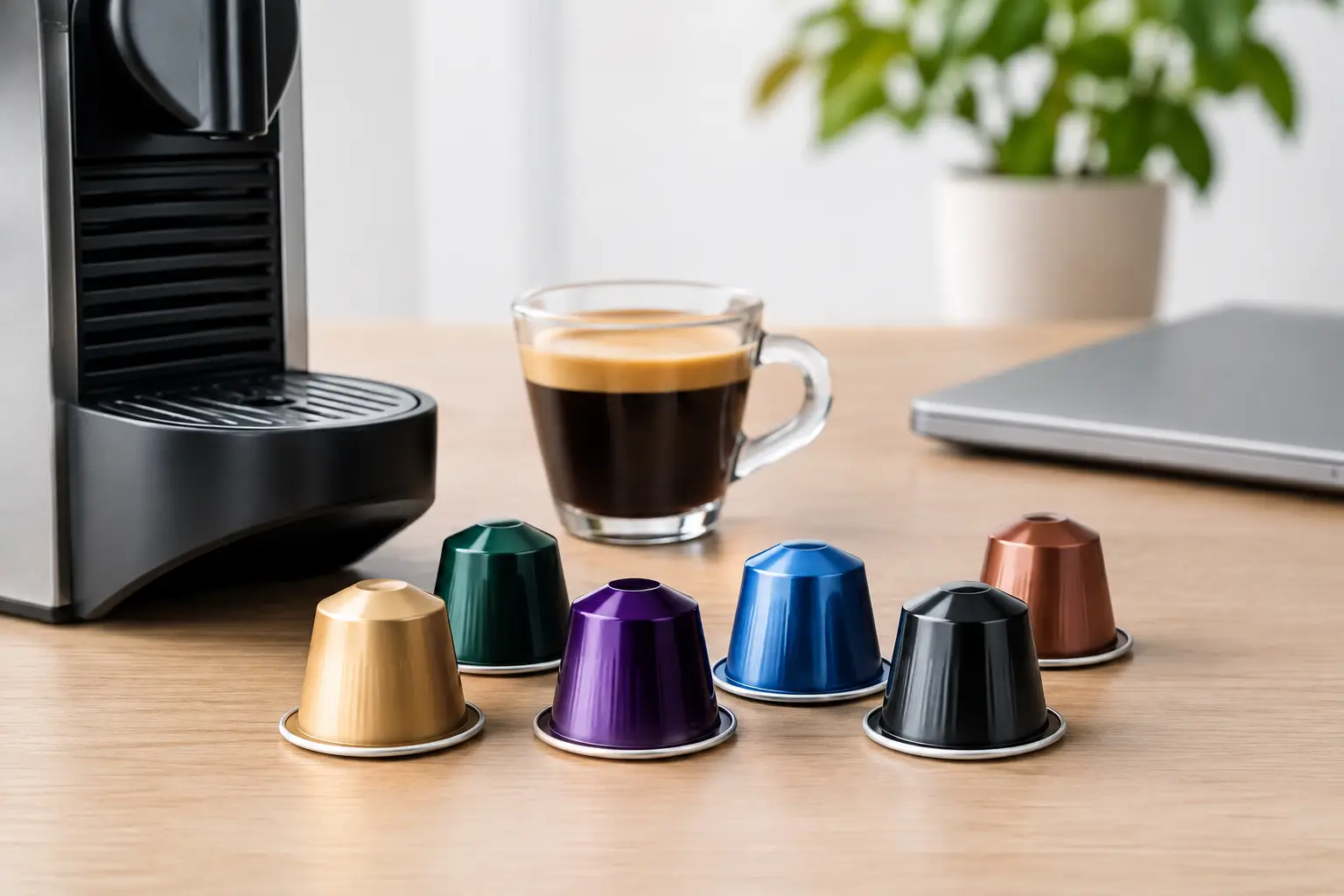
Pods offer consistency because each capsule contains a pre-measured serving. That can be helpful when no one in the office wants to think about grinding, dosing, or brewing. The trade-off is freshness. Coffee begins losing aromatic character after roasting and grinding, and a sealed pod cannot fully recreate the aroma and crema of beans ground immediately before brewing.
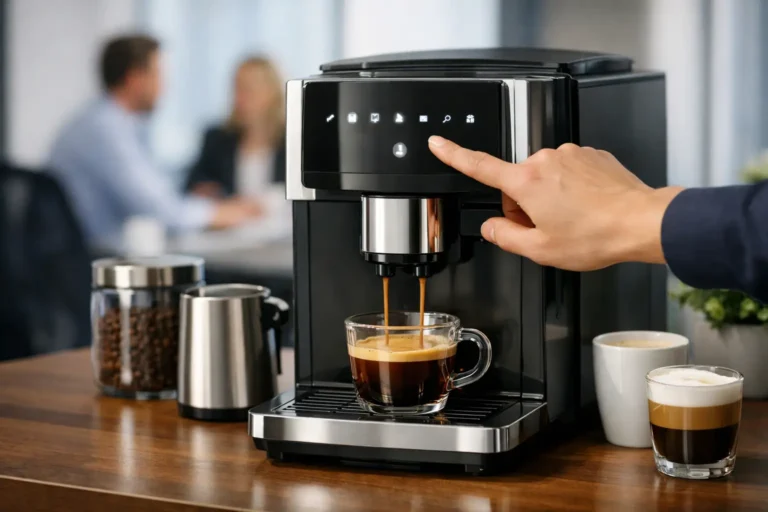
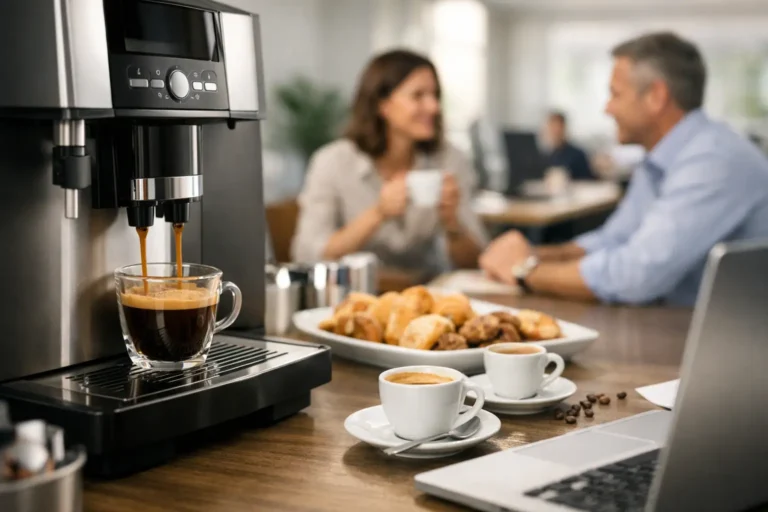
For employees who simply want a fast caffeine boost, that difference may not matter much. For a workplace using coffee as a hospitality touchpoint, it often does. Fresh roasted beans and a quality Italian-made barista machine can produce a fuller espresso base for lattes, cappuccinos, and other specialty drinks. That gives staff and visitors the kind of beverage they might otherwise leave the building to buy.
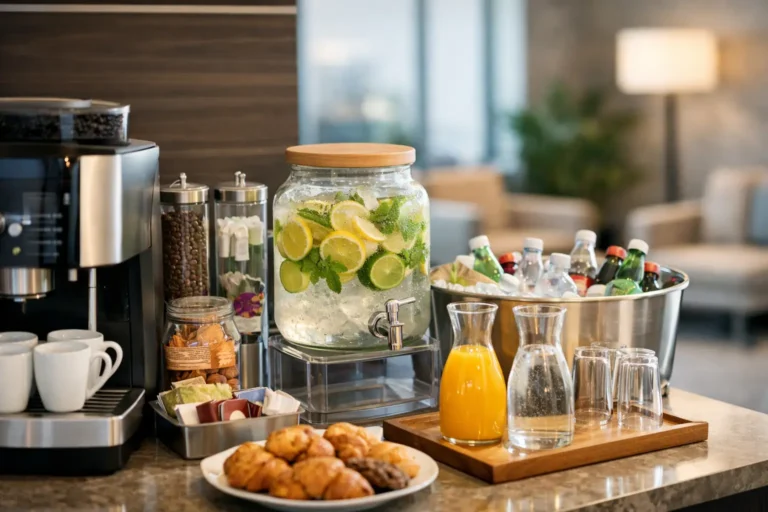
Pod options can also limit customization. You may need separate capsules for different strengths, flavors, and beverage styles. With a bean-to-cup program, the coffee can be selected around your team’s tastes while milk powders, cocoa, flavor ingredients, and drink settings create a broader menu.
Cost Is More Than the Price of a Pod
Capsules make costs easy to see because every drink has a small, distinct package. That transparency is useful, but it can make the per-cup cost higher than expected in a high-use environment. Specialty pods, milk pods, and branded capsule systems can push expenses higher, especially when employees make more than one drink per day.
Fresh-bean systems have their own costs, including equipment, ingredients, cleaning, and service. The difference is that a full-service workplace coffee provider can bundle the operational pieces into a predictable program. Instead of asking an office manager to compare pod orders, troubleshoot a brewer, and chase down cleaning supplies, the service is built around keeping the station ready to use.
There is no single winner on cost. Pods can make sense when volume is low and the drink menu is simple. A commercial barista machine often becomes the stronger value when an office needs to serve many people, offer more beverage variety, and avoid the administrative burden of managing supplies internally.
Waste and Storage Matter in a Shared Breakroom
Every pod creates a used capsule that has to go somewhere. Some are recyclable under certain conditions, but recycling programs vary, and many used pods still end up in the trash. Multiply that waste by dozens of drinks per day, and it becomes a visible part of the breakroom routine.
Pods also require storage space. An office that wants dark roast, decaf, flavored choices, espresso capsules, milk capsules, tea, and hot chocolate can quickly fill cabinets with small boxes. It is easy to run out of the one option people want most while still having several unwanted varieties left over.
A fresh-bean program generally uses larger ingredient packages and can reduce the amount of single-serve packaging associated with each drink. It will still require responsible supply management, but it is often a better match for businesses looking to make environmentally conscious choices without asking employees to sacrifice beverage quality.
Convenience Depends on Who Owns the Work
The strongest argument for pods is speed. Most systems are simple enough for anyone to operate with minimal instruction. However, convenience at the moment of brewing is only one part of the experience.
Someone still has to place orders, receive deliveries, stock the drawers, empty used capsules, clean the machine, descale it, and handle a breakdown. In many offices, those tasks land on an administrator or office manager who already has a full workload. A neglected pod brewer can quickly become a source of frustration, especially when it is needed for a client meeting.
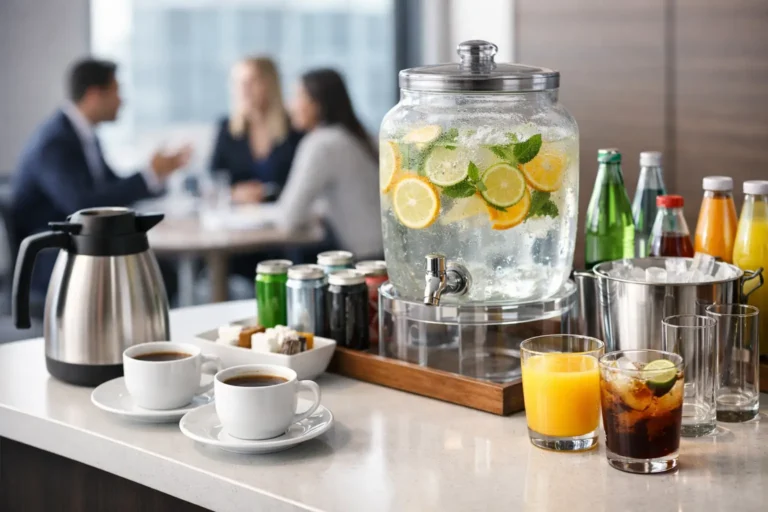
A managed commercial coffee program changes the equation. Sip and Smile Gourmet Coffee installs the equipment, provides the coffee and beverage ingredients, and handles routine cleaning, maintenance, repairs, and restocking. Your staff chooses a drink at the touch of a button. Your team does not have to become a coffee equipment service department.
That model is particularly useful for organizations with more than 10 employees or a steady flow of guests. It keeps the coffee station polished without turning it into another operational responsibility.
When Espresso Pods Are the Right Choice
An honest comparison should recognize where pods work well. They are a sensible option for a very small office, a low-traffic satellite location, or a business that only needs occasional individual servings. They can also be helpful when a dedicated decaf or specialty option is needed alongside another main coffee system.
Pods are less compelling when the workplace wants a premium, café-like experience. If employees are asking for lattes and cappuccinos, if customers routinely wait in your lobby, or if the office is buying coffee shop drinks several times a week, a commercial beverage program may better reflect the level of hospitality you want to provide.
The goal is not to add a more complicated machine. It is to remove complications from the people responsible for the breakroom.
A Better Question Than “Which Pod Is Best?”
Rather than asking which capsule delivers the best espresso, ask what you want your coffee station to do for your business. Should it be a basic utility? Or should it help you welcome clients, give employees a meaningful daily perk, and create a more enjoyable place to work?
If your needs are modest, a pod machine may cover them well. If you want fresh coffee, espresso-based drinks, customizable options, and dependable local support, look beyond the capsule aisle. A well-managed barista machine can make the office coffee break one less thing to coordinate and one more reason people enjoy being there.