Workplace Coffee Program Implementation Guide
A workplace coffee program implementation guide for Canton businesses that want premium drinks, easy setup, and dependable ongoing service.
If your office coffee setup still means a burnt pot in the break room and a standing line at the lobby coffee shop by 8:30, it is already costing you more than coffee. It affects employee experience, how clients see your business, and how much time your team spends leaving the building for a decent drink. This workplace coffee program implementation guide is built for employers who want a better setup without adding one more thing to manage.
What a good workplace coffee program should actually solve
A workplace coffee program is not just about serving coffee. For most businesses, it is really a decision about convenience, hospitality, and consistency.
When the setup is right, employees have access to café-style drinks without leaving the office. Guests are welcomed with something better than a basic drip pot. Your team gets a perk they use every day, not one they forget exists. Just as important, the program should not create extra work for your office manager, HR team, or operations staff.
That last point matters more than many companies expect. A coffee machine may look simple on paper, but someone still has to track supplies, clean equipment, call for repairs, and deal with complaints when the machine stops working. The best program removes those tasks from your internal team.
Start your workplace coffee program implementation guide with the right goals
Before you compare machines or drink menus, get clear on what you want the program to do. A 15-person office with frequent client visits will have different needs than a 75-person operation with multiple departments and shift changes.
Most businesses are trying to accomplish a mix of the same things. They want to improve employee satisfaction, create a more polished experience for visitors, and avoid the hassle of buying and maintaining equipment themselves. Some also want to reduce the number of coffee runs that pull employees away from work throughout the day.
If your main goal is simply to offer something basic, a standard brewer may be enough. If you want the coffee station to feel like a real workplace perk, bean-to-cup and espresso-based options make a much stronger impression. That is where it helps to think beyond coffee alone. Cappuccinos, café lattes, Americanos, hot chocolate, and seasonal drinks often get much more use than decision-makers expect.
How to assess demand without overbuilding the program
It is easy to overestimate what people will drink, and it is just as easy to undershoot and create frustration. The smart move is to look at your office through three lenses: headcount, traffic, and expectations.
Headcount gives you a starting point, but not the full picture. A 20-person office where most employees work on site every day may use more coffee than a 40-person hybrid team. Traffic matters too. If clients, vendors, or interview candidates regularly visit your location, your beverage program is part of your front-facing experience.
Expectations are often the deciding factor. In some workplaces, employees are happy with a dependable cup of coffee. In others, especially where recruiting and retention are priorities, a premium drink menu feels much more aligned with the culture you want to build. There is no universal answer. The right fit depends on how you want your workplace to feel and what level of experience reflects your brand.
Choosing equipment that fits the office, not just the brochure
This is where many programs go off track. Companies choose equipment based on upfront price or a feature list, then realize later that it is too limited, too complicated, or too demanding to maintain.
A practical workplace coffee program implementation guide should account for ease of use first. If the machine is confusing, people will avoid it. If it takes too long to make drinks, you get bottlenecks. If it requires frequent manual cleaning or troubleshooting, the burden lands back on your staff.
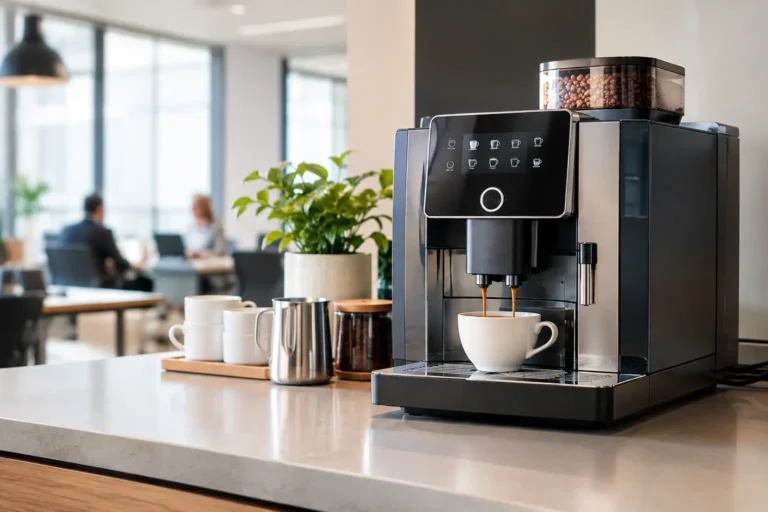
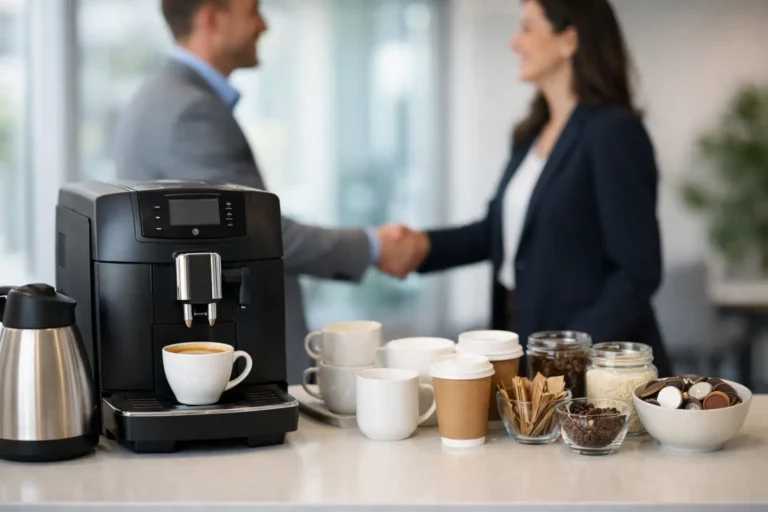
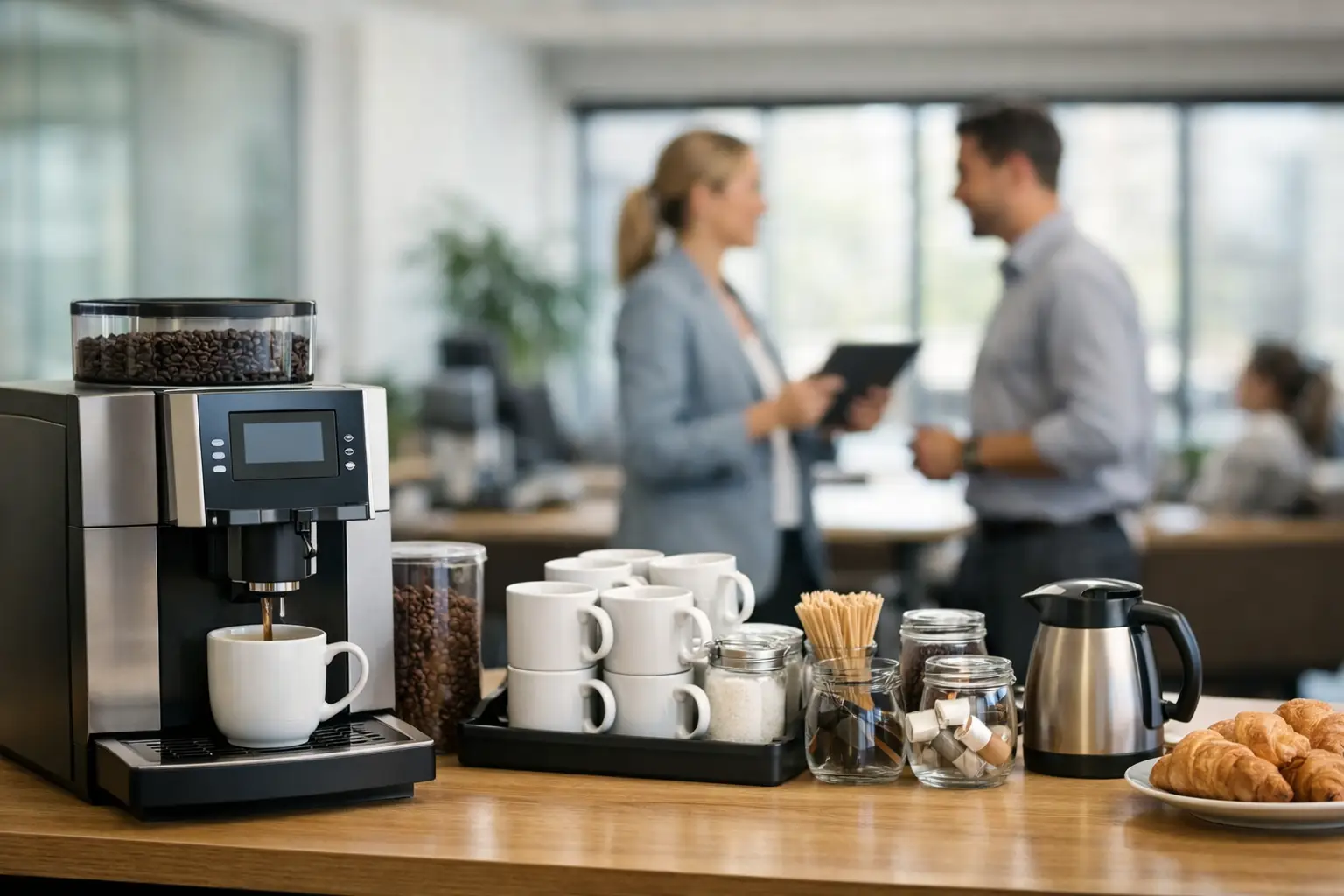
For many offices, commercial barista-style machines strike the right balance. They deliver espresso-based drinks at the touch of a button, give employees more choice, and create a premium feel without requiring anyone on your team to play barista. That matters when you want a polished beverage station but not another operational headache.
Machine placement matters too. If the unit is hidden in a cramped back room, it will not have the same impact as a well-placed station in a break room, shared commons area, or client-facing space. The best location is convenient, visible, and easy to restock and service.
Don’t overlook supplies, service, and maintenance
Coffee programs rarely fail because the idea was bad. They fail because no one planned for the day-to-day details.
Beans run out. Powdered mixes need replacing. Milk alternatives may become a request. Machines need cleaning. At some point, every piece of equipment needs service. If your plan depends on an office employee handling all of that on top of their actual job, the program becomes inconsistent fast.
This is why outsourced service is often the most practical choice for growing businesses. Instead of buying equipment and managing every moving part yourself, you work with a provider that installs the machine, supplies the ingredients, and takes care of maintenance, repairs, and restocking on a regular schedule.
That approach changes the math. You are not just paying for coffee. You are paying to eliminate interruptions, reduce internal workload, and keep the experience consistent. For many employers, that reliability is the real value.
Budgeting for a premium program without wasting money
Budget questions are fair, and the answer is not always as simple as choosing the cheapest option. A low-cost setup can become expensive if it underdelivers, breaks often, or forces your staff to spend time managing it.
Think about cost in layers. There is the equipment itself, the beverage ingredients, the service schedule, and the internal time required to keep the program running. There is also the less obvious value of employee convenience and client impression.
A premium program tends to make the most sense when you want café-style drinks and a dependable experience but do not want to purchase machines outright or assign the work internally. In that case, a service-based model can be easier to forecast and easier to live with. You know what is being handled, who is responsible, and what your team does not have to worry about.
A simple rollout plan that works
The easiest implementations are the ones that stay practical. First, define the audience for the program and the level of beverage experience you want to provide. Next, choose equipment that fits your volume and your space. Then confirm how supplies, cleaning, maintenance, and repairs will be handled before the machine ever arrives.
Once installation is scheduled, communicate the benefit clearly to employees. Keep it simple. Let them know what is available, where the station is located, and how to use it. If the machine offers multiple drinks, a short posted guide helps people try it with confidence.
After launch, pay attention to actual usage in the first few weeks. This is where you learn whether you need more variety, more frequent restocking, or small adjustments to placement or service timing. A good program should be flexible enough to adapt once real habits become clear.
The case for a full-service model
For many Canton-area employers, the best answer is not building a coffee program from scratch. It is choosing a partner that already knows how to make it work.
A full-service provider brings more than equipment. You get guidance on machine selection, drink variety, installation, supply planning, and ongoing support. That means fewer decisions for your team and fewer surprises after the program goes live.
This is especially helpful if your goal is to offer something that feels upscale. Italian-made barista machines, fresh roasted beans, and café-style drink options create a stronger experience than standard office coffee, but they also require consistency behind the scenes. If the provider handles maintenance, cleaning, repairs, and weekly restocking, your office gets the benefit without taking on the burden.
That is why many businesses choose a hands-off model. It keeps the experience high-end while making the administration easy. For decision-makers, that is usually the sweet spot.
Why this matters more than it seems
Coffee is a daily ritual, but in the workplace it also sends a message. It tells employees whether you pay attention to the details that shape their day. It tells visitors something about your standards. And it tells your office manager whether this new perk is going to help the workplace run better or create one more recurring problem.
A well-planned workplace coffee program implementation guide should lead you to a setup that is easy to use, easy to support, and genuinely worth having. If you can give your staff and clients great drinks without buying equipment outright or managing the operation yourself, that is not a small upgrade. It is a practical way to make the office feel more welcoming every single day.
If you are considering a change, start with the simplest question: what kind of experience do you want people to have when they walk into your workplace and pour their first cup?